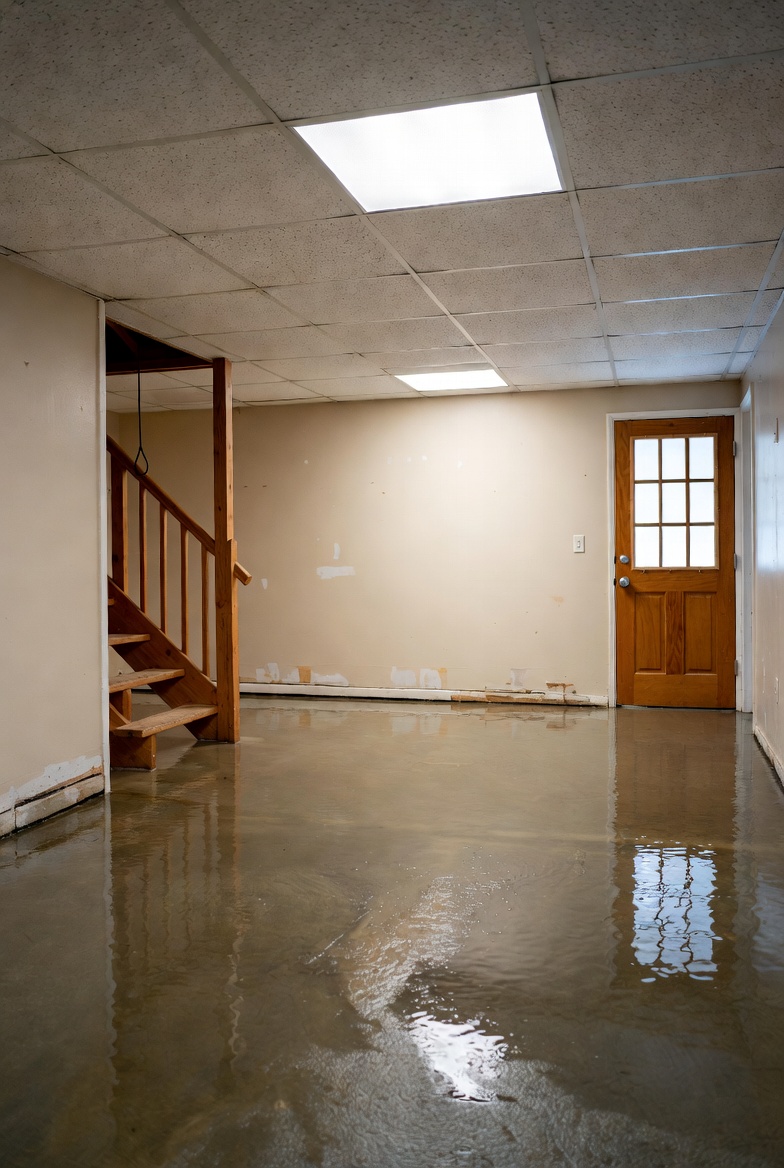
Quick Answer:
If you notice water slowly rising in the basement, act methodically. Mark the waterline and set time-lapse photos, run simple dye tests on floor drains and visible supply lines, inspect the foundation perimeter for slow seepage and hairline cracks, and monitor the water meter overnight for slow continuous flow. Record what you find and call a professional if you can’t find the source, the level keeps rising despite dry weather, or signs of mold appear.
Why This Happens
Slow, progressive basement water is usually one of a few things: a tiny leak in a supply line or fixture, water seeping in through a hairline crack in the foundation, groundwater slowly pushing through the floor or wall joints, or a failing sump pump or drain system. It can be hard to spot because the leak is small but constant, and the water spreads or evaporates between checks.
Patterns help. If the problem shows no relation to rain or thawing, it may feel like a case of Basement floods randomly. If it only appears with seasonal melt or heavy spring rains, think about Flooding only in spring as part of your diagnosis.
Step-by-Step What to Do
Step 1 — Mark the waterline and document progression
- Use a pencil or waterproof tape to mark the current water level on a basement wall or concrete floor edge. Note the date and time next to each mark.
- Set up a phone or camera for periodic photos or a simple time-lapse aimed at the same spot. Even a photo every hour gives useful evidence of the rate of rise.
Step 2 — Check visible supply lines and do dye tests
- Turn off fixtures and appliances that use water. Watch for any immediate drop in the rate of rise.
- For floor drains and sink drains: pour a little food coloring or a nonstaining dye into the drain and watch if it appears in the rising water. This indicates a drain link.
- For suspected supply-line leaks: with fixtures off, apply dye at accessible joints or use colored water in a container to check nearby damp areas. Do not open pressurized lines yourself—if a hidden pressurized supply line is suspected, shut off the main and call a plumber.
Step 3 — Inspect the perimeter for seepage and hairline cracks
- Walk the inside perimeter and touch walls and floor joints. Look for soft, damp, or discolored spots and tiny hairline cracks in concrete.
- Check the outside grade if you can safely do so: clogged gutters, poor slope, or saturated soil can drive slow seepage through foundation microcracks.
- Document any cracks and take close photos. Small cracks can allow constant seepage that slowly raises the floor level over days or weeks.
Step 4 — Monitor the water meter for slow continuous flow
- Locate your water meter and note the reading. Avoid using water in the house for a quiet test period (typically overnight).
- Check the meter again after several hours. Any steady movement when all fixtures are off suggests a continuous leak on the supply side.
- If the meter shows steady flow and you cannot find a visible leak, call a licensed plumber for a pressure/leak test; small underground or in-wall leaks need professional tools.
Step 5 — Keep records and protect valuables
- Keep a log of times, measurements, photos, and any tests you run. This helps a pro diagnose the cause faster.
- Move electronics, paper, and stored items off the floor and onto shelving to limit damage while you investigate.
What Not to Do
- Avoid normalizing a slow rise or waiting until it floods badly — small, steady leaks often get worse and cause hidden damage over time.
- Do not ignore signs of mold or odors. Once mold spreads, it complicates repairs and health risks increase.
- Do not turn on sump pumps, heaters, or electrical equipment in standing water without ensuring power is safe — and do not wade into deep or contaminated water.
- Call a pro when the water level keeps rising despite dry days, when mold spreads, or when you cannot locate the advancing source.
When to Call a Professional
- If the meter shows continuous flow and you cannot find the leak, hire a licensed plumber for a pressure test and leak location.
- If water keeps rising on dry days or after you’ve fixed obvious causes, contact a foundation or waterproofing specialist to inspect for seepage and structural cracks.
- If you see mold growth, persistent dampness, or electrical equipment has been exposed, call the appropriate pros (mold remediator, electrician) right away.
Safety Notes
- Turn off electricity to affected areas if water is near outlets, appliances, or panels. If you’re unsure, call an electrician — do not work near energized equipment in wet conditions.
- Avoid entering standing water that might be deep, contaminated, or hiding trip hazards. Use a flashlight and keep the area ventilated when safe.
- Don’t open pressurized pipes yourself. If you suspect a pressurized supply leak, shut off the main water and contact a plumber.
Common Homeowner Questions
- Why does water rise slowly instead of suddenly?
A small continuous source—like a pinhole leak, seepage through a crack, or a failing joint—adds water faster than it evaporates but too slowly to notice without checking. - Can I stop damage by just drying the basement?
Drying helps short-term, but you must find and stop the source. Otherwise water and mold return. - How long should I monitor before calling help?
If the level rises at all over a day or two, or if the meter shows continuous flow overnight, call a professional. Don’t wait for a major flood.
More in this topic
For more related fixes and similar symptoms, see Intermittent Basement Flooding Events.