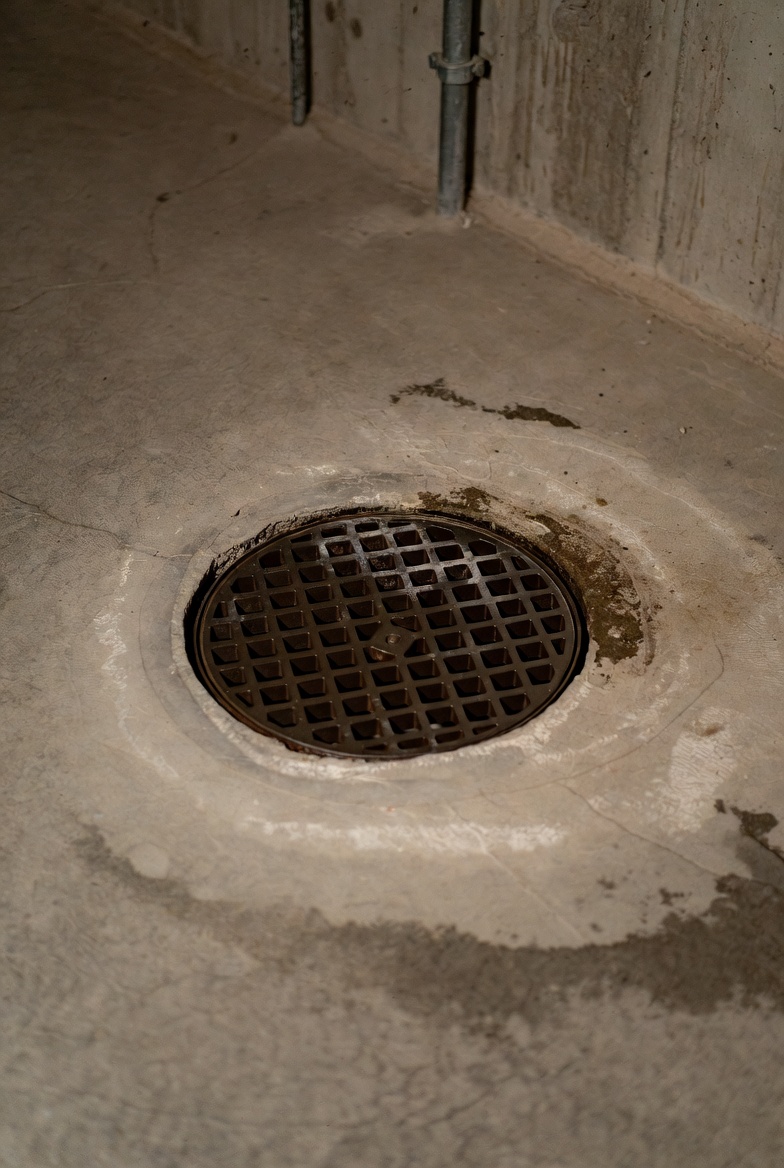
Choose by the original event after the safety response below. Repairs, outages, appliance timing and supply-device alerts can be useful history without proving one cause of basement flooding. Distinguish wastewater return from a supply leak, groundwater or an actual pump problem.
Floor Drains, Basement & Main Lines
Protect people and stop contributing discharge
For strong, widespread or unexplained gas-like fumes, exposure symptoms or suspected concentrated sewer gas, leave the building and call emergency services from outside. For suspected fuel gas, leave even if faint and do not operate switches, plugs, valves or phones there. Do not stay to sniff, ventilate or wait for an odor to fade; follow responder clearance.
Stay out of floodwater near electrical equipment. Do not touch wet plugs, controls or appliances; isolate only from safe dry access when no gas emergency is suspected, or get utility/electrician help. Stop affected household wastewater inputs during backup. Keep people and pets away from sewage and obtain prompt appropriate service. A water-supply shutoff cannot stop every external sewer or groundwater inflow.
Rising from a drain
Stop contributing wastewater. Keep unknown service covers closed and obtain drainage assessment.
Leaking from a supply component
Use safe appropriate source isolation and model-specific service. Supply pressure and drain capacity are different.
At a wall, floor or pump system
Identify the actual entry and equipment. Do not infer sewage or stop groundwater protection from timing alone.
Event guide, not an installed piping map or permission to reproduce flooding.
Backups after repairs, installations, or system changes
Use the actual changed systems and original event. Supply treatment, pressure, restoration and wastewater movement need separate paths; timing does not prove debris or air crossed an intact separation.
- Basement Drain Backup After Plumbing Repair
If a basement floor drain returned water after a plumbing repair, stop affected discharge and contact the installer with the original event and changed-part record. Timing makes the work relevant but does not prove debris entered the main or assign responsibility. Do not run sinks and a toilet to isolate the cause.
- Basement Drain Backup After Winterization
After winterization, identify the treated systems and actual products before interpreting a backup. A frozen supply pipe, blocked waste path, leak and lost trap seal need different responses. Do not remove a cleanout cap to let a sewer vent or run warm fixtures to see whether the backup clears.
- Backup after pressure change
First clarify what changed after the pressure event: faucet delivery, a pressurized supply leak or wastewater rising from a basement drain. These functions are different. Supply pressure does not directly pressurize a properly separated gravity drain, and an ordinary floor-drain trap is not a reverse-flow valve.
- Backup after long vacation
After a long vacation, distinguish a mild local odor from actual wastewater return, a supply-quality concern or unsafe equipment. Disuse can make trap maintenance relevant, but does not prove roots or hardened buildup. Do not flush every fixture and outside spigot as the required first step.
- Backup after filter install
Clarify whether the post-filter problem is reduced delivered water, a pressurized housing leak or actual wastewater rising at a basement drain. A partly closed supply valve can reduce faucet flow; it does not by itself create reverse wastewater flow. Do not reopen or bypass equipment to locate a floor-drain backup.
- Backup after smart shutoff trip
After a smart shutoff trip and a basement backup, preserve the alert and the original water event. A trip can respond to an earlier fault; its timestamp does not prove the device caused sewage return. Supply shutoff pressure does not directly force wastewater through an intact separated drain.
- Basement drain floods after turning water back on
If flooding appeared when water was turned back on, stop the actual contributing source from safe access and identify where water emerged. A supply leak onto the floor is different from wastewater rising through a drain. Do not reopen faucets circuit by circuit to diagnose an unresolved flood.
- Backup after water heater install
For a floor-drain backup noticed after water-heater installation, stop contributing discharge and contact the installer with the original event. Supply connections, pan drainage, relief discharge and the wastewater branch have different functions. Do not run a hot tap while someone watches for another backup.
- Basement drain floods after remodel
For flooding noticed during a remodel, stop affected inputs and contact the crew with the actual work record. Debris or altered routing is possible where evidence supports it, but a floor that slopes toward a drain is not inherently wrong. Do not repeat a five-gallon bucket test to prove a deep obstruction.
When specific fixtures or appliances run
Keep the original toilet, shower or washer discharge without another flush, shower simulation or laundry load. Correlation does not locate the fault.
- Basement drain floods when upstairs toilet flushed
If an upstairs toilet flush was followed by a basement drain rise, stop contributing wastewater and keep the original observation. Do not flush again with the tank cover off, run other fixtures or open a branch cleanout to confirm the link. The existing return is enough to request assessment.
- Drain backs up only when shower runs
When a shower was followed by a basement drain rise, stop the shower and other affected discharge. Keep the earlier event rather than running nearby fixtures or simulating shower output with a bucket. Shower timing does not uniquely locate a hair clog, failed weir or damaged branch.
- Basement drain floods when washer drains
If a basement drain rose while the washer pumped out, stop affected discharge using the actual machine’s safe controls. Do not touch a wet plug, run a small spin/drain trial or flush another fixture alongside it. Water falling afterward does not exclude a damaged or partly collapsed receiving route.
Timing and intermittent patterns
Use existing observations and service records. Do not wait several nights or deliberately move a known failing load to another hour.
- Basement drain floods overnight
For flooding discovered overnight, keep the discovery time separate from the unknown start time. Overnight absence of household use does not identify groundwater, sewer surcharge or pump failure. Do not begin with a bucket into a pit or opening a backwater valve.
- Drain backs up only at night
A backup noticed only at night needs the original timing and actual wastewater history, not a five-to-seven-night trial. Stop affected discharge and arrange assessment for the existing event. Do not move a known failing drain challenge to daytime or operate appliances deliberately for comparison.
- Drain backs up intermittently
Intermittent backup still warrants appropriate assessment; randomness does not establish roots, collapse or public surcharge. Keep the original events and existing service record. Do not open a cleanout to discover standing sewage or shift a suspected obstruction with a hand cable.
- Drain backs up during peak hours
Keep the actual discharge and sewer context. Peak timing or avoiding one event does not establish public surcharge, capacity or the required engineering repair.
- Basement drain floods randomly
Random flooding needs the actual entry path identified. Unpredictability does not uniquely prove roots, collapse or a particular camera finding.
Immediate overflows and sudden flooding
Stop contributing wastewater, protect people and request appropriate service without another bucket or cleanout test.
- Basement floor drain backing up
Use the existing laundry and return record, stop affected discharge and obtain appropriate help. A slow bucket test does not certify the receiving path.
- Floor drain overflows suddenly
Record what was originally poured and the exact product history. Do not use a new stream, toilet flush or fixed-distance cable trial after overflow.
External events and utility interruptions
Identify which utility system was affected and follow the actual notice. Public restoration and household drain clearance are separate findings.
- Basement Drain Backup After a City Outage
For a basement backup after a city outage, stop affected discharge and check the actual utility notice from safety. Identify whether the event affected potable supply, sewer pumping, electricity or several systems. Do not reopen fixtures one by one or loosen a cleanout to decide which side owns the fault.
All Articles in This Cluster
- Basement floor drain backing up
- Floor drain overflows suddenly
- Basement drain floods overnight
- Basement Drain Backup After Plumbing Repair
- Basement Drain Backup After a City Outage
- Drain backs up only at night
- Basement Drain Backup After Winterization
- Basement drain floods when upstairs toilet flushed
- Backup after pressure change
- Basement drain floods after remodel
- Backup after long vacation
- Drain backs up only when shower runs
- Backup after filter install
- Drain backs up intermittently
- Basement drain floods when washer drains
- Backup after smart shutoff trip
- Basement drain floods after turning water back on
- Drain backs up during peak hours
- Backup after water heater install
- Basement drain floods randomly
Use a resolved state before a completion check
Do not open unknown cleanouts, shift a valve, restore a tripped supply or add a known failing load to establish a diagnosis. An assessed model-specific maintenance or completion procedure differs from fault reproduction during unresolved return. Keep the actual work, product and observation record, then ask what evidence supports the correction and safe return to use.
Prompt help for basement drainage problems
Sources and limits
- Wisconsin DHS: sewer gas, exposure and leaving an unsafe area
- Con Edison: suspected fuel-gas leak response
- CDC: electrical hazards near water
- Madison Metropolitan Sewerage District: stop discharge and report backup
- Example drain-opener label: remaining-product restrictions
- Zoeller Aquanot Fit example: power sources, maintenance and alarm functions
- Government of Canada: backwater valve types, maintenance and closed-valve use
- Seattle Public Utilities: repair choices and sewer-camera limits
Examples do not identify the installed device, actual defect or local responsibility. Independent professional review and household field tests have not been obtained.