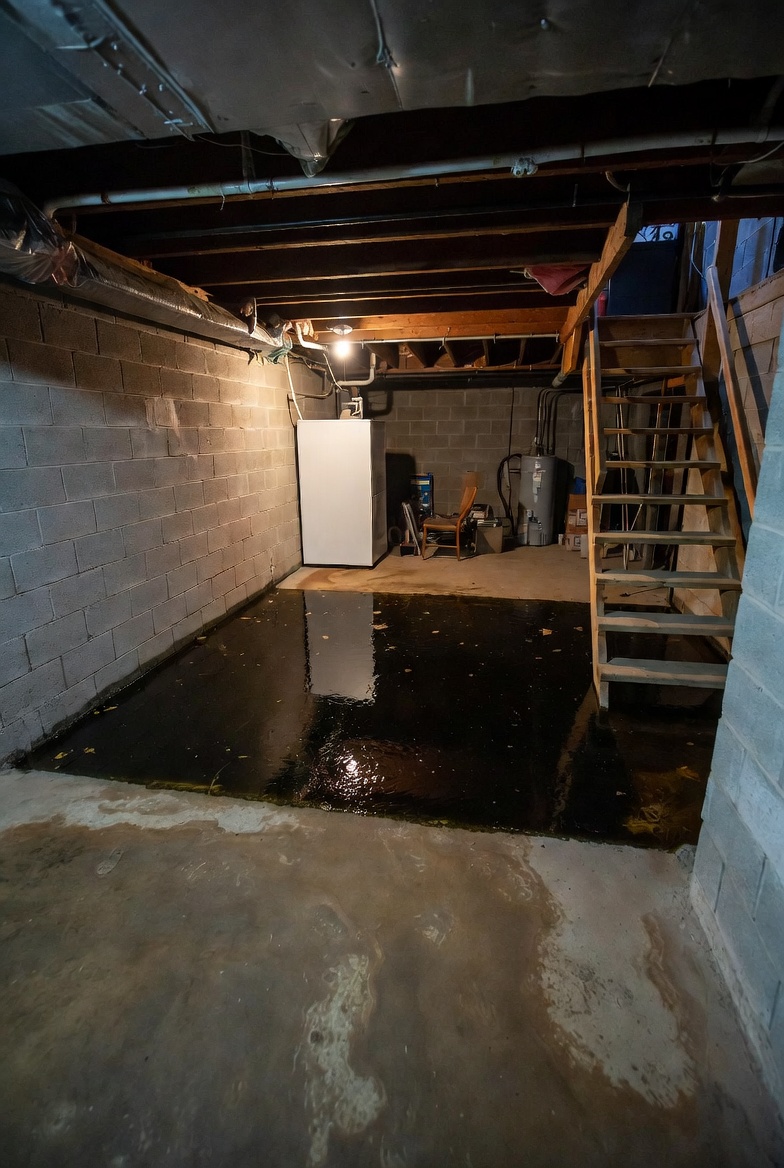
Intermittent backup still warrants appropriate assessment; randomness does not establish roots, collapse or public surcharge. Keep the original events and existing service record. Do not open a cleanout to discover standing sewage or shift a suspected obstruction with a hand cable.
Protect people and stop contributing discharge
For strong, widespread or unexplained gas-like fumes, exposure symptoms or suspected concentrated sewer gas, leave the building and call emergency services from outside. For suspected fuel gas, leave even if faint and do not operate switches, plugs, valves or phones there. Do not stay to sniff, ventilate or wait for an odor to fade; follow responder clearance.
Stay out of floodwater near electrical equipment. Do not touch wet plugs, controls or appliances; isolate only from safe dry access when no gas emergency is suspected, or get utility/electrician help. Stop affected household wastewater inputs during backup. Keep people and pets away from sewage and obtain prompt appropriate service. A water-supply shutoff cannot stop every external sewer or groundwater inflow.
Separate recurrence from a diagnosis of hidden damage
- A pattern is unclear: Record safely available earlier timing, actual discharge and weather. Do not delay prompt help to observe several more returns or force a household comparison test.
- Runoff or trees are suspected: An actual drainage or infiltration path must be established. Roof water near the foundation and a nearby tree do not prove entry into the sanitary line; short-term root swelling is not an observed valve action.
- An inspection is suggested: Ask what access, inspected length and actual findings can support the proposed work. A camera may help under suitable conditions but cannot guarantee a clear view of every hidden defect or automatically select lining, root cutting or replacement.
Should I prioritize repeated snaking until the symptom stays away?
No. Suitable clearing can be part of a defined assessed repair, but repeated force and chemical cycles do not establish a lasting correction. Retain the location, recovered material and observed result. Recurring return, shared effects, leakage or uncertainty merits suitable service without another open-first household experiment.
Use the original event, then arrange the appropriate assessment
Keep cleanout caps and unidentified sealed covers closed. Slow opening and gloves do not establish that trapped sewage, gas or pressure can be safely released. Do not open an access to discover the water level, run other fixtures or add a bucket to locate the blockage. Do not enter pits, tanks, manholes or excavations.
Record the original water location, actual discharge, work history, alarms and every cleaner or winterizing product already used. Do not add another product or improvise neutralization; identify actual label restrictions before tools, opening or cleanup. Waiting or a guessed rinse is not clearance. Collect photographs only from safe access and do not delay help to finish a log.
A suitable correction, accepting receiving path, secure reassembly and required source checks must precede any controlled completion check. Stop at leakage or renewed rise. Ask the provider what evidence supports clearing, a device repair or further inspection. A camera has access and visibility limits and does not automatically establish every hidden fault, grade or required replacement. Control source and electrical hazards before appropriate cleanup.
Related guides
When to get prompt basement drainage help
Sources and limits
- Wisconsin DHS: sewer gas, exposure and leaving an unsafe area
- Con Edison: suspected fuel-gas leak response
- CDC: electrical hazards near water
- Madison Metropolitan Sewerage District: stop discharge and report backup
- Example drain-opener label: remaining-product restrictions
- Seattle Public Utilities: repair choices and sewer-camera limits
Examples do not identify the installed device, actual defect or local responsibility. Independent professional review and household field tests have not been obtained.