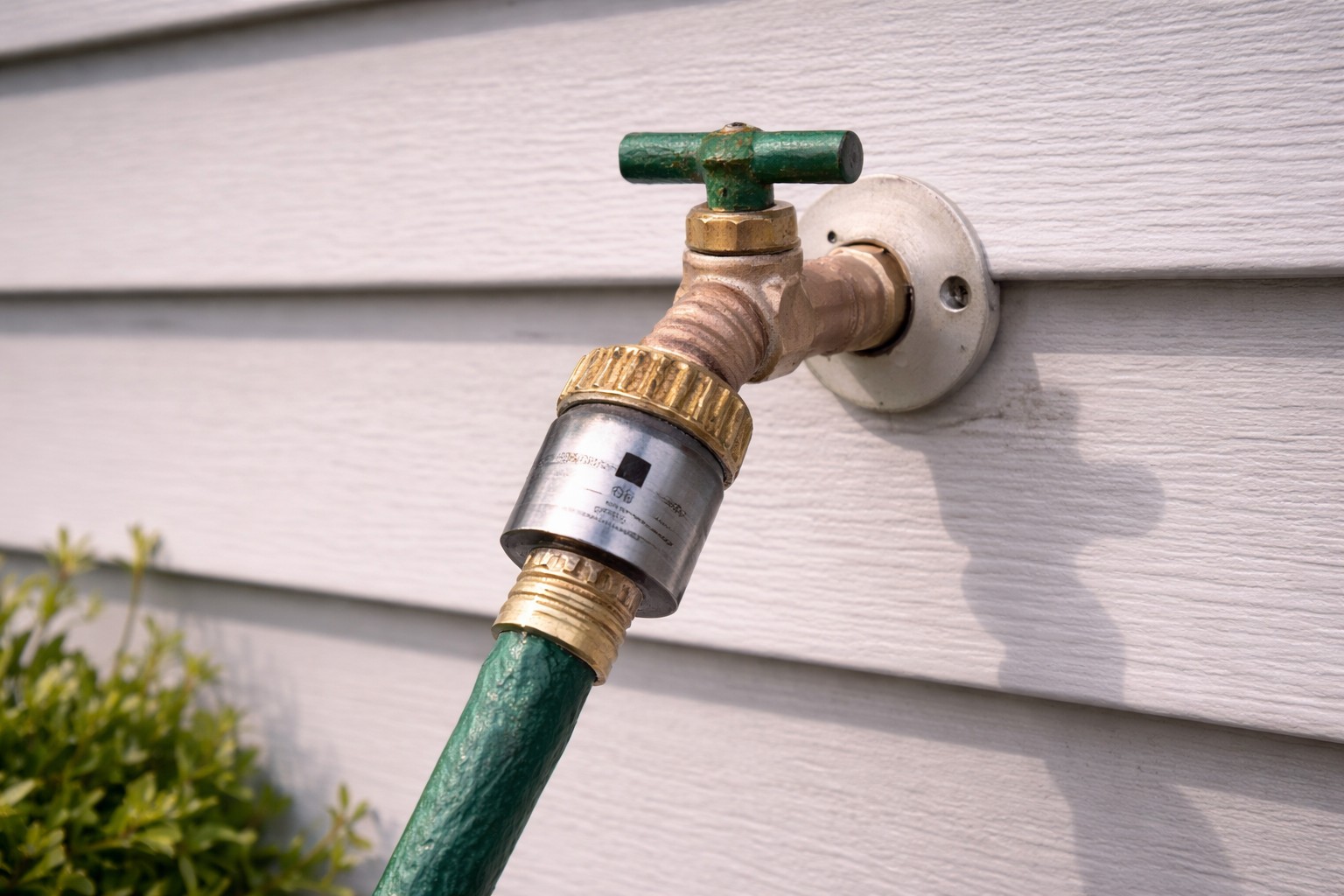
This hub covers backflow preventer problems such as constant dripping, random discharge, buzzing, and pressure loss—often after winter, sprinkler startup, or a recent installation.
It also includes symptoms that point to a failed device, as well as issues at vents and test ports.
Use the groups below to match what you’re seeing and open the most relevant article. For related topics see the sub-category hub: Water Entry, Shutoffs & Flow Control Systems.
Drips, leaks, and random discharge
When the device releases water, drips, or leaks from vents or ports.
-
Backflow preventer dripping constantly
A steady drip often points to a worn internal seat, debris lodged in the valve, or a small crack; many drips can be diagnosed visually and may be repairable without full replacement.
-
Backflow device leaking after winter
Leaks that appear after freezing conditions commonly result from freeze damage, shifted internals, or trapped debris that freed during thawing.
-
Backflow device releases water randomly
Intermittent discharges can be caused by pressure fluctuations, a sticking relief valve, or debris that intermittently prevents a complete seal.
-
Backflow vent leaking
Leakage at a vent is often due to a damaged vent cap, worn seal, or unusual downstream pressure forcing water out the vent path.
-
Backflow device only leaks at night
Nocturnal leaks are usually tied to nightly pressure changes or irrigation cycles that alter system balance and permit seepage.
-
Backflow preventer test port leaking
A leaking test port commonly means a worn plug, damaged gasket, or a loose fitting that needs tightening or replacement.
Freeze and winter damage
When freezing conditions crack or damage the device.
-
Backflow froze and cracked
Visible cracks or a burst casing after freezing usually require replacement; inspect for internal damage and surrounding water intrusion.
Low pressure and intermittent pressure loss
When pressure drops after install or the device causes intermittent flow issues.
-
Water pressure low after backflow install
New installs can show reduced flow due to incorrect model, trapped debris, or alignment problems that restrict the passageway.
-
Backflow device causing intermittent pressure loss
Intermittent loss often stems from a relief or check component that is sticking, allowing temporary drops in supply pressure.
Noise and hammer after install
Buzzing or hammer that starts after backflow installation.
-
Backflow preventer buzzing noise
Buzzing typically comes from vibrating internals or high-velocity flow through a loose component and may be reduced by securing parts or adjusting flow.
-
Water hammer after backflow install
New or different valve geometry can contribute to water hammer; the symptom shows as loud banging when flow stops suddenly and may require an arrestor or configuration change.
Sprinkler-related problems
Backflow symptoms tied specifically to irrigation systems.
-
Sprinkler system backflow leaking
Irrigation-linked leaks often appear at startup or cycling and can be related to check valves, zone valves, or debris entering the device.
-
Backflow failure after sprinkler startup
Startup stresses can reveal hidden damage, dislodge debris, or create pressure spikes that trip the device into discharge or lockout.
Won’t reset or suspected failure/reverse flow
When the device won’t reset or you suspect it has failed or is allowing reverse flow.
-
Backflow preventer won’t reset
A unit that won’t reset may have a stuck shuttle, debris preventing closure, or a failed spring—diagnosis often requires inspection or testing.
-
How to tell if backflow preventer failed
Key signs of failure include continuous discharge, contamination risk, or inability to hold pressure; confirmed failure usually needs a certified test or replacement.
-
Backflow preventer causing reverse flow
Reverse flow indicates the device is not blocking backpressure or back-siphonage; this is a serious condition that merits prompt attention.
All Articles in This Cluster
- Backflow preventer dripping constantly
- Backflow device leaking after winter
- Backflow device releases water randomly
- Backflow vent leaking
- Backflow device only leaks at night
- Backflow preventer test port leaking
- Backflow froze and cracked
- Water pressure low after backflow install
- Backflow device causing intermittent pressure loss
- Backflow preventer buzzing noise
- Water hammer after backflow install
- Sprinkler system backflow leaking
- Backflow failure after sprinkler startup
- Backflow preventer won’t reset
- How to tell if backflow preventer failed
- Backflow preventer causing reverse flow