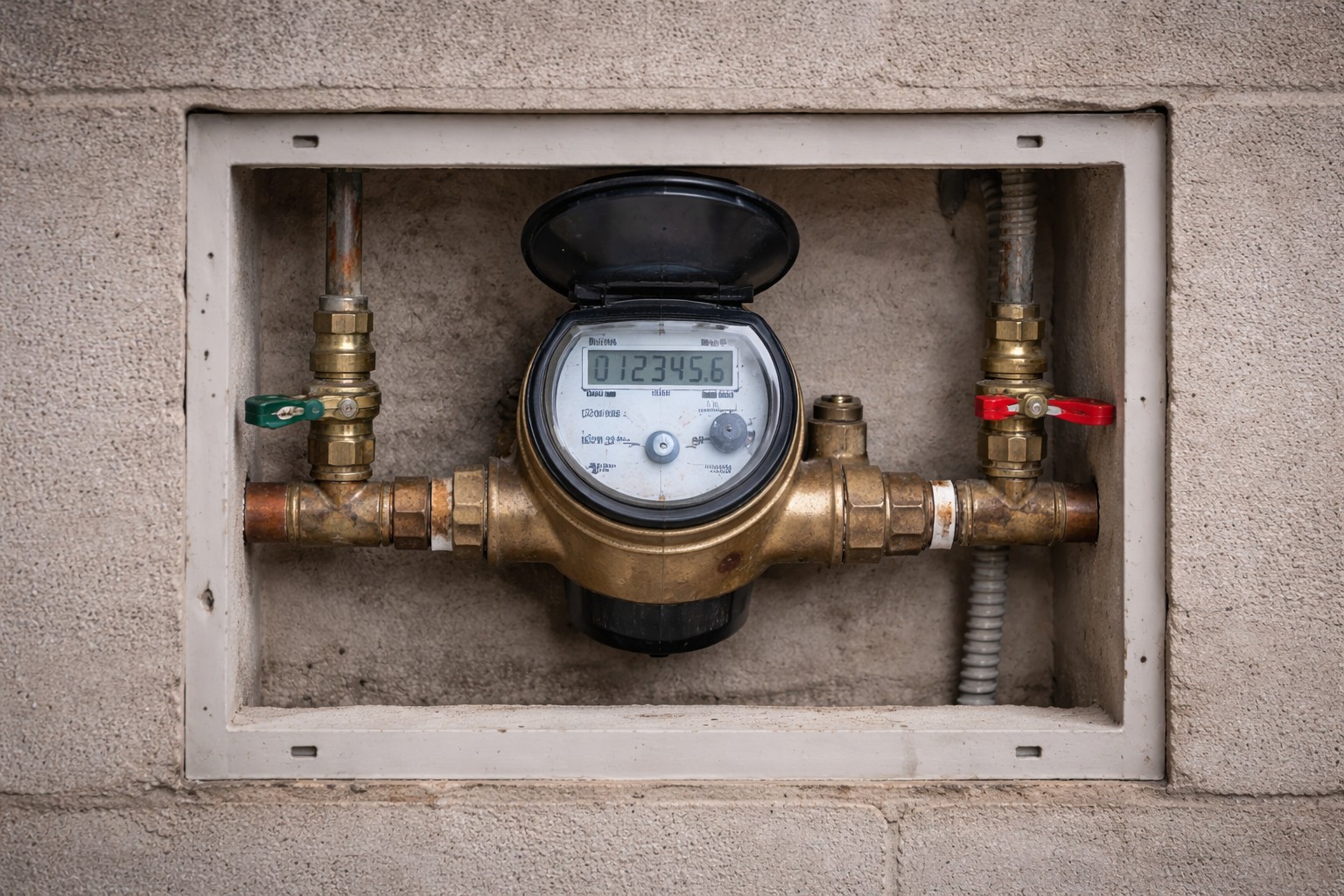
Choose by the original symptom and actual work record. Curb-stop, meter and household shutoff roles vary; this directory helps you report the right evidence without operating unknown utility hardware.
Choose the problem you already observed
Report uncontrolled water, soil loss or an unsafe opening promptly. These choices use existing observations; you do not need to operate a valve, reach into a box or reproduce a leak to choose.
- Water is standing or rising in the box: keep clear and prepare a useful report for the provider.
- The cover is missing or damaged: protect people from the opening without an improvised load-bearing repair.
- A reported shutoff did not stop the supply: tell the provider that effective isolation has not been established.
- A meter-area leak appeared after work: report the work record and visible conditions without tightening fittings.
Authority and safe access first
If fuel gas is suspected, leave the building or affected area immediately. Do not operate valves, switches, plugs, appliances or phones there. Call the gas emergency service from a safe location well away, and wait for responders’ clearance.
Keep away from wet electrical equipment. Do not touch wet appliances, plugs or switches, or enter water to reach a breaker. When no gas leak is suspected, power may be isolated only from a safely accessible dry location; otherwise call an electrician or emergency help. Wet equipment needs qualified assessment before it is used again.
Contact the water provider first to identify the actual component, ownership, permitted operation and responsible service. An absent seal or a property-line location is not permission to turn or repair a meter valve. Use a clearly identified private emergency shutoff only when operation is permitted, its purpose is known and access is dry and safe; do not force it. Leave unknown, shared and fire-service controls to their responsible provider.
Report uncontrolled water, soil loss, damaged pressure equipment or an unsafe opening promptly. Stay out of traffic, pits, flooded boxes and unstable ground. Do not pump, probe, thaw, tighten meter fittings or test a curb stop before the actual provider’s authority and safe service process are established.
Unable to isolate or use the control
- Curb Stop Won’t Fully Shut Off Water: First Response
Report ineffective isolation and use only appropriate safe containment; do not repeat curb-key trials.
- Curb Stop Won’t Fully Shut Off Water: Flow and Pressure
Interpret existing valve, meter and outlet observations without treating one of them as proof of safe service isolation.
- Meter valve reported stuck open
- Broken meter-valve handle
- House still has pressure after a reported shutoff
Water or damage around the meter and box
- Leak after city repair
- Leak on service turn-on
- Flooded curb box
- Existing warning signs without a failure prediction
- Missing or damaged cover
Freeze and finding the actual access
Pressure, delivery, air and sound after work
- Actual pressure and gauge conditions
- Reduced delivered flow
- Problem after city work
- Supply sputter after restoration
- Banging after a curb-stop event
- Squeal near the meter during demand
Meter use record
Why a house shutoff may leave the meter pressurized
Why a house shutoff may not isolate a meter
Requires the actual permitted isolation point.
May remain pressurized after a house valve closes.
Can limit household delivery without isolating the meter.
An open faucet does not verify every feed or chamber.
A house shutoff downstream of a meter may stop household flow while leaving the meter, its upstream valve and fittings pressurized. An open house faucet does not prove every connected feed or trapped chamber is isolated. Internal service requires the actual permitted upstream isolation, all other feeds/returns, controlled pressure release and verification, compatible retained parts and model-specific refitting/commissioning. A towel, bucket, slow turn or gloves is not isolation.
Useful evidence for the provider
- Actual work notice, device/model and service record available from safe access.
- First wet point or original sound/event, not a deliberately repeated leak or hammer test.
- Suitable existing meter/gauge readings with actual location, units and operating state.
- Known private/shared/fire or other feeds and who has confirmed ownership and permitted operation.
Do not treat a meter response, cover, property line or rust patch as a diagnosis or responsibility boundary. For a new water-quality change, follow actual provider use/sampling directions; steady clear flow is a different question from completed safe service.
Broader directory: Water Entry, Shutoffs & Flow Control Systems.