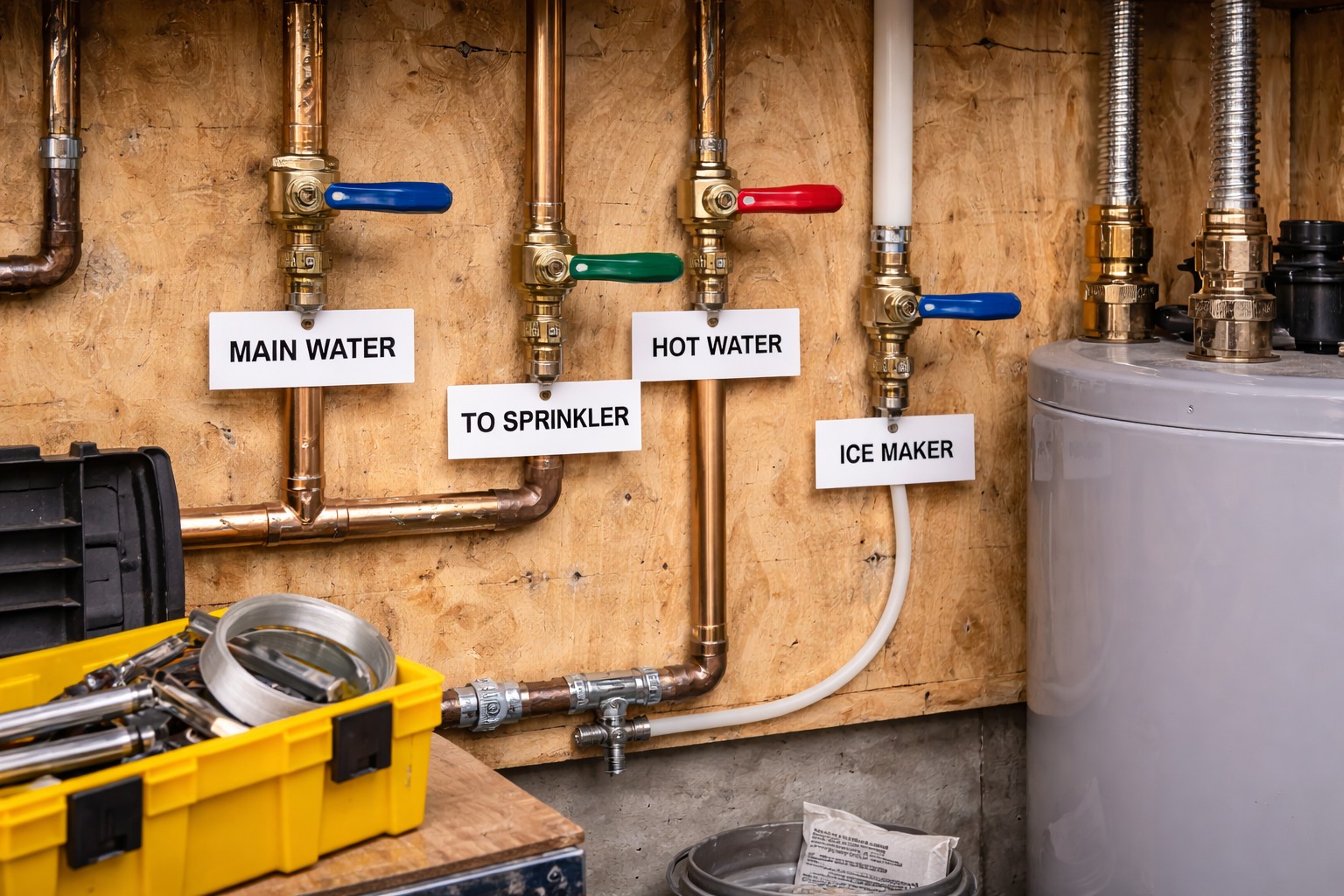
This hub covers common ways a home’s main water shutoff can fail or behave oddly—stuck handles, leaks at the stem, valves that won’t fully stop flow, and changes after the valve is used or replaced. It also covers situations like a missing or hidden shutoff, and what to watch for when a shutoff is noisy or causes hammer after it’s operated.
Use the groups below to match what you’re seeing (stuck, won’t stop flow, leaking, noisy, or pressure changes) and open the most relevant article. For related topics in the same section, see the sub-category overview: Water Entry, Shutoffs & Flow Control Systems
Stuck, broken, or hard to operate
Problems that prevent normal operation, from a handle that won’t turn to a valve frozen in cold weather.
-
Main water shutoff valve won’t turn
Steps to identify why the valve is seized and what to try before calling a pro, including gentle techniques to avoid breaking the valve.
-
Main shutoff valve stuck halfway
How to diagnose and deal with a valve that won’t reach full open or closed positions and the risks of forcing it.
-
Main shutoff handle broke off
Options for temporary control and safe next steps when the handle shears, including access and replacement considerations.
-
Main shutoff won’t reopen after being closed
Common causes why a valve can be closed but refuse to open again, and what to try to restore operability without causing damage.
-
Main shutoff frozen in winter
Signs a shutoff has frozen, safe thawing methods, and preventive steps to reduce recurrence in cold climates.
-
Main shutoff buried behind finished wall
How to locate or access an inaccessible shutoff and short-term workarounds when cutting into finishes is necessary.
-
Main shutoff valve spins freely but does nothing
What it means when the stem spins without changing flow and how internal failure differs from external handle damage.
-
How to exercise main shutoff safely
Simple, safe routines for operating the shutoff periodically to keep it working and what to watch for when you do.
Won’t fully stop water
Situations where closing the valve does not shut off all flow or isolates only part of the house.
-
Water still flows after main shutoff is closed
Common paths that let water bypass a closed shutoff and troubleshooting steps to locate the leak source or alternate feed.
-
Main shutoff only stops hot water
Why a shutoff might stop hot but not cold supply and how separate plumbing runs or mixing devices can cause that behavior.
Leaks after use or replacement
Drips and seepage that appear at the stem or fittings after operating or replacing the shutoff.
-
Main shutoff leaking from handle
Typical causes of stem or packing leaks and quick fixes to reduce dripping until a permanent repair can be made.
-
Main shutoff dripping after being reopened
Why a valve can begin to leak when it’s used again and how debris, seating damage, or loose packing contribute.
-
Main shutoff replacement caused new leaks
What to check after a replacement if new leaks appear—common installation issues and how to confirm proper sealing.
Noise, vibration, and hammer
Audible or physical disturbances tied to the shutoff or its operation.
-
Main shutoff buzzing or vibrating
Causes of vibration and buzzing at the valve, including flow-induced vibration and loose mounting.
-
Main shutoff squeals when turning
Why valves can squeal during operation and what that usually indicates about internal wear or trapped debris.
-
Main shutoff causing hammer after use
How rapid valve movement or system dynamics can produce water hammer and basic remedies to reduce the shock.
Pressure changes and failure clues
Signs that suggest a failing valve or pressure issues after service or replacement.
-
Water pressure low after main shutoff replacement
Reasons pressure may drop after changing a shutoff, including incorrect valve type or partial obstruction.
-
How to tell if main shutoff is failing
Key indicators of a failing shutoff and simple checks to decide if replacement is advisable.
-
Gate valve vs ball valve main shutoff failures
Differences in failure modes between common valve types and what each tends to look like in everyday use.
-
Shutoff valve corroded internally
How internal corrosion affects performance and signs that corrosion—not external wear—is the root cause.
-
House has no visible main shutoff valve
Where mains are commonly hidden and steps to locate the service shutoff or alternative isolation points.
All Articles in This Cluster
- Main water shutoff valve won’t turn
- Main shutoff valve stuck halfway
- Main shutoff handle broke off
- Main shutoff won’t reopen after being closed
- Main shutoff frozen in winter
- Main shutoff buried behind finished wall
- Main shutoff valve spins freely but does nothing
- How to exercise main shutoff safely
- Water still flows after main shutoff is closed
- Main shutoff only stops hot water
- Main shutoff leaking from handle
- Main shutoff dripping after being reopened
- Main shutoff replacement caused new leaks
- Main shutoff buzzing or vibrating
- Main shutoff squeals when turning
- Main shutoff causing hammer after use
- Water pressure low after main shutoff replacement
- How to tell if main shutoff is failing
- Gate valve vs ball valve main shutoff failures
- Shutoff valve corroded internally
- House has no visible main shutoff valve