Quick Answer:
When closing the main shutoff stops only the hot side, the likely causes are a secondary isolation valve at the water heater or a cross-connection/circulation loop that keeps cold water flowing to fixtures. Check the cold inlet valve at the heater and inspect any crossover or recirculation lines before taking further action.
Why This Happens
Most homes have a shutoff where the supply enters the house. If closing that stop valve appears to cut hot water but cold keeps flowing, one of two common issues is present:
- A secondary isolation valve on the cold inlet to the water heater is closed or partially closed, so the heater has been isolated separately from the house shutoff.
- There is a crossover between hot and cold — a recirculation loop, mixing valve, or a failed single-handle faucet — that lets cold water bypass the main shutoff and continue to fixtures through the hot piping. This is the reason you might notice water still flows at cold taps when you expect everything to be off.
Step-by-Step What to Do
1. Confirm which valve you closed
Make sure the valve you turned is the actual main supply. Some homes have separate shutoffs (street side, meter, or inside) and a valve near the water heater that only affects the heater. If you have multiple shutoffs, open the main back and try the others one at a time while watching faucets.
2. Locate and check the water heater isolation valve
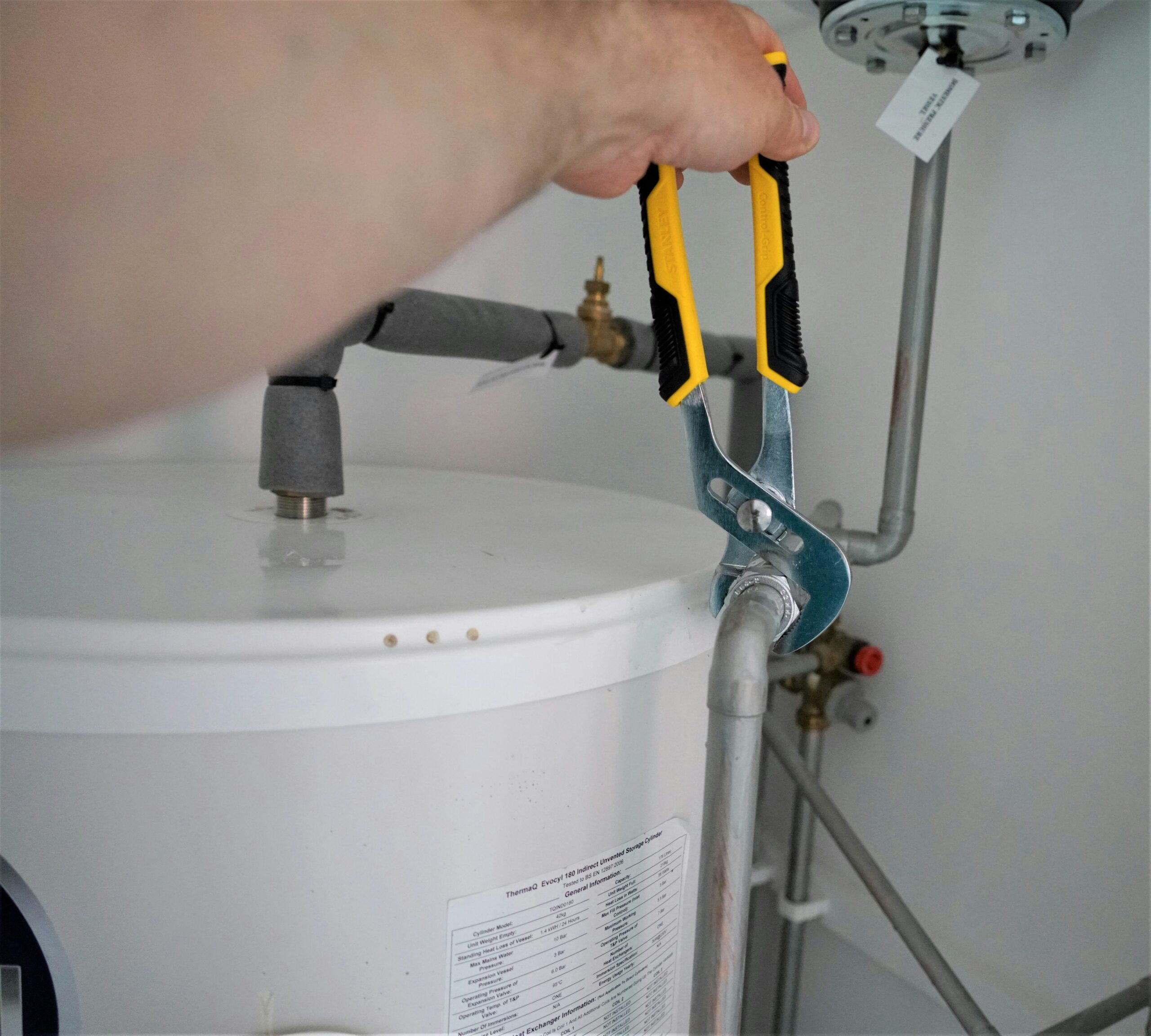
Find the cold inlet pipe to the water heater (usually marked or on the top). There should be a valve there. Verify its position:
- Open the heater cold isolation valve fully if it’s closed or partly closed.
- Operate it gently; avoid forcing a stuck valve. If it spins without changing flow, it may be broken and needs replacement.
3. Test isolation behavior
With the main shutoff open, close the water heater cold inlet valve and then open a cold tap elsewhere. If cold stops at fixtures when that heater valve is closed, the secondary isolation is the reason the heater was being interrupted.
4. Inspect for crossover lines and recirculation
Look for signs of a recirculation loop or mixer valves:
- Small pump on hot piping near the heater or under cabinets (recirculation pump).
- Thermostatic mixing valves on the hot outlet or near the water heater.
- Single-handle faucets or a shower valve that could be leaking internally and allowing hot/cold crossover.
If you find a recirculation pump, it may be powered and pumping cold water through the hot line when the main is shut. Turn the pump off and test the shutdown behavior again.
5. Narrow down the location of the crossover
Isolate sections by closing local shutoffs (shower, under-sink valves) and testing until the crossover stops. This helps identify whether the issue is a specific fixture, a mixing valve, or the recirculation system.
6. Address the actual problem
Depending on what you find:
- Replace or repair a faulty isolation valve at the heater if it’s damaged.
- Shut off power to a recirculation pump and have it serviced if it’s pushing water when it shouldn’t.
- Repair or replace a faucet or shower cartridge that allows internal crossover.
What Not to Do
- Do not drain the water heater assuming the main is closed. If the main isn’t actually stopping all flow, draining can cause flooding or scalding and may not work as expected.
- Do not force rusted or stuck valves—forcing can break them and cause a sudden surge of water.
- Do not open gas/electric panels on a water heater or tamper with the heater’s power without turning off fuel or electricity and knowing what you’re doing.
When to Call a Professional
Call a licensed plumber if:
- You can’t locate the secondary isolation valve or identify the crossover source.
- Valves are broken, leaking, or won’t operate safely.
- You find a recirculation pump or mixing valve that needs electrical work or replacement — a pro can diagnose and repair it without risking damage.
- You notice banging or pressure surges after operating the shutoff — this could indicate a check-valve or pipe-anchoring issue and may lead to water hammer; seek help if you see persistent problems with the shutoff or experience main shutoff hammer.
Safety Notes
- Wear gloves and eye protection when working with valves and piping.
- Turn off power to the water heater (electric breaker or gas control) before doing any work that could expose wiring or burner components.
- Work slowly when operating older valves—abrupt movement can break parts and release water under pressure.
- If you’re unsure about gas, electrical, or structural issues, stop and call a professional to avoid injury or damage.
Common Homeowner Questions
- Why does closing the main sometimes not stop all water? Because there can be secondary isolation valves, recirculation loops, or cross-connections that bypass the main shutoff.
- Can I fix a stuck heater valve myself? Only if it’s accessible and you’re comfortable; otherwise call a plumber to avoid breaking the valve or causing a leak.
- Is a recirculation pump dangerous? Not usually, but it can keep water moving and prevent a full shutoff; power should be turned off before inspecting or servicing it.
For more related articles, see the Main Shutoff Valve Failures hub.