Quick Answer:
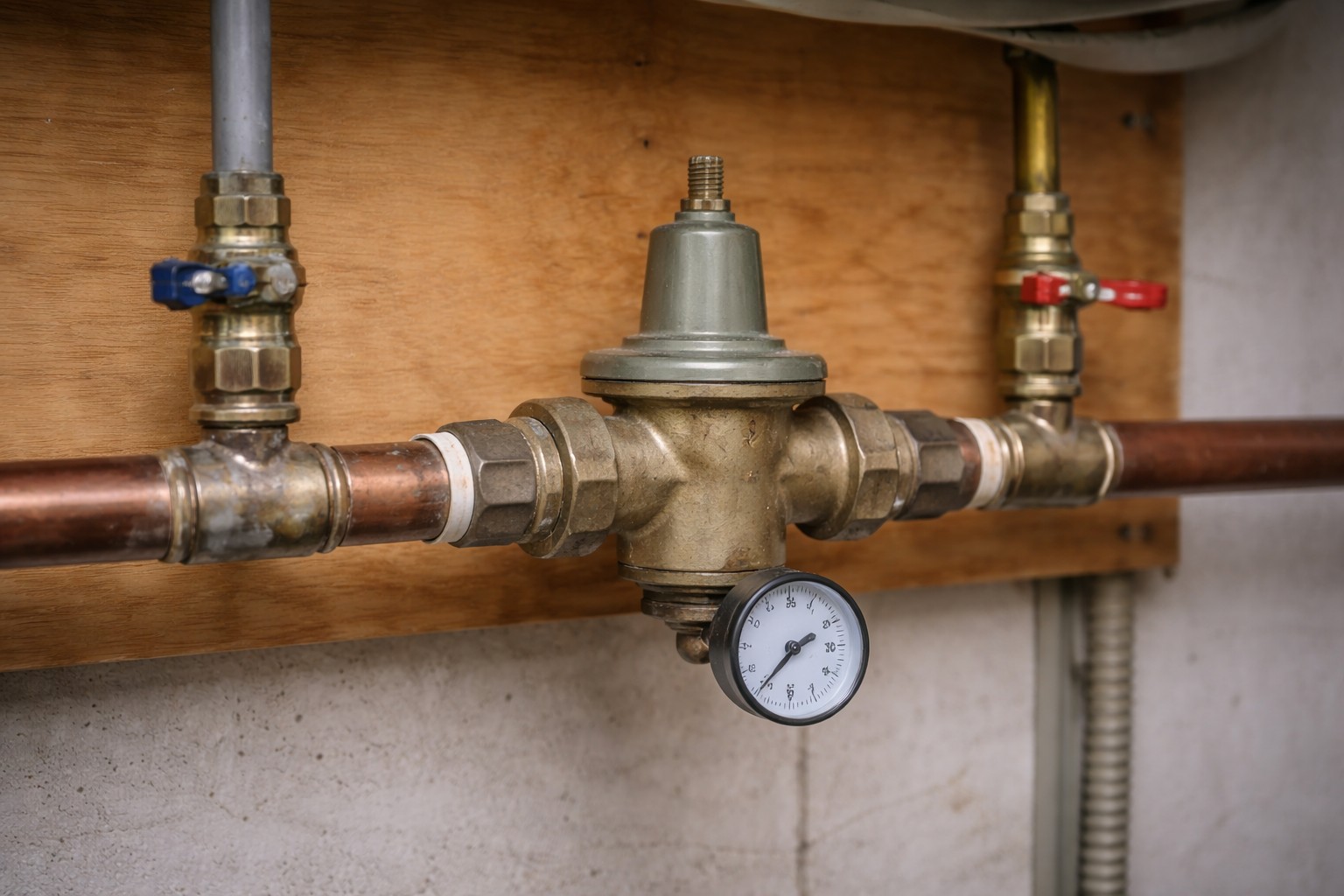
If hot pressure wanders up and down unpredictably, start by checking the hot and cold flow at the same fixture and watch how your water heater behaves when the change happens. Fluctuating hot pressure is usually a problem with the hot supply path (heater, mixing valve, or hot-side regulator/check valve) rather than the main cold supply. Try simple isolation checks first and call a pro if the heater seems to be cycling with the pressure changes.
Why This Happens
- Thermostatic mixing valves or pressure-balancing valves can stick or fail, letting hot pressure vary independently of cold.
- Sediment or mineral buildup inside the heater or an inline hot-side valve can restrict flow intermittently.
- If the heater or its pump cycles on and off while the pressure drops, this points to a heater-related cause — Pressure drops only when heater running.
- A failing hot-side pressure regulator or a bad check valve can cause the hot side to wander while the cold side stays steady.
- Air trapped in the hot lines or a partial obstruction at a single fixture can create uneven flow that looks like pressure fluctuation.
Step-by-Step What to Do
1. Reproduce and note the exact symptom
- Turn on a fixture that gives you the problem and watch how the hot flow changes (does it pulse, steadily fall, or drop only at times?).
- Write down when it happens: when the shower runs, when another appliance cycles, or randomly.
2. Compare hot vs cold at the same fixture
- Open the hot and cold taps individually at full flow and compare feel and strength. If cold is steady and hot fluctuates, the issue is on the hot side.
- Do this at the same fixture so supply-side differences don’t confuse the test.
3. Observe the water heater during the fluctuation
- When the pressure changes, watch the heater: does it turn on or off, make unusual noises, or show error lights? Note timing and any pattern.
- If the problem started or changed after a recent heater work or replacement, that’s an important clue — **Hot water pressure loss after heater install**.
4. Try simple isolation checks
- Close other hot taps and appliances to see if a specific fixture or appliance is causing the pressure change.
- Check aerators and faucet cartridges for blockage; remove and inspect if comfortable doing so.
5. Look for valves or regulators on the hot line
- Locate any mixing valves, balancing valves, or pressure regulators serving the hot line and verify they’re fully open and not leaking.
- Do not attempt internal repairs on gas burners or sealed heater components unless you are qualified.
6. Decide next steps based on findings
- If the problem follows the heater cycling, or you can’t isolate a single fixture, it’s time to call a professional.
- If a single fixture or blocked aerator fixed it, monitor for recurrence before assuming the job is done.
What Not to Do
- Do not replace cold-side plumbing for a hot-side-only problem.
- Do not open or modify gas-fired heater components or gas lines yourself.
- Do not ignore signs of leaks, strong odors, or heater error codes — these need prompt attention.
When to Call a Professional
- If the heater appears to be causing the pressure change (cycling, error lights, or unusual noises).
- If the fluctuation is sudden and severe, or you find leaks when inspecting valves and connections.
- If you’re not comfortable isolating valves, testing mixing valves, or working around the heater, call a licensed plumber or service tech.
Safety Notes
- Hot water can scald — test flows carefully and reduce temperature before disassembly.
- Turn off power to electric heaters or follow manufacturer guidance before doing any electrical work. For gas heaters, do not work on gas components yourself; shut off gas only if you are trained to do so and a leak is obvious.
- Relieve system pressure before opening any plumbing joints; use basic personal protective equipment like gloves and eye protection.
Common Homeowner Questions
- Why does only the hot side fluctuate?
Most often because something on the hot side (heater, mixing valve, or hot-side regulator) is restricting or varying flow. - Can I fix it by running the taps or bleeding the line?
Running taps can clear trapped air; it’s worth trying, but persistent or repeating issues need professional diagnosis. - Will a new water heater always fix this?
Not always. If the problem is a valve, regulator, or piping on the hot side, replacing the heater may not help; if the issue began after a new heater was installed, contact the installer.
Related Articles
If you’re troubleshooting a similar symptom, these guides may help:
For the full directory, see Pressure Fluctuates Only on Hot Water.