Quick Answer:
If water pressure drops only during the busiest evening hours while the rest of the day is normal, start by logging pressure with a gauge at several times and compare your readings to local demand patterns. The goal is to confirm whether the issue is municipal supply timing or an in-home component before making repairs.
Why This Happens
City water supply systems experience higher demand at predictable times, often when people return home, run showers, washers and dishwashers, and when irrigation systems operate. When the public system is strained, pressure at individual homes can fall even though plumbing and fixtures are otherwise fine.
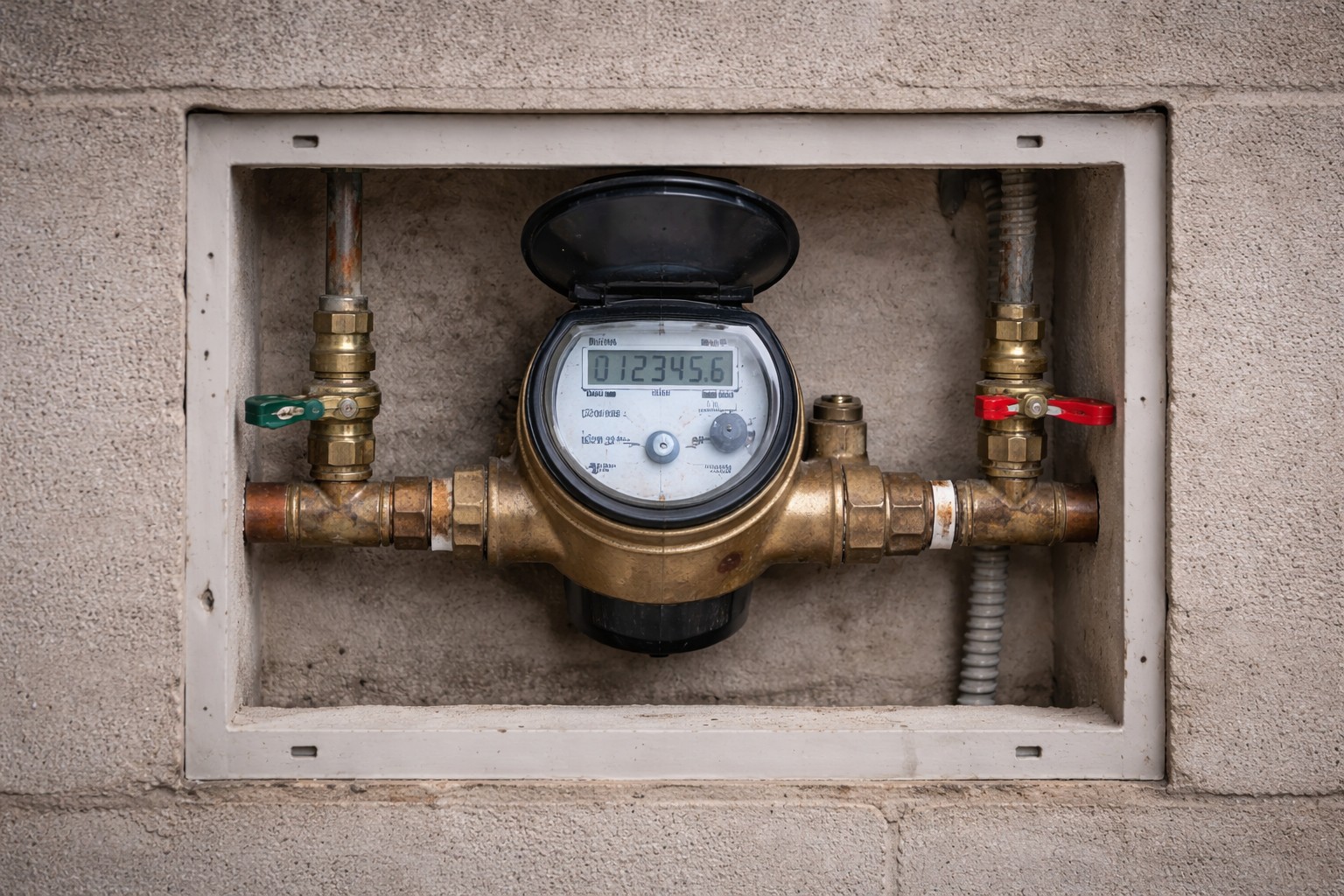
Patterns like Pressure drops when city demand rises are common in areas with aging mains, small distribution zones, or large evening usage. Smaller pumps or storage tanks in the municipal system can’t maintain the same pressure during peaks, so pressure at the meter falls for customers downstream.
Step-by-Step What to Do
Step 1 — Gather a pressure gauge and a simple log
- Get a threaded water pressure gauge that fits an outdoor hose bib or washing machine connection.
- Prepare a simple log sheet or phone note with time, date, and reading fields.
Step 2 — Take baseline readings at different times
- Measure pressure when you expect normal flow (early morning and mid-afternoon).
- Measure again during the suspected low-pressure period in the evening. Record the exact time and whether appliances were running.
- Repeat for a few days to confirm a pattern.
Step 3 — Correlate your log with city demand patterns
- Call your water utility or review any local notices about peak usage times, planned maintenance, or hydrant flushing that might match your low-pressure window.
- Ask a neighbor to take a quick reading at the same time to see if the effect is system-wide.
- If you see consistent drops during specific hours, this suggests a distribution-level issue rather than a single fixture.
Step 4 — Inspect in-home pressure controls and leaks
- Check the pressure-reducing valve (PRV) near your main shutoff for obvious signs of failure or large pressure swings.
- Look for hidden leaks (unusually wet areas, higher water bills) that could worsen under low-supply conditions.
- If the PRV seems to hold pressure steady at non-peak times but fails during peaks, that points back to the supply.
Step 5 — Note special timing patterns
- If you notice issues mainly very late, record those times too — sometimes supply pressure drops after midnight when tanks and pumps cycle differently. If you see patterns like Pressure drops late at night, note exact hours for reporting to the utility.
What Not to Do
- Do not replace in-home plumbing before confirming municipal timing patterns.
- Do not assume a single fixture is the cause without measuring system pressure at the meter.
- Do not open or adjust municipal valves, hydrants, or other city equipment yourself.
- Do not ignore a suspected leak; delaying can cause damage and mask true pressure behavior.
When to Call a Professional
- Call a licensed plumber if you confirm low pressure at the meter at non-peak times, suspect a leak, or identify a failing PRV that needs replacement.
- Contact the water utility if multiple homes show the same pattern or your recorded times match known peak-demand hours — the utility can confirm supply issues or advise on scheduled work.
- Get professional help if you’re unsure how to interpret gauge readings or if adjusting valves might risk damage to your system.
Safety Notes
- Turn off the house main before working on plumbing downstream. Wear eye protection when disconnecting fittings under pressure.
- Use a pressure gauge rated for household systems; do not exceed the gauge’s maximum.
- Avoid climbing on wet surfaces to access outdoor spigots. If work requires excavation or cutting into supply lines, hire a pro.
Common Homeowner Questions
- Why is pressure fine most of the day but weak in the evening?
High evening demand on the municipal system is the usual cause; logging pressure at set times helps confirm this. - Will replacing my pipes fix evening-only pressure drops?
Not usually. If the supply to your meter drops during peaks, replacing internal piping won’t help; confirm municipal patterns first. - Can I adjust the PRV myself to increase evening pressure?
You can adjust a PRV if you’re comfortable, but do so cautiously and consider a plumber if you’re unsure — an improper setting can stress appliances.
Related Articles
If you’re troubleshooting a similar symptom, these guides may help:
For the full directory, see Water Pressure Changes by Time of Day.