Quick Answer:
If water pressure collapses late at night while no one in the house is using water, the most common cause is a change in municipal system pressure or a utility pump/tank cycle. Before replacing in-home parts, log pressure with a gauge at different times and compare those readings with local water authority patterns to confirm whether the issue is inside your house or in the mains.
Why This Happens
City water systems run pumps and refill storage tanks on schedules. Those cycles can lower pressure when a pump pauses or a tank draws down. Nearby irrigation, commercial use, or maintenance work can also change pressure at night. Less commonly, a slow leak on the main or a failing pressure-reducing valve (PRV) in your home can cause drops that show up when demand elsewhere is high.
Step-by-Step What to Do
1. Prepare a simple pressure log
Buy an inline water pressure gauge (it’s inexpensive) or use a hose-thread gauge. Record a baseline: check and note the pressure at the hose bib or at the water heater connection. Log these readings over several nights and at different daytime hours.
- Suggested times: midnight, 2 a.m., 4 a.m., 6 a.m., noon, and 4 p.m.
- Record date, time, pressure (psi), and any nearby water use events.
2. Compare night vs. day readings
Look for patterns in your log. If pressure is normal during the day and drops only late at night, that pattern points to the distribution system. If you see the opposite — pressure spikes at night — note that too. A useful way to describe findings when you talk to the utility or a plumber is whether you have Pressure fine midday but poor at night or Pressure high only overnight.
3. Check neighbors and the PRV
- Ask a neighbor to check their tap pressure at night. If they see the same drop, it’s almost certainly a municipal issue.
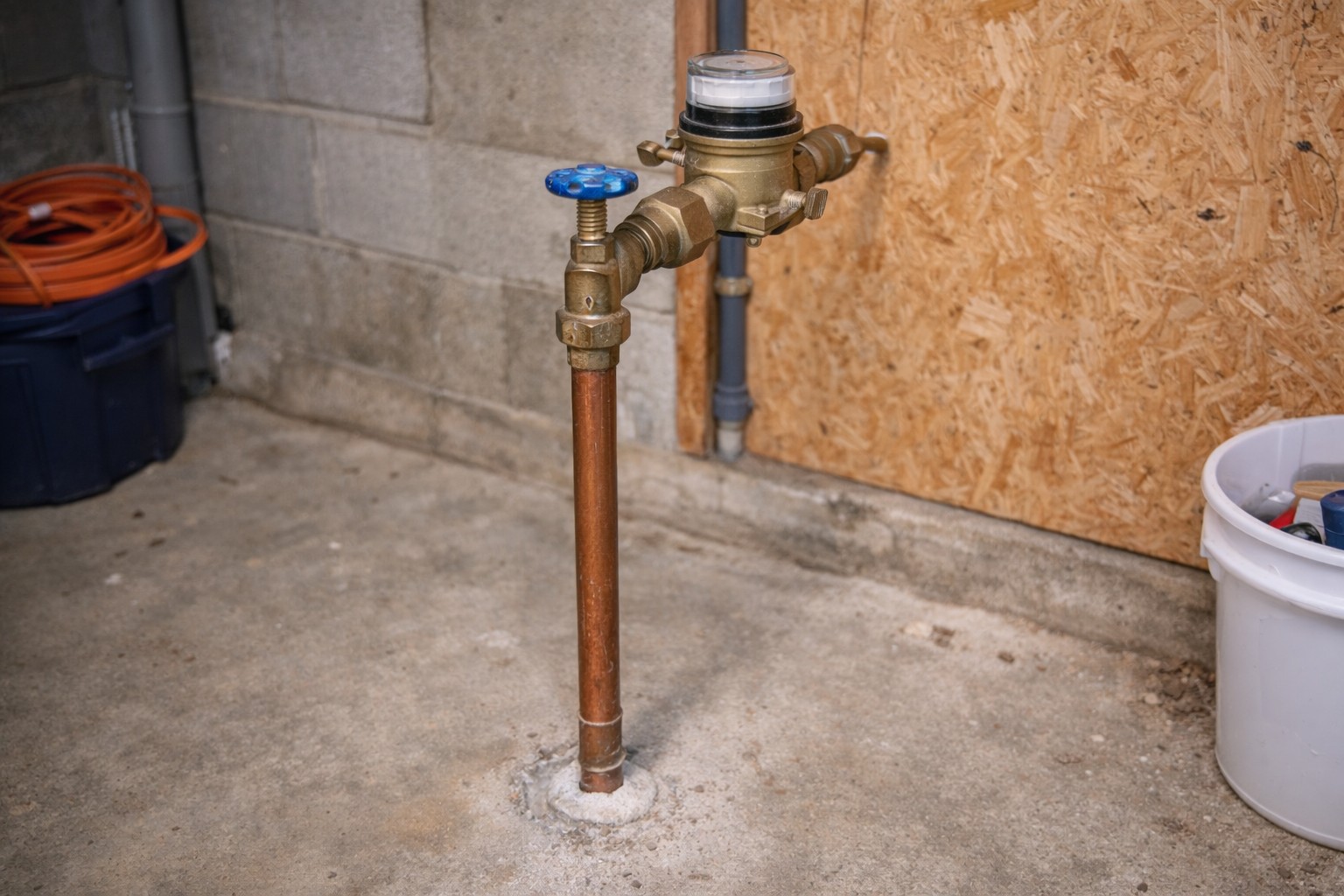
- Locate your home’s PRV (if present) and visually inspect it for obvious damage or leaks. Do not disassemble it yourself unless you are experienced.
4. Correlate with city demand patterns
Contact your local water utility or check their published schedules or outage notices. Many utilities can tell you whether pump cycles, tank refills, or maintenance occur overnight. Share your log to help them identify whether system behavior matches your drops.
5. Document and escalate if needed
If your log and neighbor checks show the same problem, file a report with the water utility and include your readings and times. If the issue seems limited to your property after logging, share the log with a licensed plumber for diagnosis.
What Not to Do
- Do not replace in-home plumbing before confirming municipal timing patterns.
- Do not assume a single fixture report means the whole house is affected—log multiple points.
- Do not open or modify the main connection to the street on your own; that work is typically the utility’s responsibility.
- Do not ignore the pattern; undocumented or intermittent drops are harder to resolve later.
When to Call a Professional
Call your water utility if neighbors see the same pressure collapse or if your log shows a system-wide pattern. Call a licensed plumber if:
- The pressure drop is isolated to your house after you’ve logged readings and checked neighbors.
- You find a suspected leak on your side of the meter (wet spots, soggy ground, or continuous meter movement when no water is on).
- Your PRV appears damaged or you have unsafe pressure spikes.
Safety Notes
- Turn off the main shutoff before doing any in-home repairs. If you are unsure where it is, ask a professional.
- Do not work on pressurized lines without proper tools and experience; sudden releases can cause injury and water damage.
- If you suspect contamination or backflow, stop using the water for drinking and contact the utility or a licensed plumber immediately.
Common Homeowner Questions
- Why only at night? Utilities often run pumps and refill tanks on schedules, and demand patterns from irrigation or businesses can change pressure overnight.
- How long should I log pressure? Log for several nights and include daytime checks—three to seven days gives a clearer pattern.
- Will a plumber fix municipal pressure? A plumber can diagnose whether the issue is in your plumbing; the utility must fix problems on the distribution side.
Related Articles
If you’re troubleshooting a similar symptom, these guides may help:
For the full directory, see Water Pressure Changes by Time of Day.