Quick Answer:
If water feels weak only during the first use of the day, it’s often tied to how the city supply behaves during morning demand. Start by measuring and recording system pressure at different times to see the pattern before changing anything inside the house.
Why This Happens
Many utility systems see a morning surge when people shower, fill kettles, and run appliances at once. That brief peak can lower pressure at the end of the line or where the municipal mains connect to your neighborhood. Other causes include a pressure-reducing valve that isn’t set correctly, a partial blockage at the service line, or scheduled flushing or maintenance by the water utility. Comparing pressure readings across times will show whether the issue is local to your plumbing or caused by wider demand.
If you see problems at different times of day, check related patterns such as **Pressure weak during evening peak**. If pressure comes back overnight, you may also want to read about **Pressure improves after midnight** to compare behavior.
Step-by-Step What to Do
Step 1 — Note when and where the problem happens
- Write down which fixtures are weak (kitchen, shower, outside hose) and exactly what times you first notice low pressure.
- Note whether hot and cold are both affected. That helps separate water supply issues from a hot-water-only problem.
Step 2 — Measure system pressure
- Buy or borrow a simple water pressure gauge that screws onto a garden hose or washing machine valve.
- Attach the gauge at a convenient outdoor spigot or laundry supply and take a reading before the morning peak, during the first use, and later in the day.
- Log pressure with gauge at different times for several days. Aim for at least a week to capture repeatable patterns.
Step 3 — Correlate readings with municipal demand
- Compare your logged readings to the times you know neighbors use water. Call the water utility and ask about known peak hours, planned works, or storage tank schedules.
- Correlate with city demand patterns so you can tell whether low pressure is a neighborhood issue or something in your house.
Step 4 — Quick checks inside the home
- Look for obvious leaks (wet spots, high water meter activity when everything is off).
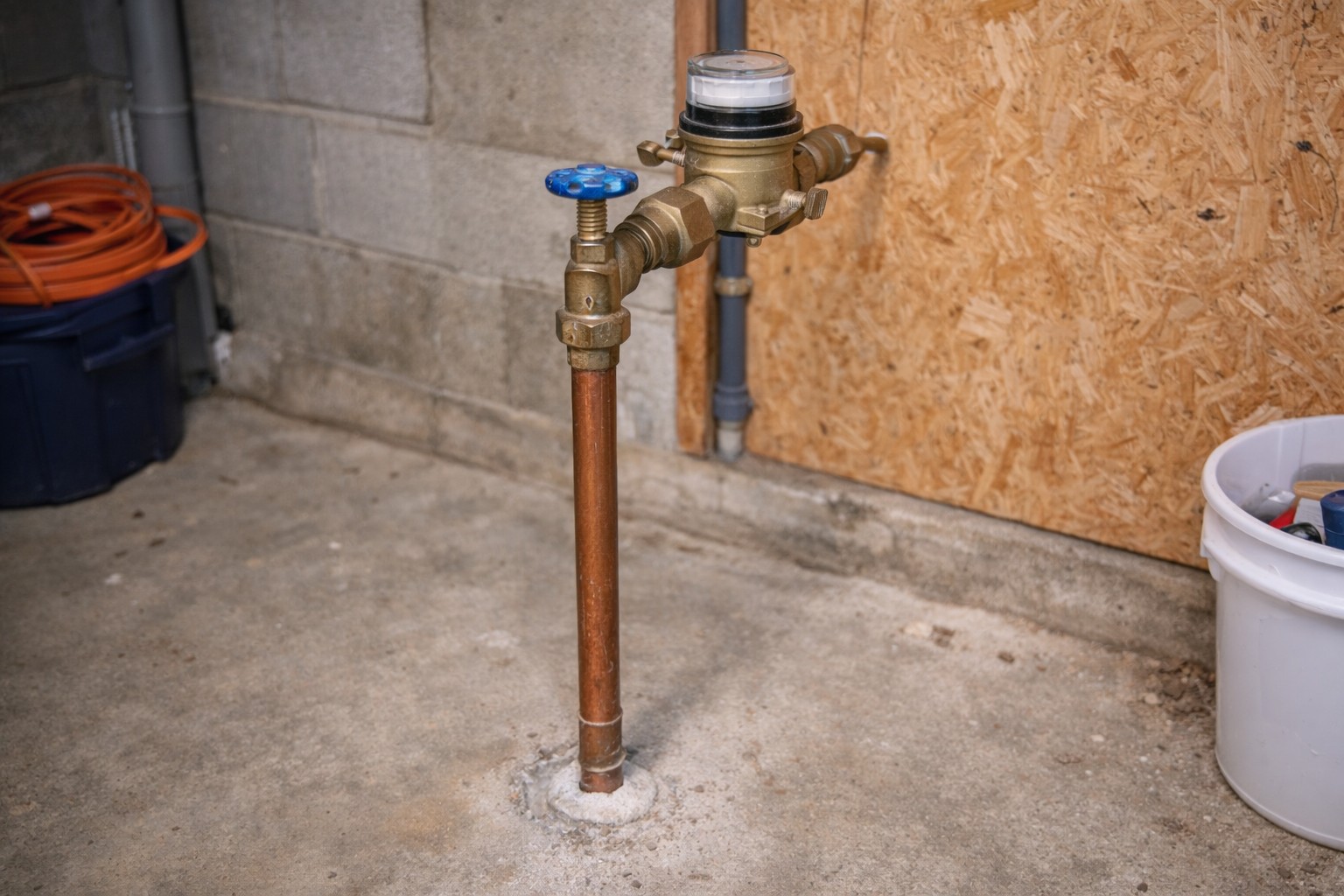
- Check the main shutoff and any visible pressure-reducing valve (PRV) for loose components or obvious damage. Do not attempt major adjustments if you are unsure.
- Test an outdoor hose bib and an upstairs fixture to see if the drop is uniform through the house.
Step 5 — Share findings and decide next steps
- If your data points to the city system (low only during morning peaks across the neighborhood), contact the water utility with your logged readings.
- If pressure is low all day or you find a leak or failing PRV, schedule a plumber and provide your pressure log so they can diagnose efficiently.
What Not to Do
- Do not replace in-home plumbing before confirming municipal timing patterns.
- Don’t start major plumbing replacements or dig up service lines based on a single morning of low pressure.
- Avoid adjusting the main water meter or city-owned valves yourself — those are handled by the utility.
When to Call a Professional
- Call a licensed plumber if pressure stays low all day, if multiple fixtures are affected continuously, or if you find active leaks.
- Call the water utility if your measurements show low pressure only during predictable city peak times or if multiple neighbors report the same pattern.
- If pressure fluctuates rapidly, pipes make new loud noises, or pressure is dangerously high, get professional help right away.
Safety Notes
- Turn off water at the main before doing any work on your service line or indoor valves.
- Use a proper pressure gauge and follow manufacturer instructions — do not improvise connections that can leak or pop off under pressure.
- If you are unsure about valves or tanks, stop and call a professional. Avoid electrical contact with wet areas during testing.
Common Homeowner Questions
- Why does it happen only in the morning? Often because many people use water at the same time, lowering pressure in the distribution system.
- Will new pipes fix it? Not necessarily—only if house piping or fittings are the cause. Confirm municipal timing patterns first.
- How long should I log pressure? At least a week, including several mornings and evenings, to capture repeatable trends.
Related Articles
If you’re troubleshooting a similar symptom, these guides may help:
For the full directory, see Water Pressure Changes by Time of Day.