Weak delivery during the first morning use can involve the current household demand, fixture/hot-water path, automatic use or the supplier. Morning timing alone does not establish a municipal peak or clear the house’s controls.
Respond before collecting more data
Keep away from wet electrical equipment. Do not touch wet appliances, plugs or switches, or enter water to reach a breaker. When no gas leak is suspected, power may be isolated only from a safely accessible dry location; otherwise call an electrician or emergency help. Wet equipment needs qualified assessment before it is used again.
For sudden severe loss, no supply, an active leak, unsafe temperature, abnormal high pressure or a protective shutdown, stop affected use and seek prompt supplier/installer/plumbing help. A week of readings, matching neighbors or constant symptoms is not required. Control a leak only from safe dry access with an identified owner valve without force; leave utility equipment and unknown controls to the responsible provider. Do not repeat the fault or disable needed services to make a log.
Keep this pattern’s useful evidence
- Exact first-use time and one outlet versus broader hot/cold delivery, without turning on more outlets to create a severe drop.
- Ordinary overlapping showers/fills/irrigation, actual control schedules and existing supplier notices.
- Comparable readings at the same known supplied point, including whether the first observation was flow rather than pressure.
First use is a distinct operating condition
An overnight low-use condition and a busy morning may have different heating, valve and simultaneous-demand states. One weak hot outlet does not describe the whole service. Preserve the original symptom and any stored alert rather than calling it normal because it follows the clock. A direct-acting household regulator is not automatically a morning timer.
Report the pattern without waiting a week
Ask the supplier about actual events and expected supply at the property, and ask a plumber/installer to assess household controls where appropriate. Both investigations can be useful together. A matching neighbor report supports the complaint but does not measure this home or exclude a local restriction/leak. No major equipment replacement or regulator adjustment is selected from morning timing alone.
Use comparable measurements and safe service
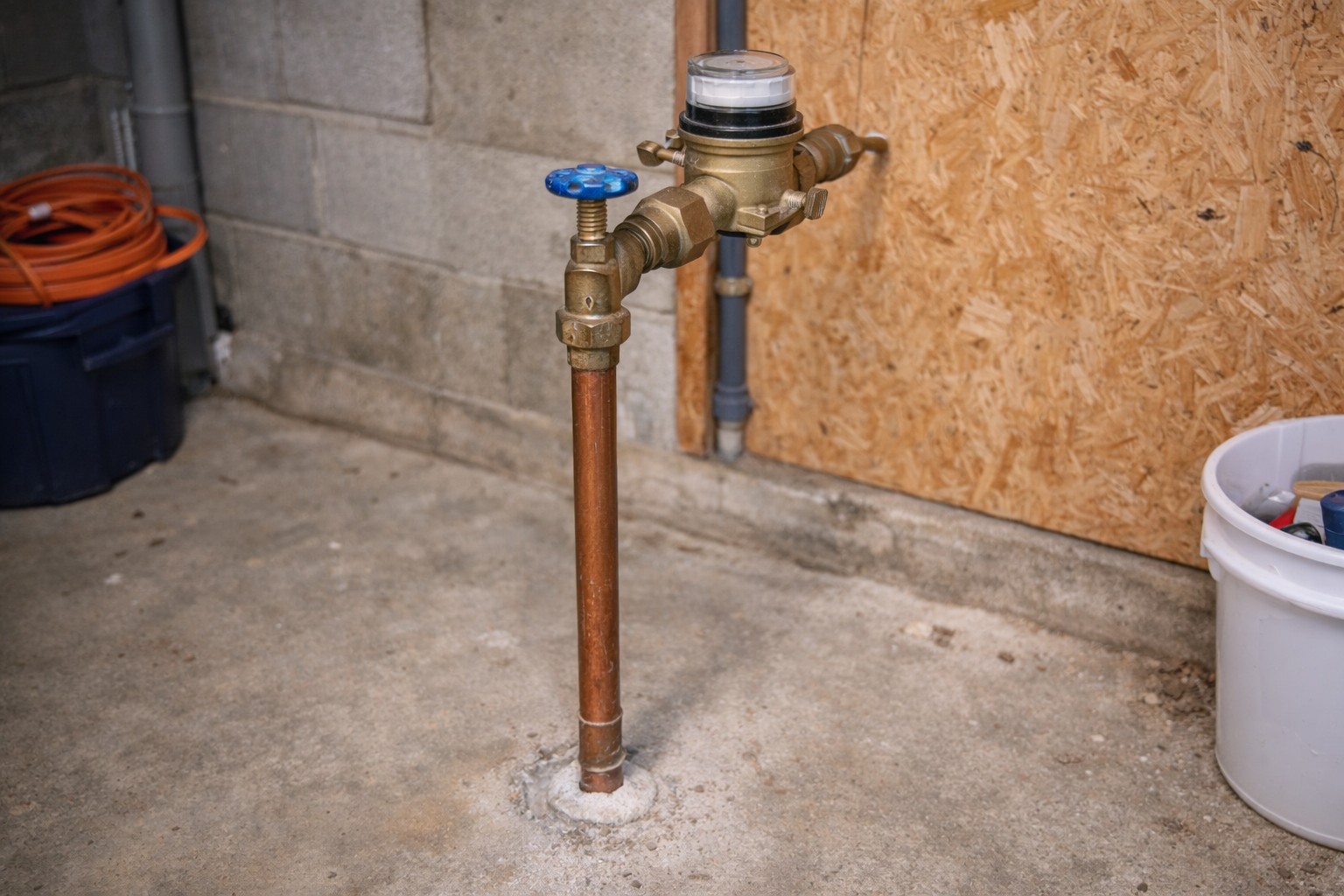
Keep pressure and delivered flow separate. An optional gauge check uses an intact existing approved owner connection, compatible pressure/temperature rating and its actual connection/release procedure. Map the source, regulator, check and valve side; a near-street hose bib is not automatically upstream. Record units, time and actual demand/heating conditions. Compare like static or known-flow states; a maximum-only pointer stores neither the low nor its time/duration, and an ordinary dial may miss fast events. No hot adapter, drain cleanout, backflow test cock or live fitting is a generic supply test point.
Before any retained part or joint is opened, identify and independently isolate all feeds, control temperature and relevant energy, release trapped pressure appropriately and verify that segment is unloaded. A lower PRV setting or remote tap alone does not establish safe service. Complete compatible reassembly, required protection and actual commissioning before restoration. Do not bypass a regulator/check or relax an unexplained protective alert to improve delivery.