Check for an emergency first
If you smell fuel gas or suspect a gas leak, leave the building or affected area immediately and take others with you. Do not operate switches, plugs, phones, appliances, thermostats or valves in the affected area, light flames, or stay to ventilate or investigate. From a safe location well away, call the local gas emergency service or emergency services. Do not re-enter until responders say it is safe. Plumbing checks and normal maintenance must wait.
If a carbon monoxide alarm sounds or you suspect carbon monoxide exposure, get everyone outside immediately and call emergency services from safety. Carbon monoxide has no smell; an odor comparison cannot rule it out. Do not restart or repeatedly cycle a fuel-burning heater to investigate a possible combustion problem.
Keep away from wet electrical equipment. Do not touch wet appliances, plugs or switches, or enter water to reach a breaker. When no gas leak is suspected, power may be isolated only from a safely accessible dry location; otherwise call an electrician or emergency help. Wet equipment needs qualified assessment before it is used again.
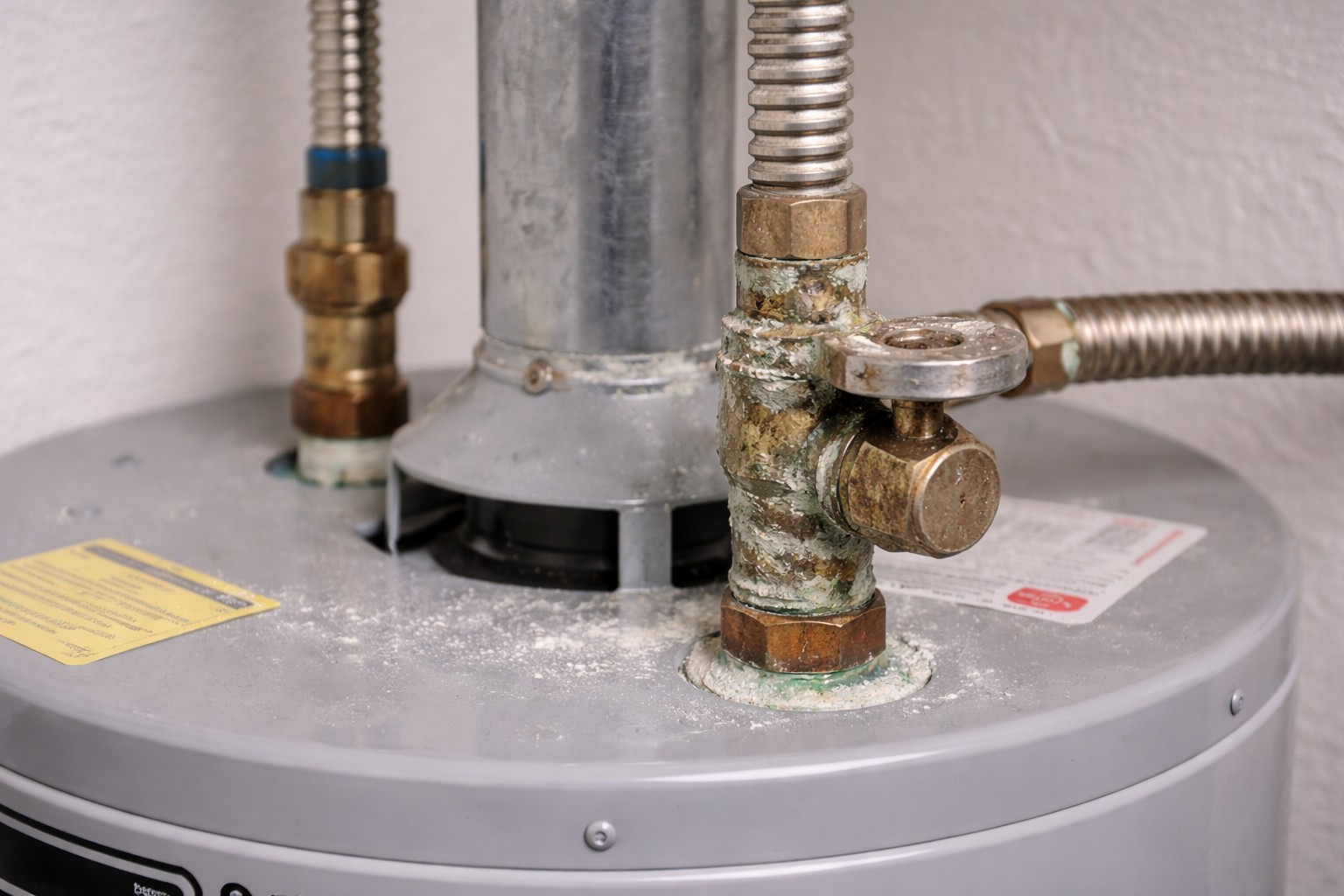
A pressure or flow change after water-heater replacement warrants an installer callback. Start by describing whether hot water alone changed or both hot and cold outlets changed. A weaker stream is a flow observation, not a pressure measurement, and one outdoor hose-bib reading does not automatically locate the fault.
Useful details to record
- Which fixtures changed, whether hot and cold were both affected during normal use, and any unsafe temperature change.
- The heater type and model, installation date and work record, including any new mixer, check valve or pressure device.
- Existing pressure readings with their outlet locations and flow conditions, plus any water-supplier interruption.
What the pattern can tell you
- Hot and cold outlets both changed. Ask the installer and, where appropriate, supplier to assess the shared supply path as well as the installation.
- Only hot delivery changed. The new hot-water path and connected controls deserve attention. That does not identify one failed part or exclude all upstream influences.
- One hose bib seems normal. Its location relative to regulators and branches matters. Do not assume it represents every outlet or the heater connections.
What to do next
- Deal with gas, carbon monoxide, leakage or electrical hazards before normal troubleshooting. Avoid a shower with unstable or unexpectedly hot delivery.
- Contact the installer with the before-and-after pattern. Ask them to verify commissioning, identified valve positions, connection orientation and required protective devices.
- Do not close the heater inlet as a pressure experiment, adjust a mixing valve or open unknown service ports. These changes can affect temperature control, pressure and the heater’s operating conditions.
- Use routine fixture maintenance only under the relevant instructions and safe conditions. Heater flushing is not an automatic cure for every post-installation restriction; any service and restart must follow the actual model.
Should I replace the new heater or turn up the regulator?
Neither follows from the symptom alone. Ask for an explanation based on the actual layout, measured conditions and installation check. Raising pressure can create a separate problem, and replacing a heater will not correct every external restriction or fixture fault.
Related situations
- Low pressure after turning water off and back on
- Low pressure after new appliance install
- Whole-House Low Water Pressure