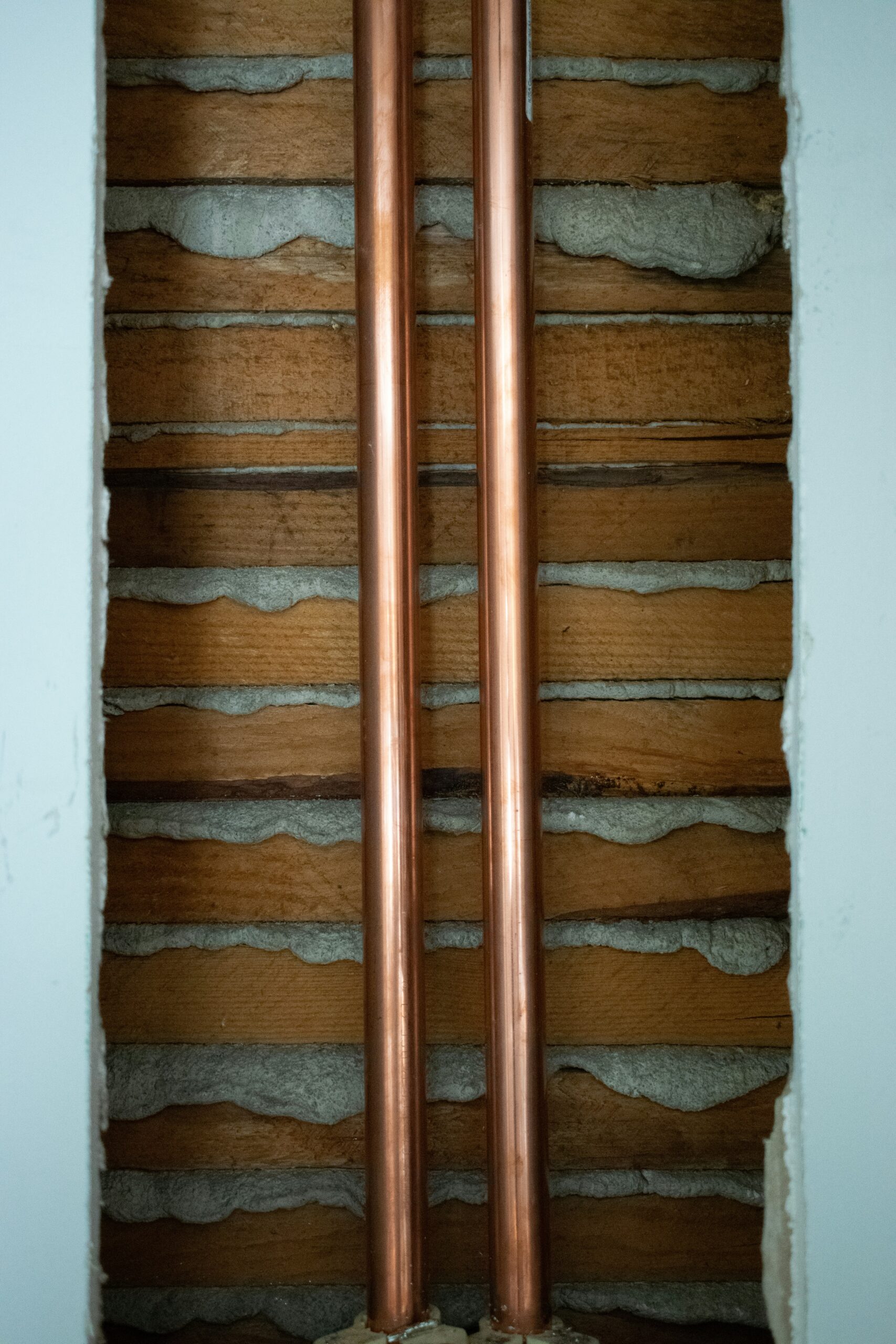
Banging first noticed after water is restored can involve a start/stop pressure event, valve behavior, pipe movement or carried air. The timing is useful, but the noise is not automatically normal or proof that a purge will fix it.
Start with the safe state
Keep away from wet electrical equipment. Do not touch wet appliances, plugs or switches, or enter water to reach a breaker. When no gas leak is suspected, power may be isolated only from a safely accessible dry location; otherwise call an electrician or emergency help. Wet equipment needs qualified assessment before it is used again.
For a new, unexplained water-quality change: do not deliberately taste the water. Use bottled water or another known-safe supply for drinking, food preparation, teeth brushing and ice while you contact the supplier. Follow the actual local notice for other uses. Boiling does not make chemically contaminated water safe, and clear appearance or a fading odor does not certify safety.
Stop for the actual warning signs
Stop operation for violent movement, severe hammer, leakage or uncertain containment and obtain appropriate help. Do not wait hours or a day to see whether a known damaging event fades. Use a known safe homeowner control for an active leak where effective; do not repeatedly cycle a main valve to recreate the sound.
Record the original event
- Whether the sound occurred during initial restoration, at one fixture opening/closure, during steady flow or afterward.
- Which controls or work changed, actual equipment startup state and already-known pressure readings.
- The general area heard, visible movement from safe existing access and any leakage. Sound transmission does not locate a concealed fault.
Air, pressure and delivery are different evidence
Closing an undrained system does not necessarily admit air. An actual drain-down, a connected source and its pressure conditions matter. Do not prescribe lowest-first or highest-first faucet opening to classify a bang. A partly open ordinary valve can restrict flowing delivery, but handle position and noise do not measure pressure or establish which part failed.
Use the actual supplier and installed equipment restoration instructions. Establish containment, permitted water use, accepting drainage and safe temperature/splash conditions before any justified attended outlet check. A known leak, failed control or poor receiver is a reason to stop, not add flow. Previously drained equipment has its own refill/purge and energy-startup requirements. There is no universal floor order, full-flow minute count or waiting period that clears every system.
Support care is material-specific
Use only safe dry existing access; do not touch an unknown hot pipe or enter an unsafe crawlspace. Actual supports, fasteners, load and allowance for thermal movement matter. Insulation used to prevent contact noise is not automatically structural support. Do not force a pipe or tighten straps by a fixed number of turns. Suitable external support care and intrusive pressure service have different isolation requirements; follow the actual procedure.
After correction
A necessary functional check follows the identified repair and appropriate safe restoration with attendance and an accepting receiver. Do not recreate rapid closure to prove the repair. Persistent concerning noise, recurring movement or uncertain pressure needs qualified assessment.
Related situations
- Restoration and air-related scenarios: broader directory
- Banging specifically when a fixture closes
- Knock perceived near an outdoor branch
Browse broader Plumbing topics. Choose from the actual symptom and equipment.
For the wider sequence and device-specific directories, browse Water Entry, Shutoffs & Flow Control Systems.