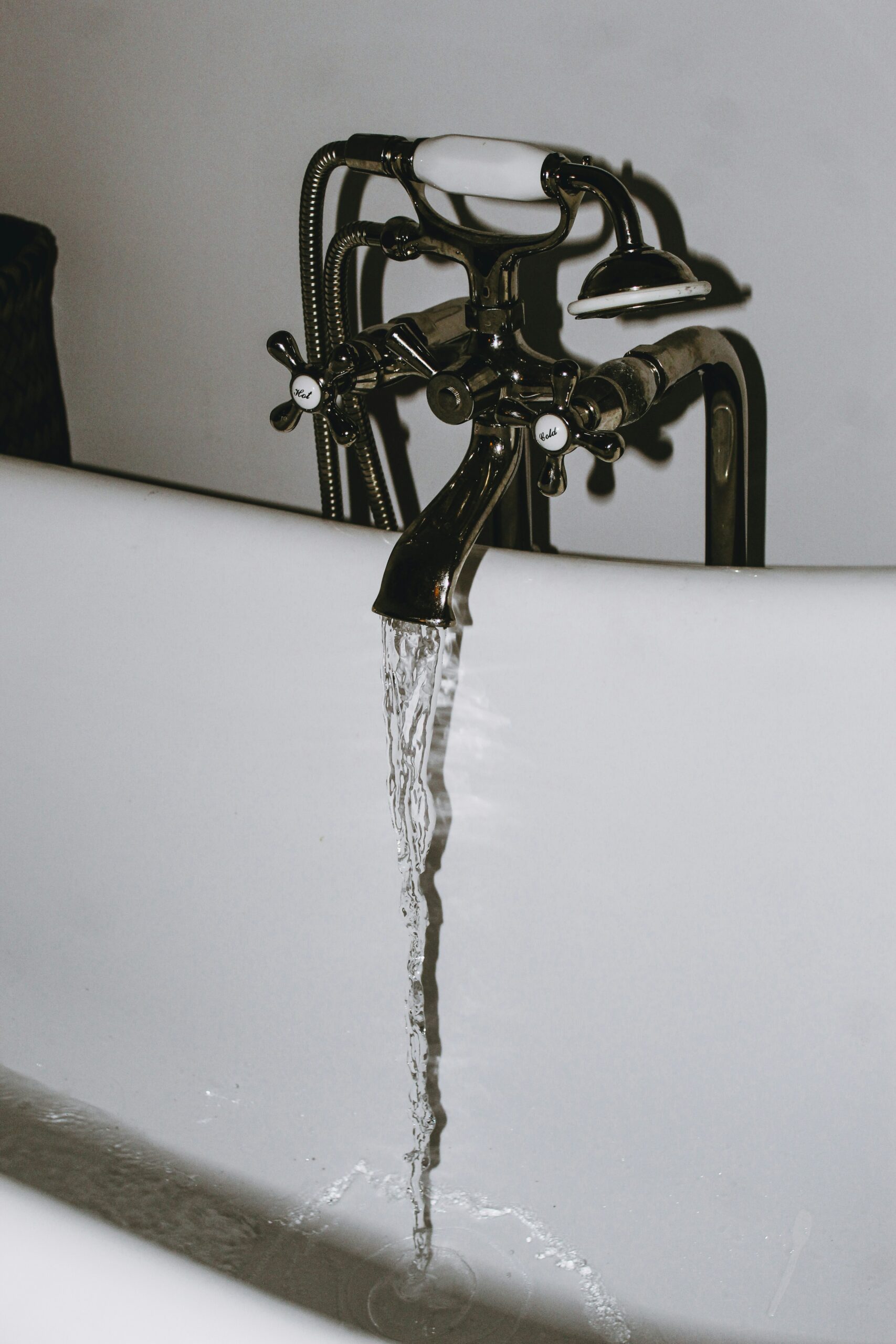
For a faucet whistle, note the original opening and ordinary setting rather than assuming pitch identifies a restriction. Faucet parts, supplied pressure and transmitted vibration may need different checks.
Check for a condition that needs prompt help
Active leaking, severe movement, loss of control, unsafe temperature, steam or hot relief discharge needs appropriate prompt response. Stop the relevant use and keep clear of unsafe spray. A known safely operable customer stop can limit a supply leak when safe; do not force a stiff, corroded or unknown valve. Stay away from wet electrical equipment and use only safely accessible dry controls when safe, otherwise obtain qualified help.
For suspected fuel gas, a carbon monoxide alarm or exposure symptoms, leave immediately and call the appropriate emergency service from safety. Do not operate switches, phones, valves or appliances in the affected area. Do not approach a heater or concealed service to listen more closely.
Identify the faucet before cleaning or replacing parts
- Useful observation: Keep whether the original sound began at opening, during steady flow or closure, and whether another outlet had already behaved similarly. One noisy faucet does not almost certainly prove its cartridge failed, and changed pitch does not rule out every appliance or external source.
- Permitted owner care: Use the actual aerator identification, removal tool, gasket and cleaning instructions. Exposed, concealed and non-accessible designs differ. Do not prescribe pliers or vinegar for every finish, run a loose assembly or remove a designed flow-control part as a generic test.
- Deeper work: Cartridge or inlet-screen work requires the actual model’s isolated service procedure. Do not gently tighten all visible nuts or change the supply stop to tune the whistle. Ask which observed condition supports cleaning, part replacement or pressure assessment.
Can I keep using a whistling faucet?
The sound alone cannot answer that. Safe ordinary use may be possible when there are no warning conditions, but leakage, loss of control or unsafe temperature needs a prompt response. Persistent or worsening noise deserves suitable assessment rather than a general assurance that it is harmless.
What the sound can and cannot establish
Keep the original fixture or appliance phase, actual model, handle position, timing, recent work and safe visible conditions. A pitch change, a quieter result or the loudest pipe is a clue, not proof of an exact failed part or general safety. Normal permitted control observations can be useful in safe conditions; do not force high flow, rapidly snap a valve or repeatedly reproduce a severe event.
Opening or reworking pressure-containing parts requires actual source isolation and controlled retained pressure, temperature and energy, followed by correct reassembly and commissioning. Power off alone does not remove water pressure. Do not tighten an unidentified nut from appearance, grip hot or moving lines, force threads or blindly open finishes. Qualified inspection may require planned access; no tool guarantees an exact hidden location or damage-free repair.
Related guides
- Toilet squeals while refilling
- Whistling after installing aerator
- Whistling or Screeching Noises in Pipes
Sources and equipment limits
- BrassCraft: actual stop configurations and fully open/closed operation
- Portland Water: flow, pressure and demand are different observations
- Moen: identify the actual aerator and service method
These manufacturer and supplier examples do not identify your installed model or safe settings. Use its actual instructions and local requirements. Independent professional review and field testing have not been obtained.