Quick Answer:
If you see hoses bulging, leaking, or hear a loud bang, shut off the washer water supplies immediately. Drain and replace old rubber hoses with braided stainless hoses rated for high pressure, add hammer arrestors at the washer box, and check system pressure. Measure pressure peaks and correct the pressure-reducing valve (PRV) or add an expansion tank so static pressure stays in a safe range, then test with a washer fill while watching for spikes.
Why This Happens
Bulging or bursting hoses are usually the result of two related problems: sustained overpressure in the water supply and sudden pressure spikes known as water hammer. Over time, rubber hoses weaken from heat, detergent exposure, and repeated pressure cycling. When the washer’s inlet valves open and close quickly, or when other devices on the system (valves, solenoids, or the dishwasher) create sudden stops in flow, the resulting shock waves temporarily raise pressure to levels that can split weakened hoses.
High steady pressure stresses fittings and hose walls; pressure spikes worsen the risk. High-pressure plumbing can cause other problems too, such as Dishwasher leaks caused by high pressure and High pressure warping supply lines, so treat both steady and transient pressures when you address the issue.
Step-by-Step What to Do
1. Shut off the washer supplies immediately
- Close the hot and cold angle stop valves behind the washer. If they’re stuck or the leak is severe, shut off the main house water supply.
- If water is pooling near the machine’s electrical connection, turn off the washer’s power at the breaker before you work on plumbing.
2. Drain the hoses and check the damage
- Disconnect the hoses at the washer and at the shutoff valves. Let remaining water drain into a bucket or towel.
- Inspect for bulges, soft spots, cracks, rusted fittings, or mineral buildup at the ends.
3. Replace hoses with braided stainless rated for high pressure
- Install braided stainless hoses designed for washing machines; they are much more resistant to bursting than old rubber hoses. Choose hoses that specify high-pressure ratings and the correct length and thread size for your fittings.
- Use new rubber or neoprene washers at the connections, hand-tighten, then finish with a quarter-turn using a wrench—don’t overtighten.
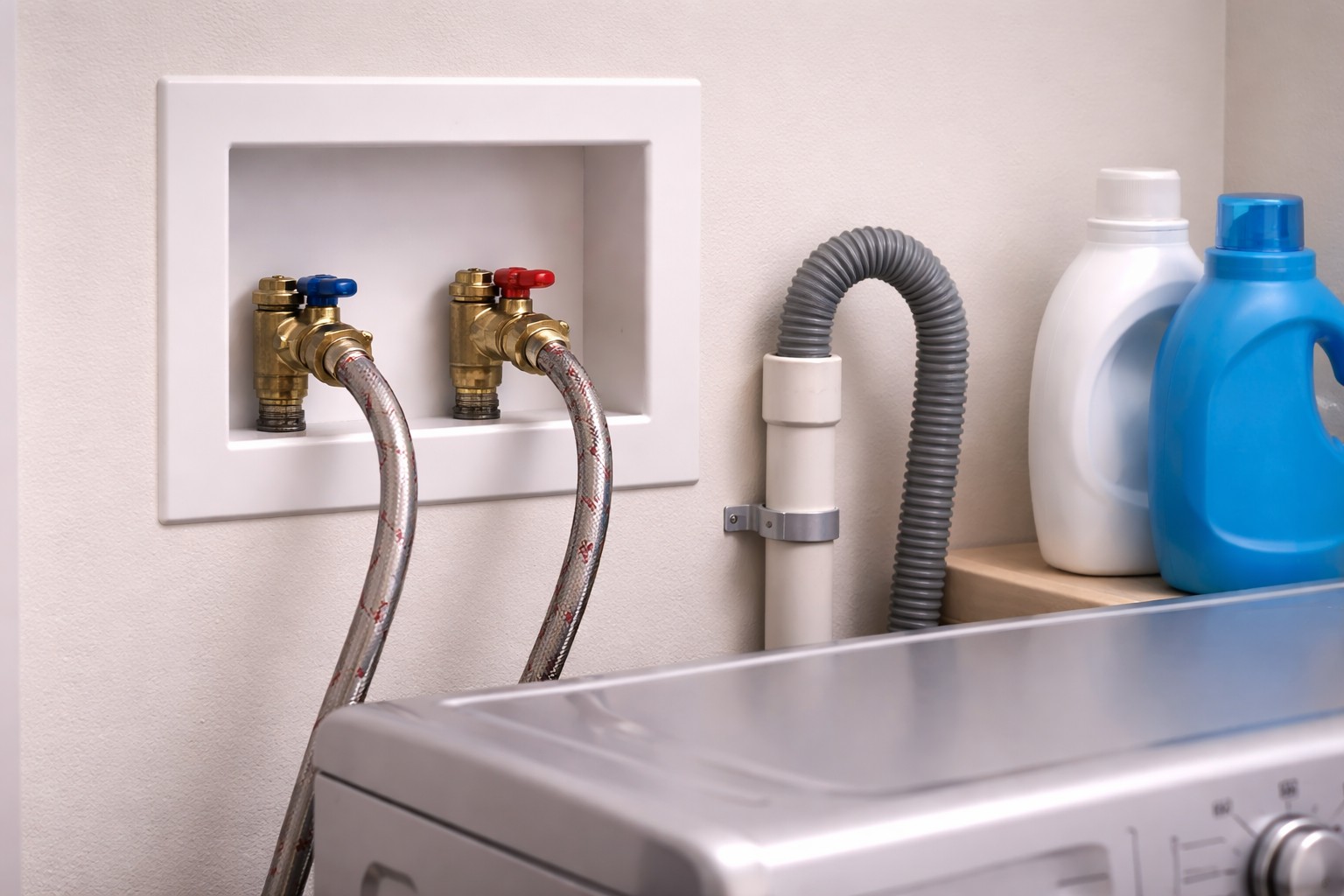
4. Add hammer arrestors on the washer box
- Install air or piston-type hammer arrestors on the hot and cold lines at the washer supply box to absorb shock from fast-closing valves.
- Many washer boxes accept in-wall arrestors; there are also external options if retrofitting is easier.
5. Measure pressure peaks and correct PRV/expansion
- Use a pressure gauge and, if possible, a data-logging pressure transducer to watch for short spikes during valve actions. If you don’t have the tools, a plumber can measure dynamic pressure for you.
- Check static pressure. If it’s above the safe range for your fixtures (many homes target 40–60 psi), adjust or install a PRV. If spikes persist, an expansion tank or improved arrestors may be needed to absorb transient volume changes.
6. Test with a washer fill and watch for spikes
- With new hoses and arrestors in place, turn the supply valves on slowly and inspect for leaks.
- Run a fill cycle while watching your pressure gauge or listening for hammering. Look for leaks at both ends and ensure no bulging returns.
What Not to Do
- Don’t reuse old rubber hoses—burst risk is high under overpressure and hammer.
- Don’t ignore small drips or bulges; they often become sudden failures.
- Don’t try to fix a leaking hose with tape or clamps as a permanent solution—replace it.
- Don’t overtighten fittings; that can damage threads and fittings and cause leaks.
When to Call a Professional
- If you can’t fully stop the leak at the shutoff valves or the main shutoff, call a plumber immediately.
- If pressure measurements show persistent spikes or you suspect a failing PRV, a licensed plumber can diagnose and correct system pressure or install an expansion tank.
- Call a pro if the leak caused ceiling, wall, or electrical damage—these need safe, coordinated repairs.
Safety Notes
- Always shut off water before disconnecting hoses. If water contacts electrical components, shut power off at the breaker first.
- Use gloves and eye protection when handling dirty or pressurized hoses.
- When in doubt about pressure testing or working on PRVs, hire a professional—incorrect adjustments can affect your whole home’s plumbing.
Common Homeowner Questions
How often should I replace washing machine hoses? Replace hoses if they show wear, bulging, or damage; many manufacturers recommend replacing rubber hoses every few years—braided stainless lasts longer and is safer.
Can I temporarily patch a leaking hose to get by? No. Patching or taping is only a short emergency stop; replace the hose as soon as possible to avoid a sudden burst.
Will adding a hammer arrestor stop hoses from bursting? Arrestors reduce pressure spikes from water hammer but don’t replace the need for high-quality hoses and proper system pressure control. Use both measures for best protection.
Related Articles
If you’re troubleshooting a similar symptom, these guides may help:
For the full directory, see High Pressure Causing Fixture Damage.