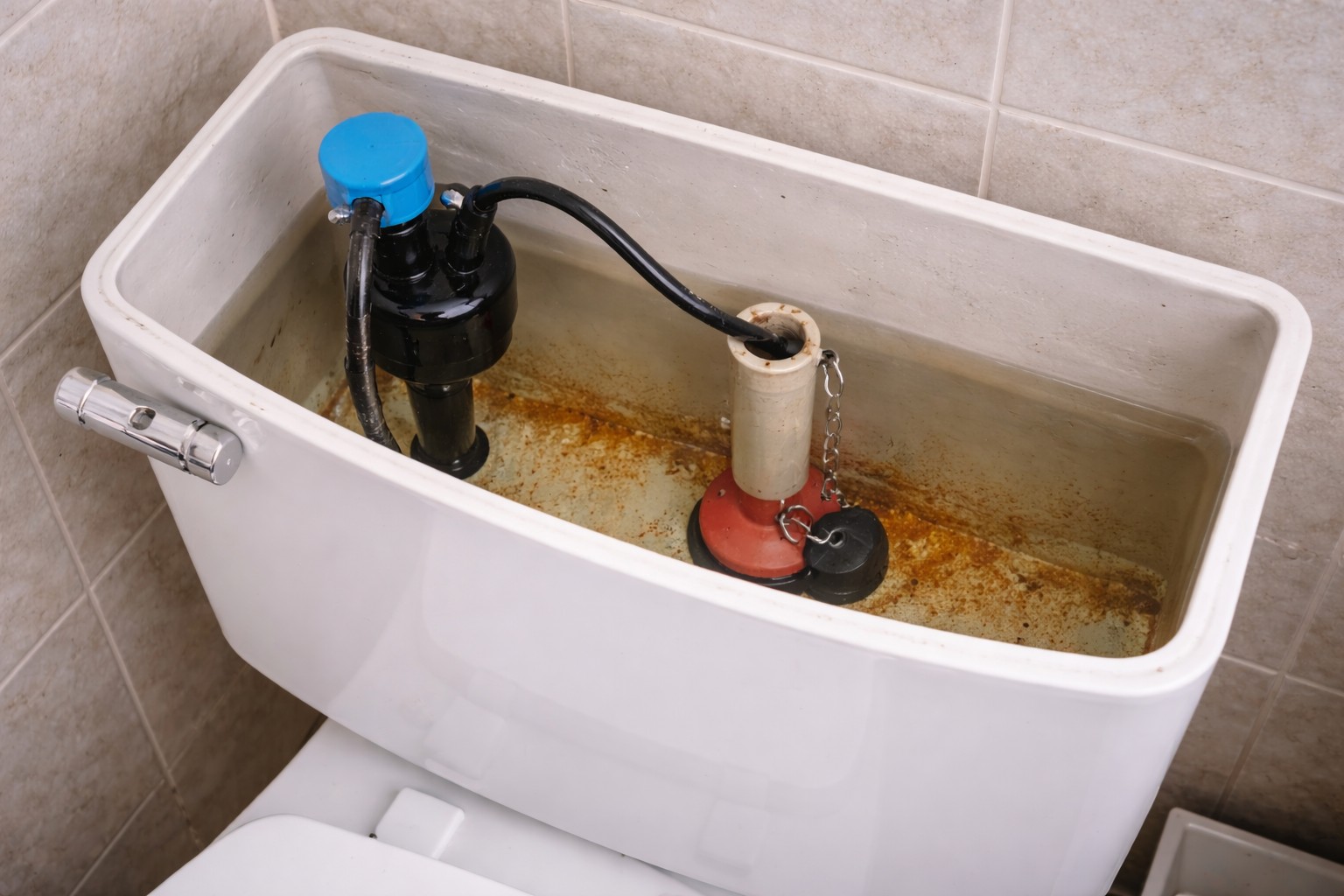
A toilet that keeps running after a fill-valve change needs its actual water path identified. Continuous inlet flow, overflow, tank-to-bowl loss and an external supply leak are different faults; repeated replacement alone does not prove high pressure.
Contain the problem before testing
If fuel gas is suspected, leave the building or affected area immediately. Do not operate valves, switches, plugs, appliances or phones there. Call the gas emergency service from a safe location well away, and wait for responders’ clearance.
Keep away from wet electrical equipment. Do not touch wet appliances, plugs or switches, or enter water to reach a breaker. When no gas leak is suspected, power may be isolated only from a safely accessible dry location; otherwise call an electrician or emergency help. Wet equipment needs qualified assessment before it is used again.
Stop using the affected leaking appliance or fixture. From a safe dry position, close an identified owner-operated supply only if it is accessible without force, hot spray or wet equipment. If that cannot control the leak safely, request prompt plumbing or utility assistance. Keep a damaged line isolated; do not patch it and reopen, pull an appliance through water, or repeat a cycle to prove the failure.
Keep the actual evidence
- Toilet and fill-valve models; gravity tank, pressure-assisted, pump or direct-flush design.
- Where water was already seen: inlet, overflow, bowl, connector, tank or floor; existing refill timing.
- Recent work, debris, exact part compatibility and pressure readings at a known supplied point.
Separate filling from loss
On a conventional gravity tank, water escaping through the flush seal can make a functioning fill valve reopen. Float/obstruction, set water level, refill arrangement and the actual valve’s shutoff condition need their own check. Other toilet designs use their own instructions. Do not force more flushes on an overflowing or leaking installation.
Use the actual part and cleaning method
Follow the identified valve’s permitted service. Some named manufacturer procedures include a covered, captured brief flush with retained parts safely controlled; that exception is not permission to lift any live cap. Connector tightening, washers and sealants follow the actual fitting instructions, not an extra universal wrench turn.
A stop is not automatically a regulator
Sustained overpressure, pressure rise as trapped water heats, and rapid valve-closure hammer are different findings. Select a regulator, approved expansion control or arrester from the actual mechanism, system design and component limits, not from a leak alone. Do not use an ordinary partly closed stop as a pressure regulator, bypass required protection or change a protective alarm merely to suppress the symptom.
The prior correction to keep a test gauge connected to the intended pressure remains essential: closing the supply outlet traps a section instead of logging later supply changes. A rising overnight maximum does not identify heating or valve damage. A genuine regulating product needs its own rating and installation evidence; a normal stop or flow restrictor does not provide that function.
Pressure evidence and safe service
A pressure check is optional evidence, not a prerequisite for containing a leak or getting help. Use an intact, accessible existing owner test connection, compatible rated gauge and its actual connection/release instructions. Identify the measured side of regulators, checks and shutoffs; the outlet must admit the intended pressure. A maximum-only pointer does not record when, how long or why its peak occurred, and a normal dial can miss fast transients. No live fitting, backflow test cock or improvised appliance adapter is a generic test point.
Before any retained part, hose or fitting is opened, identify and isolate every supply to that section, allow hot water to cool, release trapped pressure by the appropriate controlled method and verify the section is depressurized. A closed faucet or lower regulator setting is not isolation. Appliance service also requires the actual safe energy isolation, access and tip/restraint procedure. If these conditions cannot be established, leave the assembly intact for qualified service. Restore compatible assembled parts and required protection, then complete only the actual model’s attended leak check and commissioning after electrical clearance.
Related situations
- Washing machine hoses bursting
- High pressure breaking faucet cartridges
- High Pressure Causing Fixture Damage
- Thermal expansion causing toilet fill leaks
Safety sources
- Con Edison: suspected gas leaks
- CDC: electrical hazards near water
- Watts 25AUB example: actual regulation, model limits and service
- Watts IWTG example: retained maximum rather than a timed pressure trace
- American Standard example: identified covered, captured fill-valve care
- BrassCraft: water supply stop instructions