Quick Answer:
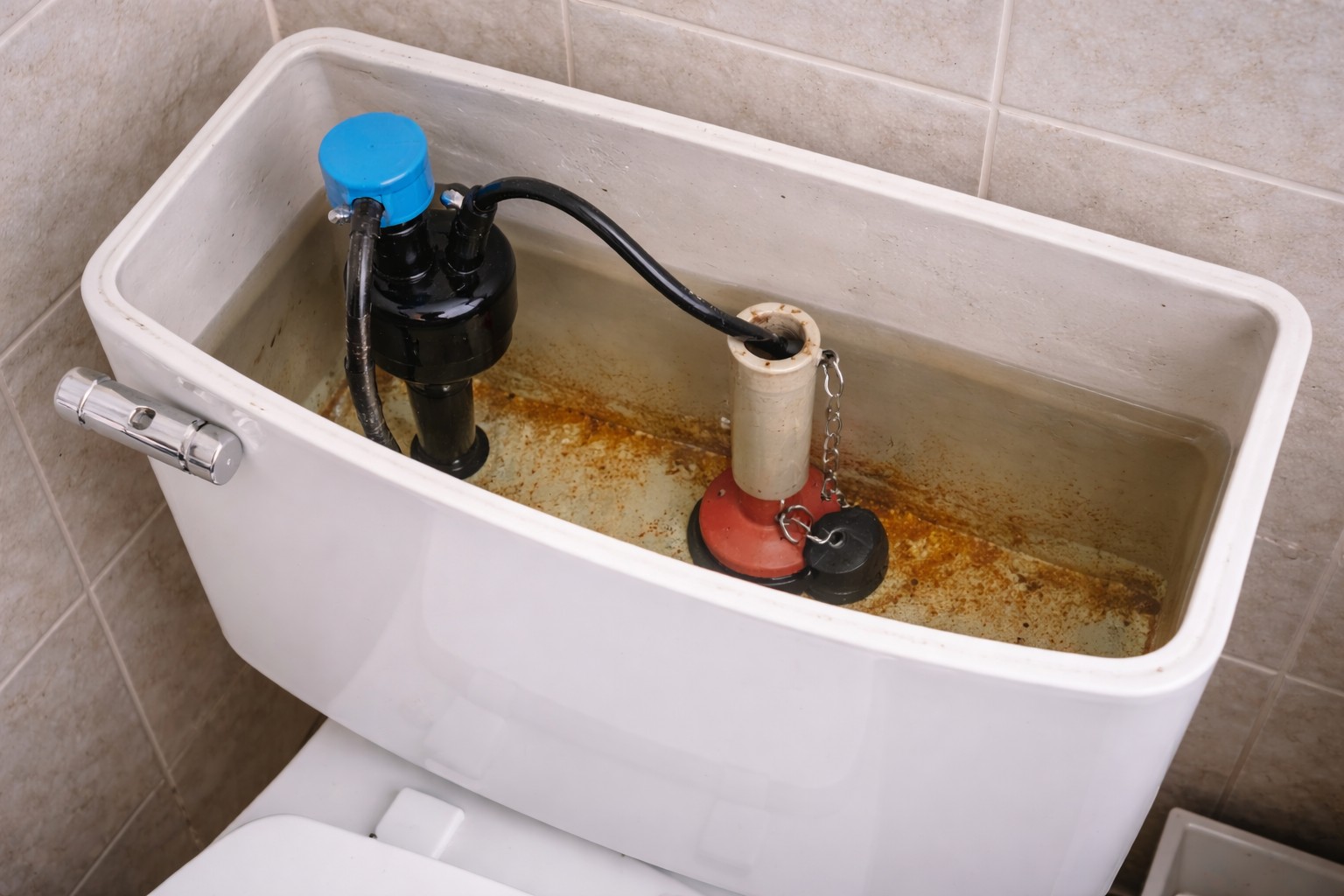
Toilets that keep running or leaking after new fill valves usually mean the house water pressure is too high or surging. Measure the static pressure and the overnight peak with a max-needle gauge first. If pressure or thermal expansion is the problem, fix the pressure-reducing valve (PRV) and add/repair an expansion tank before replacing fill valves. After the pressure system is stable, install quality fill valves and consider a pressure-reducing toilet stop. Confirm the toilets stop seeping once pressure is under control.
Why This Happens
Toilet fill valves have rubber diaphragms and seals that do well at normal household pressures. When pressure is consistently high or there are sudden peaks, those soft parts get beaten up and fail quickly. A closed or failing PRV, missing/failed expansion tank on a water heater, or pump systems can raise steady pressure or cause spikes that damage plastic parts. The same pressure problems can also cause other failures like Washing machine hoses bursting and Shower valves leaking due to pressure.
Step-by-Step What to Do
1. Gather a max-needle pressure gauge and basic tools
- Max-needle gauge (records highest pressure during a test)
- Adjustable wrench, bucket, rag
- Replacement fill valves and optional pressure-reducing toilet stop
2. Measure static pressure
- Close all faucets and appliances that use water. Turn off any fill cycles (e.g., dishwasher, washing machine).
- Attach the max-needle gauge to an accessible threaded spigot or a toilet supply line (use an adapter if needed).
- Open the spigot briefly so the gauge reads the system pressure, then close the spigot. Note the static pressure reading.
- Normal household pressure is typically 40–60 psi. Consistently above 60 psi is considered high; above 80 psi is risky.
3. Measure overnight peak pressure
- Leave the gauge connected where it will stay undisturbed overnight. The max-needle will record the highest pressure experienced.
- Check the gauge the next morning to see the recorded peak. Peaks that exceed the static reading by a lot, or top 80 psi, indicate surges or thermal expansion problems.
4. Fix PRV and expansion issues first if readings are high
- If the static pressure or peaks are high, adjust or replace the house PRV so steady pressure returns to the 40–60 psi range.
- If you have a closed system (PRV or check valve at the street) and the water heater lacks a functioning expansion tank, add or repair the expansion tank to absorb thermal expansion.
- Confirm pressure is stable with the gauge after repairs. Don’t skip this before changing toilet parts.
5. Replace toilet fill valves
- Once pressure is corrected, replace the toilet fill valves with quality parts rated for your pressure level.
- Follow manufacturer instructions, use correct washers, and hand-tighten fittings then give a small additional turn—not excessive force.
6. Consider a pressure-reducing toilet stop
- If your plumbing has occasional spikes or you want an extra layer of protection, install a pressure-reducing toilet stop at each toilet supply. It limits pressure at the fixture even if house pressure varies.
7. Confirm toilets stop seeping
- After pressure and fill valves are addressed, watch each toilet for seepage for 24–48 hours and repeat the overnight max-needle test.
- If a toilet still seeps but system pressure is stable in range, the issue is likely a faulty valve or flapper at that fixture and should be replaced.
What Not to Do
- Don’t overtighten toilet parts to stop leaks—fix the pressure or you’ll crack plastic components.
- Don’t ignore a high pressure reading and keep replacing parts; repeated failures point to system pressure, not the fill valve brand.
- Don’t attempt major PRV or water-main work without shutting off the water and knowing how to relieve pressure first.
When to Call a Professional
- If your static pressure or overnight peaks are high and you’re not comfortable adjusting or replacing the PRV.
- If you suspect thermal expansion issues and you don’t know how to check or replace the expansion tank.
- If multiple fixtures keep failing after you’ve corrected pressure and replaced parts—there may be an unseen systemic problem.
Safety Notes
- Always shut off the water and drain the line before working on supply fittings. Open a lower faucet to relieve pressure.
- Use hand tools and avoid excessive force on plastic fittings. Broken pieces can create sudden floods.
- If you smell gas or see electrical problems while working, stop and call the appropriate professional.
Common Homeowner Questions
- Why measure overnight peaks? Short pressure spikes can damage valves even if static pressure looks normal.
- What pressure is safe? Aim for 40–60 psi at the house; sustained readings above 60 should be corrected.
- Will a toilet stop fix repeated failures? A pressure-reducing toilet stop can protect a fixture, but fix the house PRV/expansion first for a long-term solution.
Related Articles
If you’re troubleshooting a similar symptom, these guides may help:
For the full directory, see High Pressure Causing Fixture Damage.