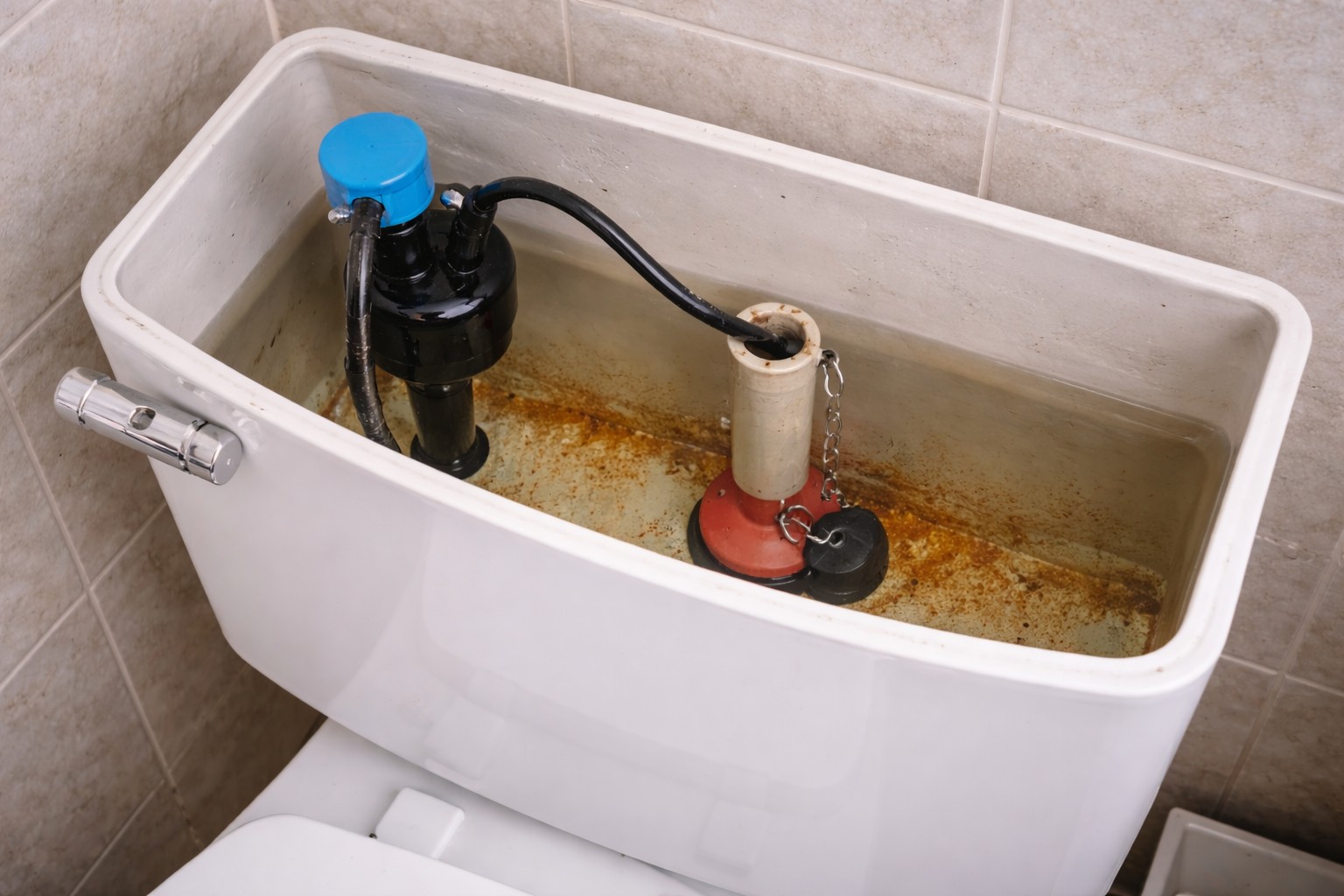
Quick Answer:
If a single toilet takes a long time to refill while other fixtures work normally, the usual cause is a clogged or partially blocked fill valve screen or diaphragm. Cleaning the fill valve screen and briefly flushing the supply line usually fixes it; replace the fill valve if cleaning doesn’t restore normal speed.
Why This Happens
- Toilets have a small screen or diaphragm inside the fill valve that can trap mineral deposits or debris. When it’s clogged the tank refills slowly even though house pressure is fine.
- The problem is local to the toilet supply or its valve parts, not the main water pressure—compare other fixtures to confirm. See related topics like Low pressure at bathroom sink only and Pressure drops only when aerator installed for other isolated-pressure issues.
- A failing fill valve can also wear internally so cleaning helps diagnose whether replacement is needed.
Step-by-Step What to Do
1. Turn off the toilet stop
Locate the shutoff valve on the toilet supply line (usually behind the toilet). Turn it clockwise to close it. This isolates the toilet so you can work without shutting off the house water.
2. Drain the tank
Flush the toilet to empty the tank. Hold the handle down until the tank is as empty as it will get.
3. Remove the fill valve cap
Follow your fill valve’s manufacturer method: most caps twist or unclip. Remove the cap carefully so you can access the small screen or diaphragm inside.
4. Rinse the small screen/diaphragm
Rinse the cap, screen and diaphragm under clean water. If mineral scale is present, soak the parts briefly in a mild vinegar solution to dissolve deposits, then rinse.
5. Briefly flush the stop into a bucket
With parts removed, put a bucket under the supply valve. Slightly open the shutoff valve to flush water briefly into the bucket—this clears any debris from the supply line. Close the valve again.
6. Reassemble and adjust float
Put the fill valve cap and screen back in place, reattach any clips, then turn the shutoff valve fully open. Let the tank refill and adjust the float height so the water level is correct. Test flushes to confirm refill speed.
7. Replace the fill valve if still slow
If cleaning and flushing don’t restore normal refill speed, replace the entire fill valve. Fill valves are inexpensive and replacement is a straightforward DIY job, but match the new valve to your toilet type.
What Not to Do
- Don’t keep forcing the toilet to refill—clean the fill valve screen or you’ll ruin the diaphragm.
- Don’t try to power-wash the valve or force metal picks into the screen; you can damage plastic parts.
- Don’t overtighten plastic connections when reassembling; hand-tight is usually enough plus a small turn with a wrench if needed.
When to Call a Professional
- Call a plumber if the valve area leaks after you reassemble it.
- Call if you’re unsure how to remove the cap or if the toilet uses an uncommon proprietary valve.
- Call if replacing the fill valve doesn’t fix the slow refill—there may be hidden supply-line issues or valve-seat problems.
Safety Notes
- Turn off the shutoff valve before working to avoid water on the floor.
- Wear gloves when handling old parts and cleaning with vinegar or cleaners.
- If you smell gas or see corrosion on pipes, stop and consult a professional. Do not use open flame or power tools near plumbing failures.
Common Homeowner Questions
- Q: How long should a toilet take to refill?
A: Usually under a minute to reach the proper tank level. - Q: Can I replace the fill valve myself?
A: Yes—most homeowners can replace a fill valve in 20–40 minutes with basic tools. - Q: Will vinegar damage the valve parts?
A: Short vinegar soaks dissolve mineral scale and are safe for short use; rinse parts thoroughly afterwards.
For more related articles, see the Low Pressure at Single Fixture hub.