Quick Answer:
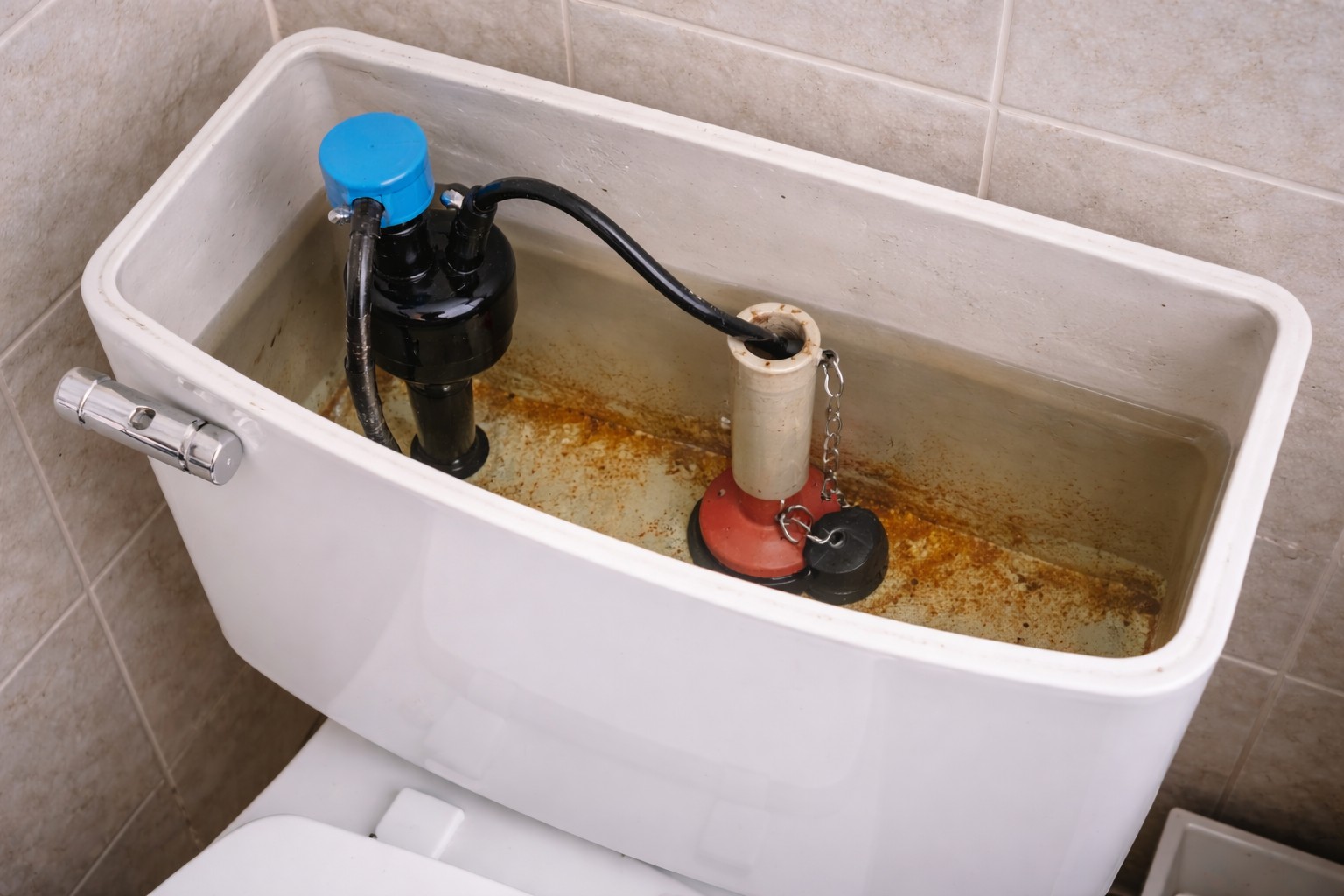
If toilet fill valves start to seep or run right after the water heater cycles, thermal expansion is likely raising system pressure and pushing water past the fill valve seals. Confirm the timing, measure the peak pressure during heating, correct the expansion-tank problem first, then clean or replace any toilet fill valves that were damaged by repeated overpressure.
Why This Happens
When a closed domestic water system heats water, the volume increases and pressure rises. An expansion tank or other relief path is supposed to absorb that extra volume. If the expansion tank is the wrong size, improperly charged, waterlogged, or piped incorrectly, pressure spikes will travel into branch lines. Toilet fill valves and shutoffs are not built to hold repeated high-pressure pulses; their seals can be pushed open or worn out, causing seepage or continuous running shortly after the heater runs.
Step-by-Step What to Do
1. Confirm timing
- Watch one or two toilets for a full hot-water/heater cycle. Flush a toilet, then run hot water or let the heater run; note whether the seep or run starts within minutes after the heater finishes. Confirm toilets seep shortly after heater run before you change parts.
2. Measure peak pressure during heating
- Screw a simple water pressure gauge onto an exterior hose bib or a convenient spigot and record the static pressure with the system idle.
- Then observe during or immediately after a heater cycle and capture peak pressure during heating. Repeat once or twice to confirm the highest spike.
- Normal static pressure is usually 40–60 psi; repeated spikes above about 80 psi indicate a serious thermal expansion issue.
3. Address thermal expansion first
- Inspect the expansion tank: check mounting, piping, and the tank air precharge. If the tank was piped or mounted incorrectly, the system may not be protected — Expansion tank installed wrong.
- Check for a waterlogged tank by locating the Schrader valve on the tank’s air side and measuring air charge with a tire gauge. If it is full of water, look for common Thermal expansion tank waterlogged symptoms such as an always-full tank or a constantly rising system pressure.
- If the precharge is low, drain enough water from the system to relieve pressure, add air to the tank to match the house static pressure, then re-pressurize the system. If the tank is undersized for your installation, replace it with a correctly sized unit rather than relying on the fill valves to tolerate the stress.
4. Clean or replace toilet fill valves after fixing expansion
- Only after the expansion issue is fixed, shut off the toilet supply, drain the tank, and inspect the fill valve for mineral buildup, damaged seals, or warped parts.
- Try cleaning debris from the valve and flushing the valve per manufacturer instructions. If the valve still seeps or fails to hold after the system pressure is stable, replace the fill valve. Replacing a damaged valve while the system is still overpressurized wastes parts and risks repeat failure.
- When replacing, use a good-quality fill valve with a reliable seal. Test by running a few heating cycles to confirm the leak is cured.
What Not to Do
- Don’t keep tightening toilet shutoffs to stop seepage—fix the overpressure or you’ll damage valves and stops.
- Don’t ignore repeated pressure spikes; continued exposure damages other fixtures and can trigger relief valves or pipe failures.
- Don’t use the main shutoff or a partially closed valve as a long-term pressure-limiting fix. That can cause unreliable pressure and make diagnosing the real issue harder.
When to Call a Professional
Call a plumber if you see any of the following:
- You capture very large pressure spikes (near or above 80–100 psi).
- You don’t have an expansion tank or you can’t safely depressurize the system to service the tank.
- Toilet leaks persist after the expansion system is corrected, or multiple fixtures show signs of seal failure.
- The water heater’s temperature/pressure relief valve is discharging or you suspect a plumbing code or safety issue.
Safety Notes
- Relieve system pressure before adding air to an expansion tank or removing any components. Use the water heater drain or a low faucet to lower pressure.
- Turn off power or the gas supply to the water heater if you’ll be working on its piping or near electrical controls.
- Use appropriate tools and eye protection when working with pressurized water; if you’re unsure, hire a licensed plumber.
Common Homeowner Questions
- Why did this start suddenly? A failing or mischarged expansion tank often shows up after a tank loses air charge, is installed wrong, or after system changes (new water heater or a check valve added).
- Can I just install a pressure regulator? A pressure regulator helps reduce high inlet pressure but won’t stop thermal expansion spikes unless paired with a correctly sized and charged expansion tank or other expansion control.
- How do I know if the toilet valve is ruined? If a fill valve continues to seep after the system pressure is stabilized, the valve seals have likely been damaged and the valve should be replaced.
Related Articles
If you’re troubleshooting a similar symptom, these guides may help:
For the full directory, see Thermal Expansion Pressure Behavior.