Quick Answer:
If you added a pressure-reducing valve (PRV), backflow preventer, water softener, or a smart shutoff, the system may now be closed and thermal expansion from your water heater will raise pressure. Check what changed in the retrofit, add or service a properly charged expansion tank, match the tank precharge to the cold static pressure, and then run the water heater while monitoring peak pressure. If you use a smart shutoff, recalibrate its thresholds so it doesn’t react to normal expansion spikes.
Why This Happens
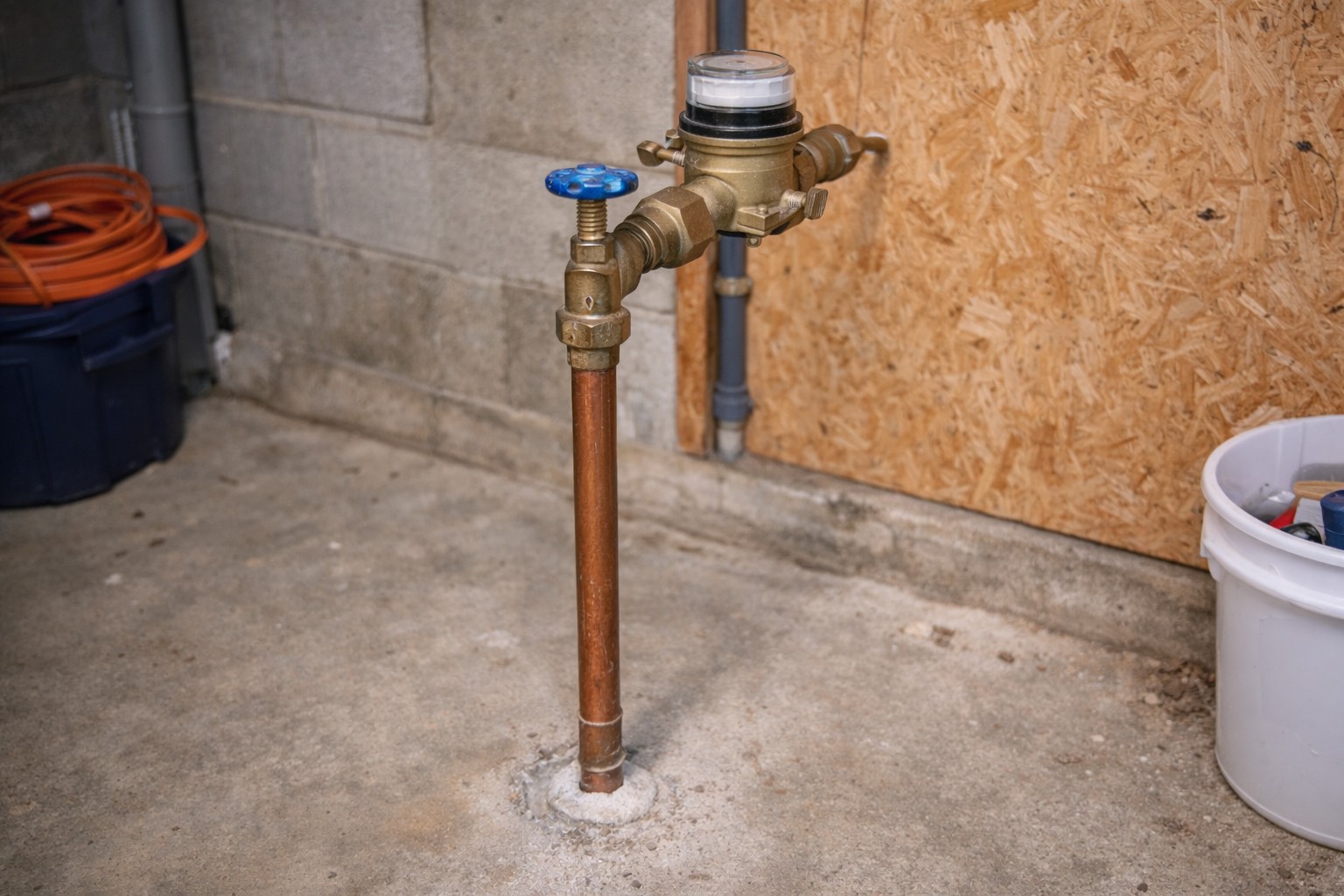
When a plumbing retrofit prevents water from flowing back into the street main, the piping becomes a closed system. Heating water makes it expand; with nowhere for the extra volume to go, system pressure rises. Common retrofit items that create or contribute to a closed system include:
- Pressure-reducing valve (PRV)
- Backflow preventer
- Smart shutoff or smart isolation valve
- Water softener or other downstream devices that include shutoff or check valves
You may notice symptoms like leaks, the relief valve discharging, or devices tripping. In many homes the first clues are that the Pressure rises when water heater runs or you see the Pressure increases after long hot shower.
Step-by-Step What to Do
1. Confirm what changed
- Make a short list of the items added or modified during the retrofit (PRV, backflow, softener, smart valve).
- Visually verify shutoff valves and backflow devices are installed and closed directionally correct.
2. Assume the system is closed and verify
- Check for a shutoff near the meter or entry point. If a PRV or backflow preventer is present, treat the system as closed unless a bypass is open.
- Open an exterior hose bib or a drain valve and observe whether water can return to the main — this helps confirm isolation.
3. Measure cold static pressure
- Attach a simple water pressure gauge to a threaded hose spigot or service port and record the cold static pressure (psi).
- Write down the reading. This is the pressure your expansion tank precharge should match.
4. Add or service the expansion tank
- If there is no expansion tank, install one sized for your system and place it near the water heater or on the cold inlet line.
- If a tank already exists, check for waterlogging (heavy tank) or visible leaks and replace if needed.
5. Match the expansion tank precharge to cold static pressure
- Use a hand pump or small compressor to set the tank bladder precharge equal to the cold static pressure you measured.
- Small mismatches can cause pressure swings; accurate precharge ensures the tank accepts expansion volume without over-pressurizing the system.
6. Confirm peak pressure during heating stays within a safe range
- With the pressure gauge still attached, run the water heater (or a hot water draw cycle) and monitor the peak pressure.
- Compare the peak to your PRV, fixture, and appliance ratings. Aim to keep peak pressure below the maximum recommended for your system (consult device labels or a pro if unsure).
- If peaks are still too high, increase expansion capacity or lower the system pressure set by the PRV if appropriate.
7. Recalibrate smart shutoff thresholds if needed
- If a smart shutoff or automated valve is tripping because of normal expansion spikes, adjust its pressure/flow thresholds so it ignores short-lived heating events.
- Consult the device manual for recommended settings and, if available, enable a short delay or hysteresis to prevent nuisance closures.
What Not to Do
- Don’t add closed-system devices without adding/servicing an expansion tank—retrofits are the most common trigger.
- Don’t disable or block temperature/pressure relief devices to try to stop leaks.
- Don’t leave an expansion tank unpressurized or with the wrong precharge; a waterlogged tank won’t control pressure and can give a false sense of security.
- Don’t size the expansion tank by guesswork; undersized tanks will not prevent high peak pressures.
When to Call a Professional
- Repeated discharge from the pressure relief valve or visible leaks from fittings after installing an expansion tank.
- You cannot set the proper precharge or you lack the tools to measure pressure reliably.
- There are signs of corrosion, waterlogged tanks, or the retrofit involves gas or electrical work on the water heater.
- A smart shutoff will not accept safe thresholds or continues to shut off critical supplies.
Safety Notes
- Always depressurize a section of plumbing before disconnecting fittings. Open a faucet and relieve pressure before removing components.
- Water discharged from a T&P or relief valve can be very hot—stand clear and avoid direct contact.
- If you are unsure about gas or electrical connections to the water heater, stop and call a qualified technician.
- Use appropriate personal protective equipment and follow manufacturer instructions for expansion tanks and smart devices.
Common Homeowner Questions
- Will a PRV cause my pressure to go up when water heats? No—PRVs lower incoming pressure, but when they combine with a closed system the heating expansion has nowhere to go, so pressure can still rise.
- How do I know the expansion tank is the right size? A professional can calculate required capacity based on water heater size and system pressure; manufacturers also publish sizing charts.
- Can I just lower the PRV setting instead of adding a tank? Lowering PRV pressure may reduce peak but does not address the volume change from heating; an expansion tank is the correct solution for a closed system.
Related Articles
If you’re troubleshooting a similar symptom, these guides may help:
For the full directory, see Thermal Expansion Pressure Behavior.