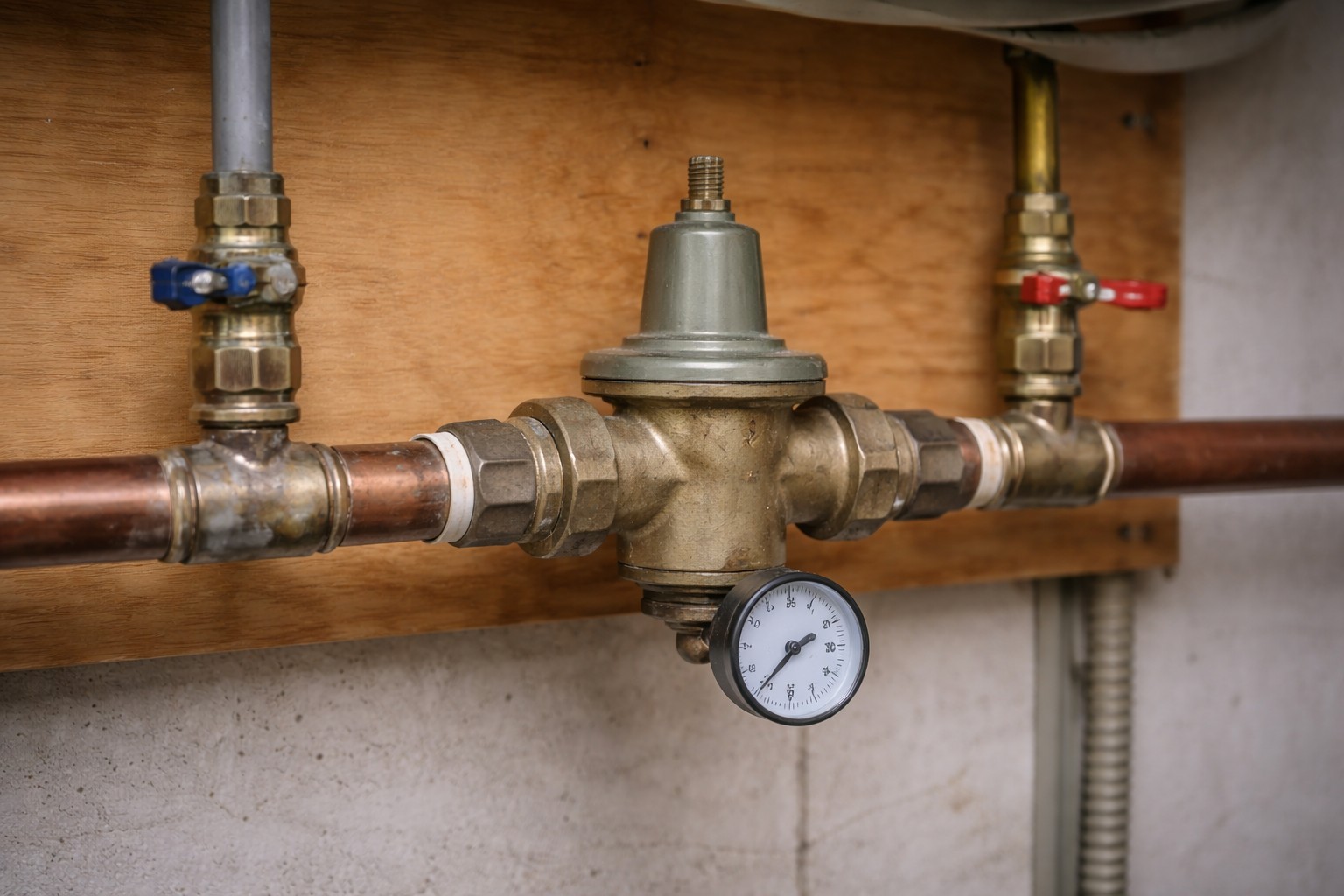
A PRV regulates pressure and a smart shutoff may monitor or close water; their functions are not interchangeable. Do not resolve an apparent conflict by cycling a regulator, turning its bonnet or disabling overlapping protection.
Safety and the original protective event
If fuel gas is suspected, leave the building or affected area immediately. Do not operate valves, switches, plugs, appliances or phones there. Call the gas emergency service from a safe location well away, and wait for responders’ clearance.
Keep away from wet electrical equipment. Do not touch wet appliances, plugs or switches, or enter water to reach a breaker. When no gas leak is suspected, power may be isolated only from a safely accessible dry location; otherwise call an electrician or emergency help. Wet equipment needs qualified assessment before it is used again.
Preserve the original alert, timestamp, displayed state and settings before clearing logs, resetting, unpairing or changing firmware. A dry room, zero flow after closure, a quiet meter or a matched timestamp does not prove there was no leak. Keep a known protective closure in place while its reason is assessed. For active leakage, obtain prompt help and use only an identified permitted private emergency control from dry safe access without force; do not operate unknown utility, shared or fire-service valves.
Keep these details
- Actual devices/models, mapped order and required protection/commissioning record.
- Original alert and existing known-point readings with static/flowing state.
- Ordinary event timing and any leak or temperature/supply fault already noticed.
What the evidence can establish
A flowing pressure reading is not automatically the PRV static setpoint. Downstream oscillation alone does not prove PRV hunting or a two-device feedback loop. A full-open faucet does not simulate every true leak or certify all shutoff detection.
What to do next
- Have the installer assess actual regulation and device data at appropriate controlled points.
- Do not cycle the PRV as an on/off valve, tighten bonnet/adjustment screws or replace a diaphragm from a symptom description.
- Keep both required regulation and leak/backflow protection effective. A small delay or threshold change is not a universal regulated-system setting.
- Use actual model-directed service and supported verification after the cause is established. No higher-flow or faucet “true leak” challenge is a household clearance test.
Actual controlled service
Internal plumbing service requires every feed/return and stored-pressure path identified, effective isolation, controlled pressure release and verification, safe energy control/cooling and compatible retained parts. Fully reassemble before restoring pressure. Opening a faucet while supply remains connected, a closed downstream point, an app “closed” icon, gloves or a towel does not prove depressurization. Do not restore water into open/loosely held parts or tighten a live union after a retest. Electrical measurements and wiring need the appropriately qualified service process.
Return to service under the actual model
If the underlying reason has been assessed and controlled and the actual product’s conditions are met, follow its exact permitted owner restoration method. Reopening is different from resetting, learning or disabling automatic protection. Verify the required leak checks, intended control, notifications and protective configuration under the actual instructions. A faucet challenge, no repeated trip or normal app icon does not certify detection of every leak. Plan for any critical/shared service with its responsible provider before an authorized test.
Can one protection feature be disabled because both devices mention pressure?
The actual functions, ratings and installation requirements must be established. Similar wording does not show redundant protection or authorize disabling it.
Related guides
- Smart shutoff locks closed after freeze
- Smart system bypass leaking
- Smart Water Shutoff System Failures