Quick Answer:
If water suddenly feels slick after a pressure drop or surge, it’s usually caused by dislodged soap, biofilm, mineral films, or lubricants from fittings—not pipes being stripped. Run and inspect the water, check multiple taps, and look at the expansion tank fittings for signs of oil. For related situations see Soapy water after outage and Oily residue after long vacation.
Why This Happens
When water pressure fluctuates, turbulence can loosen surface films inside pipes and fixtures. Common sources of slickness include:
- Soap or detergent residue left from previous use.
- Biofilm or microbial films that become dislodged when flow changes.
- Small amounts of oils or lubricants from valves, fittings, or recent plumbing work.
- Residue from certain water treatments or softeners.
Actual physical stripping of a proper pipe coating by turbulence is very unlikely in home plumbing. Sudden oily smells or sheen that reappears after standing are more concerning and worth checking promptly.
Step-by-Step What to Do
1. Note where and when it happens
- Try cold and hot taps, upstairs and downstairs. If it’s only one faucet, the issue is local to that fixture.
- Note whether slickness started right after a pressure event (outage, main repair, water hammer).
2. Run the water and collect a sample
- Run cold water for several minutes to flush lines. Smell and feel the water on a clean paper towel.
- If the towel shows a greasy film or residue, keep the sample and note the appearance.
3. Inspect fixtures and aerators
- Remove faucet aerators and check screens for slimy or soapy buildup. Clean and reassemble.
- Check showerheads and supply hoses for similar deposits.
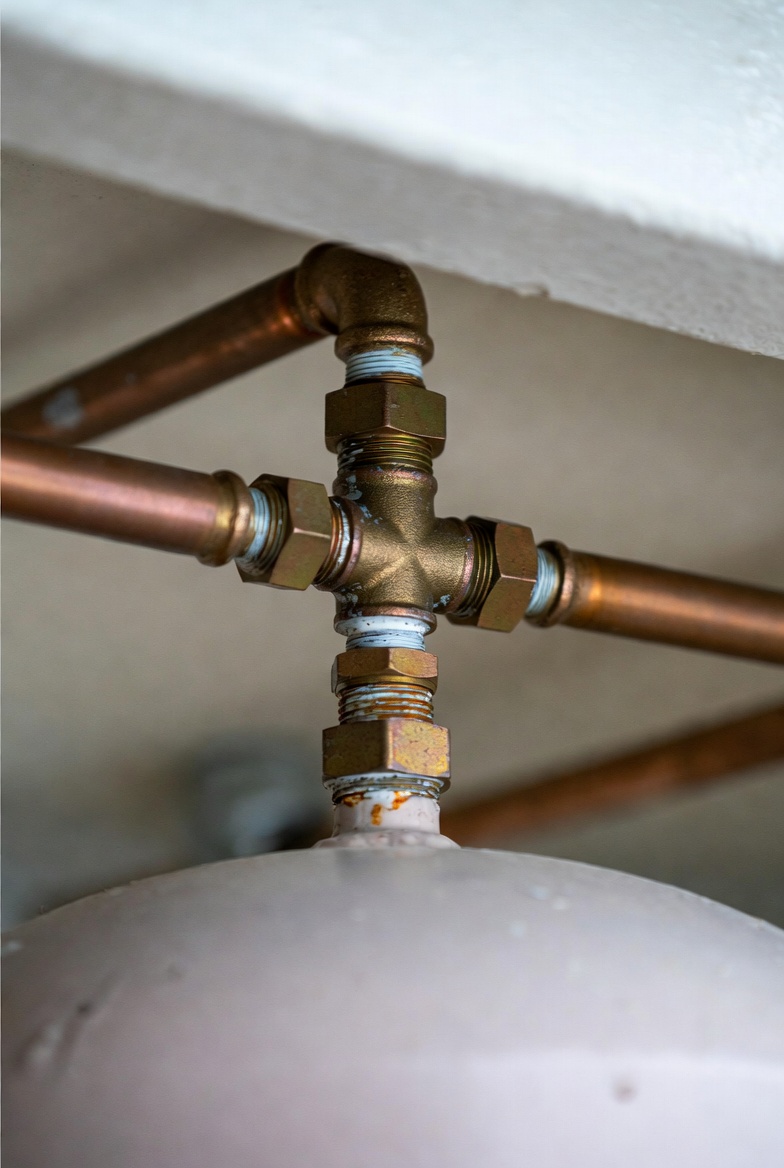
4. Check the expansion tank fittings for oily residue
- Locate the expansion tank (usually on the cold-water line near the water heater).
- Wipe fittings and connections with a paper towel or cloth to see if an oily film appears. Do not loosen fittings while the system is pressurized.
- If you find an oily film at the tank connection, note it and consider contacting a professional—this can indicate seal or lubricant issues that need attention.
5. Consider system-wide sources
- Check if a softener, filtration media change, or recent plumbing repair coincided with the pressure event.
- If only the hot water is slick, the water heater or tank anode condition may be involved; consult a technician before opening the heater.
6. Flush and monitor
- After flushing and cleaning aerators, run water for several hours and recheck. Temporary films often clear with flushing.
- If slickness returns or there’s an oily smell, stop using the water for drinking and call a professional.
What Not to Do
- Do not overtighten expansion tank fittings — overtightening can damage threads or seals and create leaks.
- Do not open or disassemble a pressurized tank or water-heater components without proper training.
- Do not ignore an ongoing oily smell or visible sheen that won’t clear after flushing.
When to Call a Professional
Call a licensed plumber if any of the following apply:
- There is a persistent greasy film or oil smell after flushing and cleaning fixtures.
- Multiple fixtures are affected throughout the house.
- You find oily residue at the expansion tank or other fittings and you’re unsure how to safely depressurize the system.
- Water is discolored, has a strong chemical or petroleum odor, or you suspect contamination.
Safety Notes
- Turn off electrical power and gas to a water heater before any inspection that requires work on the heater.
- Do not loosen any pressurized plumbing connections. Depressurize lines first by shutting off the main and opening faucets.
- Wear gloves when inspecting oily residues and avoid ingesting water until the source is confirmed safe.
Common Homeowner Questions
- Is the slick water dangerous? Usually not if it’s just soap or biofilm; if it smells oily or chemical, avoid drinking it and call a pro.
- Could pressure changes strip pipe coatings? Very unlikely—turbulence typically dislodges surface films, not coating layers.
- Can I fix this myself? Simple flushing and cleaning aerators often help; persistent oily residue or multiple affected fixtures merit a plumber.
Related Articles
If you’re troubleshooting a similar symptom, these guides may help:
For the full directory, see Oily Sheen, Slick Feel, or Soapy-Like Water.