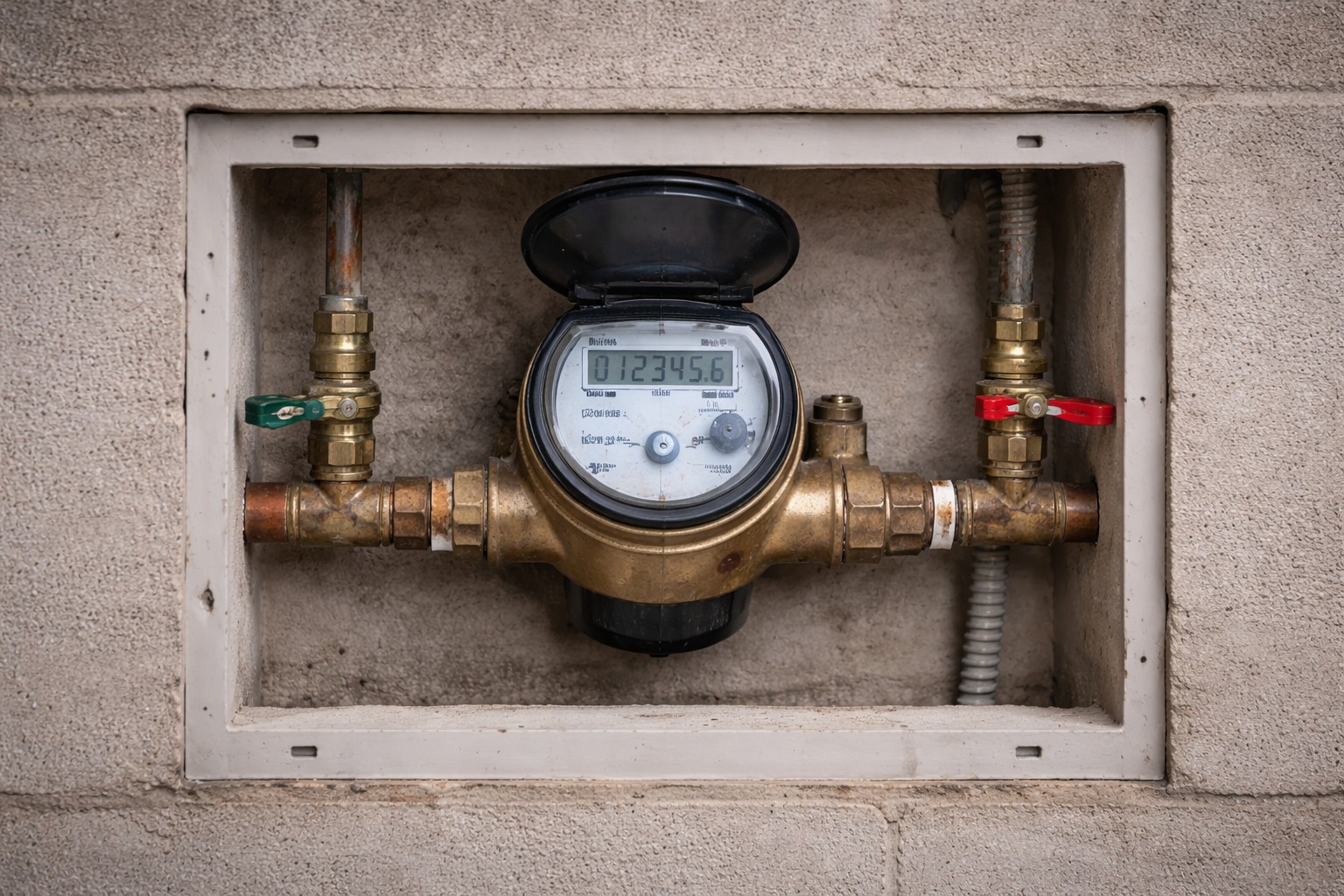
Quick Answer:
Gritty sand or visible particles after a nearby utility crew works on the street usually means material in the main was disturbed. Collect a clear-jar sample, run cold water from an outside hose bib or a tub spout until it clears, and notify the water utility if heavy amounts remain. Do not use hot water or run appliances until the cold water is particle-free.
Why This Happens
When crews open a water main or move valves, sediment, sand, and mineral deposits that normally sit in the pipes can get dislodged and move downstream. That material shows up as gritty particles, cloudy water, or visible sand in taps. This is similar to other post-repair conditions such as Water cloudy after turning main back on, where air and fine material are pushed into the system during work.
Step-by-Step What to Do
1. Collect a clear-jar sample
Use a clean, clear glass or plastic jar (a mason jar works). Fill it from the faucet without rinsing the jar, screw the lid on, and set it in a light place. The sample shows the utility what you’re seeing and helps them assess how much sediment is present.
2. Flush with cold water at a hose bib or tub spout
Run cold water from an outdoor hose bib or a bathtub spout (not hot) for several minutes until the flow runs clear. These outlets have higher flow and will move sediment out faster. Repeat at other exterior or basement spigots if you have them.
3. Check other fixtures and appliances
- Run a cold tap at a sink and the shower to see if particles persist.
- Do not use the dishwasher, washing machine, water heater or ice maker until the cold water is clear.
4. Notify the water utility if heavy or persistent
If you still see visible sand or heavy amounts after flushing, call your local water utility and give them the jar sample or describe the issue. Persistent sediment can indicate a larger disturbance that the utility should address.
5. Clean fixture screens and the PRV after flushing
After the water runs clear, remove and rinse faucet aerator screens and shower screens to clear trapped grit. If your home has a pressure-reducing valve (PRV) and it has a removable screen or strainer, follow the manufacturer instructions to clean it; if you’re unsure, have a plumber check it. Minor post-repair particles are also covered in cases like Particles in water after pipe replacement.
6. Avoid hot water until the cold clears
Do not run hot water, use the water heater, or run appliances that use hot water until the cold water is free of sand. Running hot draws the sediment into the water heater and appliances, where it can cause clogs or damage.
What Not to Do
- Don’t ignore visible sand—treat it as a utility disturbance and protect appliances.
- Don’t run hot water, the water heater, or the dishwasher/washing machine until the cold clears.
- Don’t try to disassemble a PRV or complex plumbing component if you’re not experienced; that can cause leaks or pressure issues.
When to Call a Professional
Contact a plumber if:
- Sand continues after thorough flushing and the utility says the mains are clear.
- Your fixtures, valves, or appliances show signs of damage (reduced flow, grinding in pumps, clogged screens).
- You need help cleaning a PRV or internal filter that you cannot access safely.
Safety Notes
- Turn off appliance supply valves if heavy sediment is present to protect pumps and valves.
- Avoid electrical work near wet fixtures. If water pooling occurs, cut power to affected circuits before handling electrical connections.
- Keep the jar sample and note times you first noticed the particles—this helps the utility track the issue.
Common Homeowner Questions
- Will the sand hurt my plumbing? — Minor amounts usually won’t harm pipes but can damage appliances and clog screens, so flush and protect equipment.
- How long until it clears? — Often a thorough cold-water flush clears things within minutes to hours; persistent problems need utility follow-up.
- Can I filter this out myself? — Temporary faucet or point-of-use strainers help; if recurring, consider a professional whole-house sediment filter.