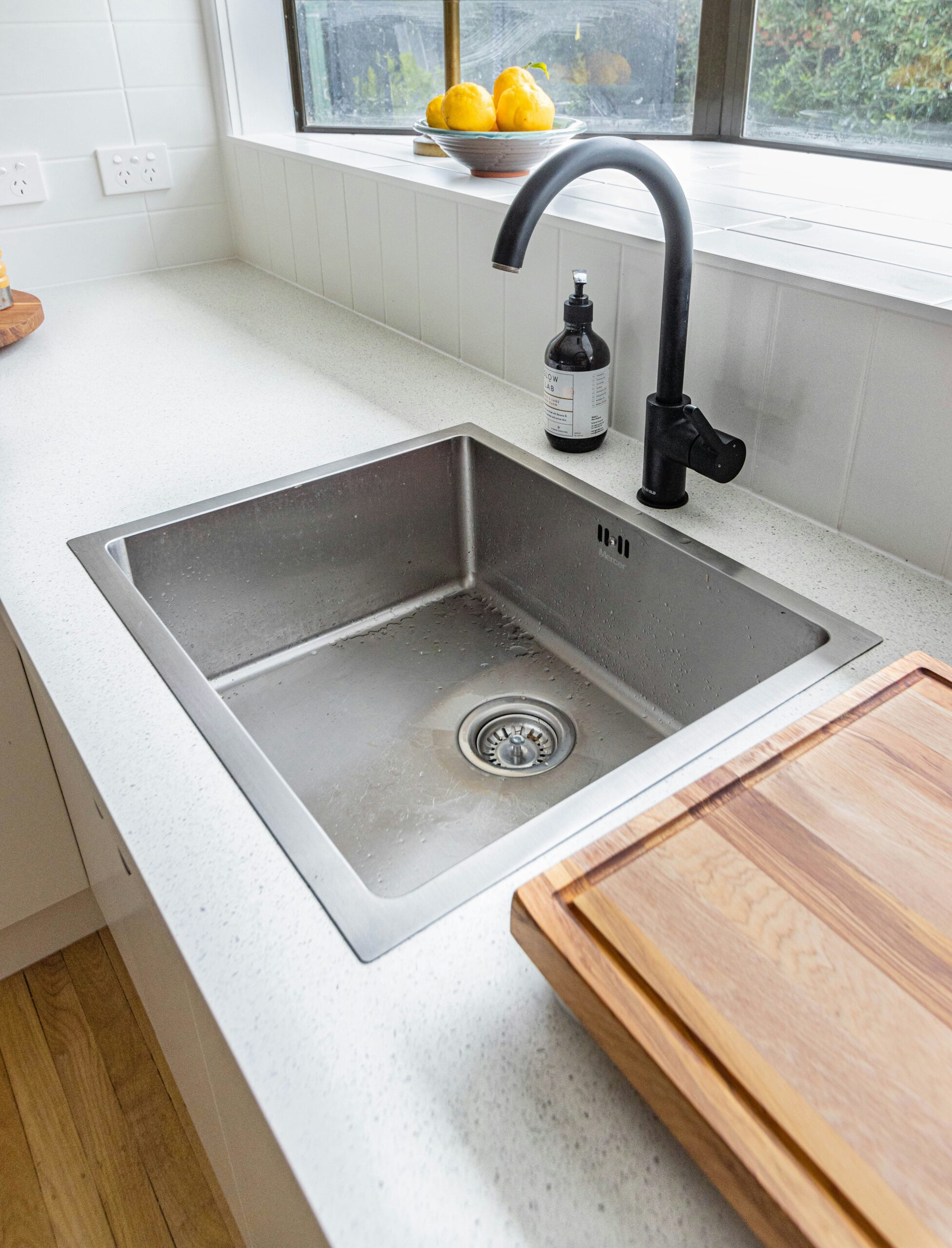
For backup noticed after switching detergent, stop added detergent, water and appliance operation. Keep the actual product name, dose and whether it was used by hand or in an automatic dishwasher. Timing and bubbles do not prove foam is the sole cause or rule out a fixed restriction.
Stop added discharge and assess the hazard
Stop feeding food, running the disposal and adding sink water when the level rises. Keep a connected dishwasher from pumping into the affected drain. Do not run another cycle, fill and dump a basin or use motor bursts to reproduce the backup. Stop or pause appliances with their actual instructions from safely reachable dry controls; Cancel/Drain can start pump-out on some models.
Do not touch wet plugs, switches or wiring, or enter water to reach a breaker. Isolate affected power only from safe dry access, or get qualified help. Suspected electrical wetting needs qualified assessment before reuse. Keep people and pets away from wastewater. Seek prompt drainage service for sewage, continuing overflow or several affected fixtures. For dangerous gas-like fumes or exposure symptoms, leave and call emergency services from outside. If fuel gas is suspected, leave without operating valves, switches or phones there and call from well away.
Identify the product and the actual return location
- Hand-dish soap versus automatic detergent: They are not interchangeable. Wrong type, excess dose or residue carried into a dishwasher can cause excess suds, but use the actual model and product recovery directions rather than a generic recipe.
- Foam versus wastewater return: Record whether foam appeared in the tub, at a door or air gap, or in the rising sink basin. Do not run the disposal with hot water to compare the patterns or deliberately recreate over-sudsing.
- Other chemicals were used: Check for drain opener or unknown residue before any tools or permitted rinsing. Do not add vinegar, baking soda, more detergent or an improvised neutralizer. Product compatibility and an accepting drain must be established first.
Choose a bounded service path
Identify any drain opener, detergent or winterizing substance already present and follow its actual label. Do not plunge, snake, loosen plumbing, operate the disposal or add an improvised neutralizer while hazardous residue may remain. A wait or guessed flush is not clearance. Let hot contents cool without testing them by hand.
Never put hands or fingers inside the disposal, even with power disconnected. Before permitted manual work, safely disconnect the actual affected sources; a control switch alone is not service isolation. Use the installed model’s approved tools and access, with no assumed wrench size or removable guard. A reset does not clear a drain or certify a jam is gone. Follow actual cooling and control-state instructions, remove tools and restore guards before operation. Re-isolate before returning to manual work after a powered check.
Only an isolated ordinary-water sink restriction with sound parts and no sewage, chemical or electrical hazard belongs in surface cleaning, a bounded cup-plunger attempt or serviceable-trap care. Keep connected inputs inactive, support parts and capture all retained liquid. Do not open unassessed cleanouts, force unidentified joints or feed a cable through the disposal. Clean a removed trap away from the sink; never run the faucet into a disconnected drain. Use the correct seals and complete secure reassembly before a small attended cool-water leak check into a known accepting route. Stop at rising water or leakage. Persistent or shared backup needs a plumber rather than blind escalation to longer cables.
Will a hot-water flush cure a detergent-related backup?
Do not use added hot flow or a powered disposal as a clearing experiment. Follow actual product and appliance directions after the hazards and route are assessed; recurrent or shared backup needs drainage service even if the suds disappear.
Related situations
For an ordinary isolated sink restriction after hazards are excluded, see bounded kitchen-sink cleaning and reassembly.
Sources and limits
- InSinkErator Complete example: normal operation, jam recovery and food limits
- Moen INS10477C example: isolation, tools and separate dishwasher inlet
- Oatey center-outlet example: identified washers and assembled leak check
- Madison Metropolitan Sewerage District: stop discharge during sewer backup
- CDC: electrical hazards near water
- Wisconsin DHS: sewer-gas hazards
- Example drain-opener label: residue and mechanical-method restrictions
- Whirlpool: automatic-dishwasher detergent and excess suds
These are manufacturer and safety references, not identification of your installed appliance or a plumbing inspection. Independent professional review and household field tests have not been obtained.