Quick Answer:
If your water pressure goes up and down depending on the day of the week, it often follows the city’s usage patterns. Many municipal systems and large users create predictable peaks on weekdays (morning and evening) and lower demand on weekends. Track pressure over time and compare it to local demand schedules before changing anything inside your home.
Why This Happens
- Municipal water systems serve many customers. When many people shower, run washing machines, or use irrigation at the same time, supply pressure in parts of the distribution system can drop.
- Large nearby users (businesses, schools, or irrigation districts) can create predictable weekday peaks that don’t occur on weekends.
- Pressure behavior can depend on time of day as well as day of week—morning and early evening are common low-pressure windows.
- Temporary system maintenance or seasonal changes in water use can make weekday patterns more pronounced.
Step-by-Step What to Do
Prepare a simple log
- Buy or borrow a basic water pressure gauge that screws onto an outdoor hose bib or indoor service valve.
- Create a log (notebook or spreadsheet) with columns for date, time, location (hose bib, utility room), and pressure reading in psi.
Take readings at key times
- Measure at least twice a day for a week: early morning (before typical morning use), mid-day, and early evening (peak evening use).
- Include both weekdays and weekend days to spot patterns tied to workweek routines.
- Note any unusual events (city maintenance, known irrigation cycles, holidays).
Compare and correlate with city demand patterns
- Call or check the water utility’s published schedules or notices to learn about regular maintenance or known peak demand times.
- Compare your log to those schedules. Look for repeated drops at the same weekday/time—this suggests municipal demand rather than a home plumbing fault.
- Ask a neighbor to check their pressure at the same times; matching dips point to a system-wide cause.
Test components only after confirming patterns
- If low pressure happens only during known city peak times, avoid replacing interior fixtures immediately.
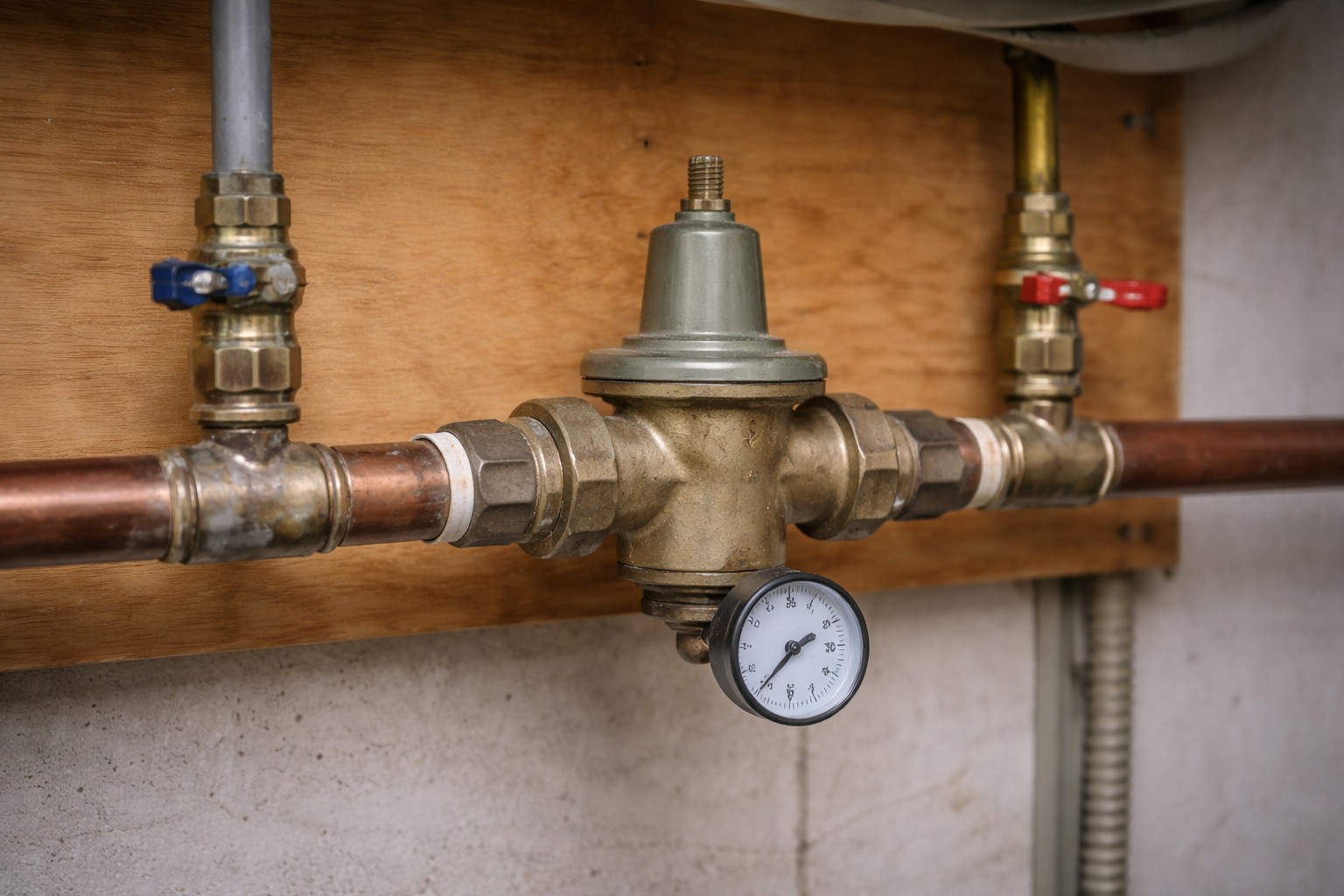
- If low pressure is constant (not tied to weekday patterns), then test the main shutoff, pressure regulator (if present), and house piping for leaks or failures.
What Not to Do
- Do not replace in-home plumbing before confirming municipal timing patterns.
- Do not buy a booster pump or new pressure regulator as a first step without confirming the problem is inside your property.
- Do not start major plumbing changes during a suspected system-wide low-pressure period—wait until you have logged data and compared patterns.
When to Call a Professional
- Call your water utility if multiple neighbors report the same pattern or if the utility confirms scheduled demand or maintenance is causing dips.
- Hire a licensed plumber if low pressure is constant regardless of time or if you find signs of leaks, discolored water, or sudden severe drops.
- Contact a professional if the pressure regulator fails or if you’re unsure how to interpret your log; a plumber can test regulators and inspect the service line safely.
Safety Notes
- Turn off the main water before doing any work on house piping and follow basic lock-out steps if required.
- Use proper tools when attaching or removing a pressure gauge to avoid damaging the spigot or valve.
- Avoid electrical contact when working around water. If you need to access areas near electrical equipment, shut power off or call a pro.
- Don’t attempt to modify or bypass a backflow prevention device—this can contaminate your water supply and is often illegal.
Common Homeowner Questions
- Low pressure only in mornings — Is this normal?
Yes. Morning peaks are common when many people use water at the same time; log readings to confirm. - How long should I log pressure?
At least one full week including both weekdays and a weekend to reveal patterns. - Pressure low when neighbors are home — Should I call the utility?
If multiple homes show the same drops, contact the water utility for confirmation and guidance.
Related Articles
If you’re troubleshooting a similar symptom, these guides may help:
For the full directory, see Water Pressure Changes by Time of Day.