Quick Answer:
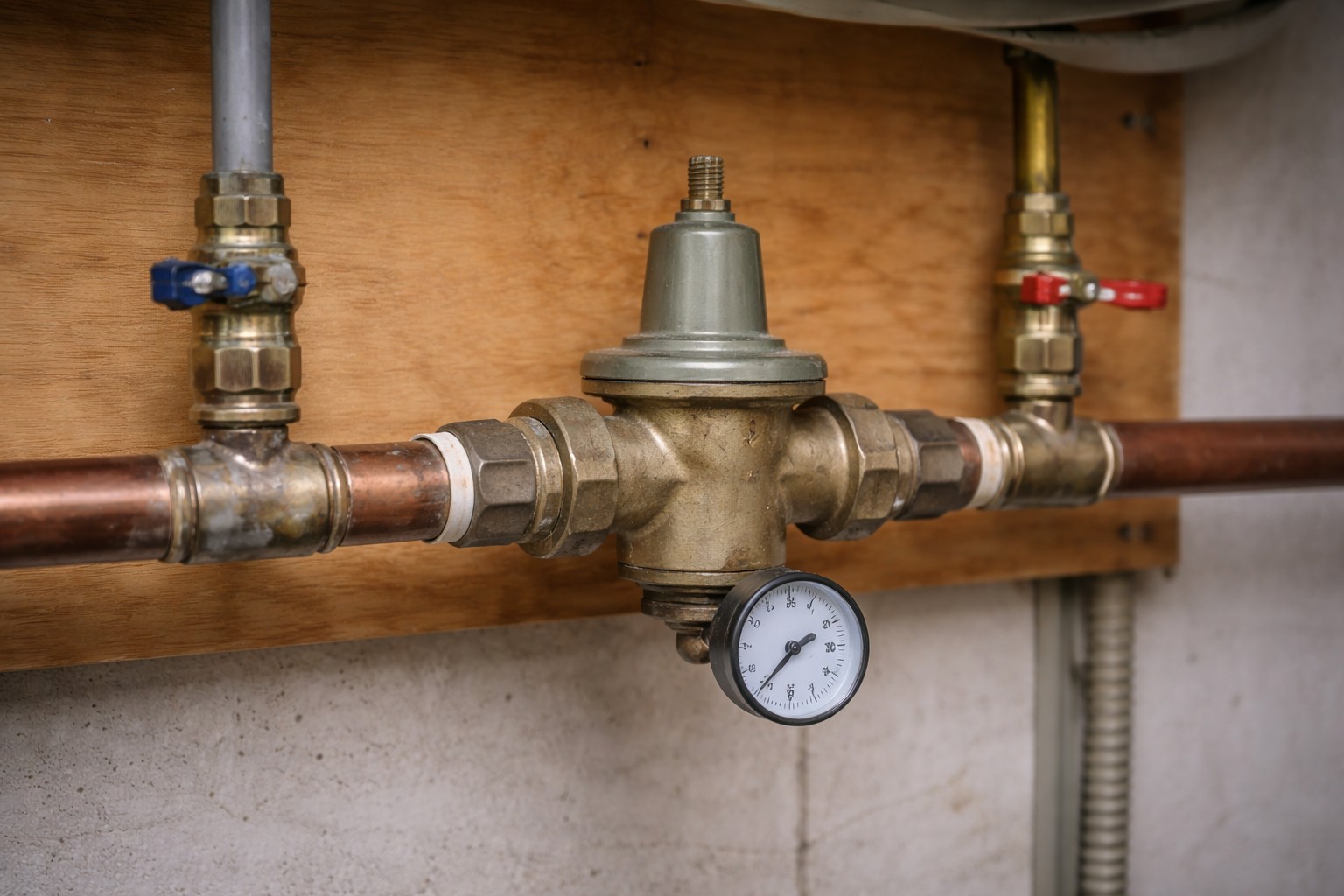
If cold-side water stays steady while all hot fixtures surge or drop, the problem is in the hot side path — usually something at or after the water heater (valve, sediment, mixing device, or recirculation/pump). First compare hot and cold pressure at the same fixture and watch the heater while the fluctuation is happening. That information usually tells you whether the issue is the heater itself or a downstream valve or device.
Why This Happens
- The cold supply and house pressure regulator are working, so anything unique to hot water can cause instability: debris or scale inside the heater, a failing internal valve, a tempering or thermostatic mixing valve sticking, or a recirculation pump cycling.
- Tank water heaters can build sediment that intermittently blocks the outlet. Tankless heaters can misread flow and cycle on/off when debris or low flow is present.
- Appliance or valve issues located only on the hot side (like a problem in a shower mixing cartridge or a faulty check valve) will affect all hot fixtures or a whole zone.
- If this started after work on the heater or plumbing, check the related equipment — see **Hot water pressure loss after heater install**. If the trouble is location-specific, also look at **Hot pressure weak only upstairs**.
Step-by-Step What to Do
Step 1: Compare hot vs cold at the same fixture
- Open a tap and run hot and cold separately at the same fixture (for example, the kitchen sink). Note flow and any pressure changes.
- For a quick check, use a bucket and stopwatch to compare flow rates; for a precise check use a pressure gauge on the fixture line if you have one.
- If cold stays steady while hot surges or drops, the issue is downstream of the cold shutoff — proceed to observe the heater and hot-side devices.
Step 2: Observe the heater during fluctuations
- Run a hot fixture until the instability appears and watch the water heater: do you see the burner/fire cycle, pilot go out, or the unit trip on an error code? Does the pressure relief valve drip or open?
- For tankless units check for rapid on/off cycling or error lights; for tanks listen for unusual sounds when flow changes. Record what the heater does at the same moment the hot water pressure changes.
- Do not touch electrical parts or gas components while the unit is powered; only observe from a safe distance.
Step 3: Check accessible valves and fixtures
- Ensure the hot supply shutoff at the heater is fully open and any mixing valves or tempering valves are not partially closed or stuck.
- Clean aerators and check single-handle cartridges or shower mixing valves for debris that can cause intermittent flow restriction.
- If you have a recirculation pump, turn it off briefly to see if the fluctuation stops — a failing pump or control can cause surges.
Step 4: Isolate to the heater or downstream
- Turn off the cold feed to the water heater (if your plumbing layout allows) and open a hot tap. If the problem stops, the issue may be backflow or a device between the heater and fixtures.
- Close supply lines to individual zones or appliances to find if a particular branch causes the instability.
Step 5: Simple maintenance and monitoring
- Consider flushing the tank to remove sediment if you have a storage heater and you see signs of blockage or noise. For tankless units, a professional flushing of the heat exchanger may help.
- After any adjustment, run the system and watch the heater behavior and hot vs cold balance for a while to confirm the fix.
What Not to Do
- Do not replace cold-side plumbing for a hot-side-only problem.
- Do not disable or tamper with the pressure relief valve or safety controls to “test” pressure — that is dangerous.
- Avoid raising thermostat settings or creating extreme hot demand to force a symptom; that risks scalding and damage.
When to Call a Professional
- Call a plumber if you cannot isolate the problem, if the heater shows error codes you don’t understand, or if you see leaks or the pressure relief valve discharging.
- Call a gas technician for any gas appliance repairs or if you suspect the burner or gas control is failing. For complex tankless electronics or internal repairs, call a qualified service tech.
- If you’re uncomfortable turning off supplies, opening plumbing, or working near gas/electrical components, get a pro to avoid risk.
Safety Notes
- Turn off electrical power or gas to the heater before attempting any physical inspection or repairs on the unit.
- Hot water can scald. Reduce temperature or shut off hot supply before testing by hand or working on fixtures.
- Release pressure before opening heater drains or lines. If you smell gas or suspect a leak, leave the area and call the gas utility or plumber immediately.
Common Homeowner Questions
- Why does cold stay steady while all hot taps surge? Because the hot path includes the heater and its valves/pumps; a problem there affects only hot water.
- Can I fix this by replacing a faucet cartridge? Sometimes—if the issue is an individual fixture. If all hot fixtures are affected, the root is likely at the heater or a shared valve.
- Is it safe to flush the heater myself? Basic tank flushing is safe if you follow the manual and shut off power/gas first; for tankless or complex issues, hire a pro.
Related Articles
If you’re troubleshooting a similar symptom, these guides may help:
For the full directory, see Pressure Fluctuates Only on Hot Water.