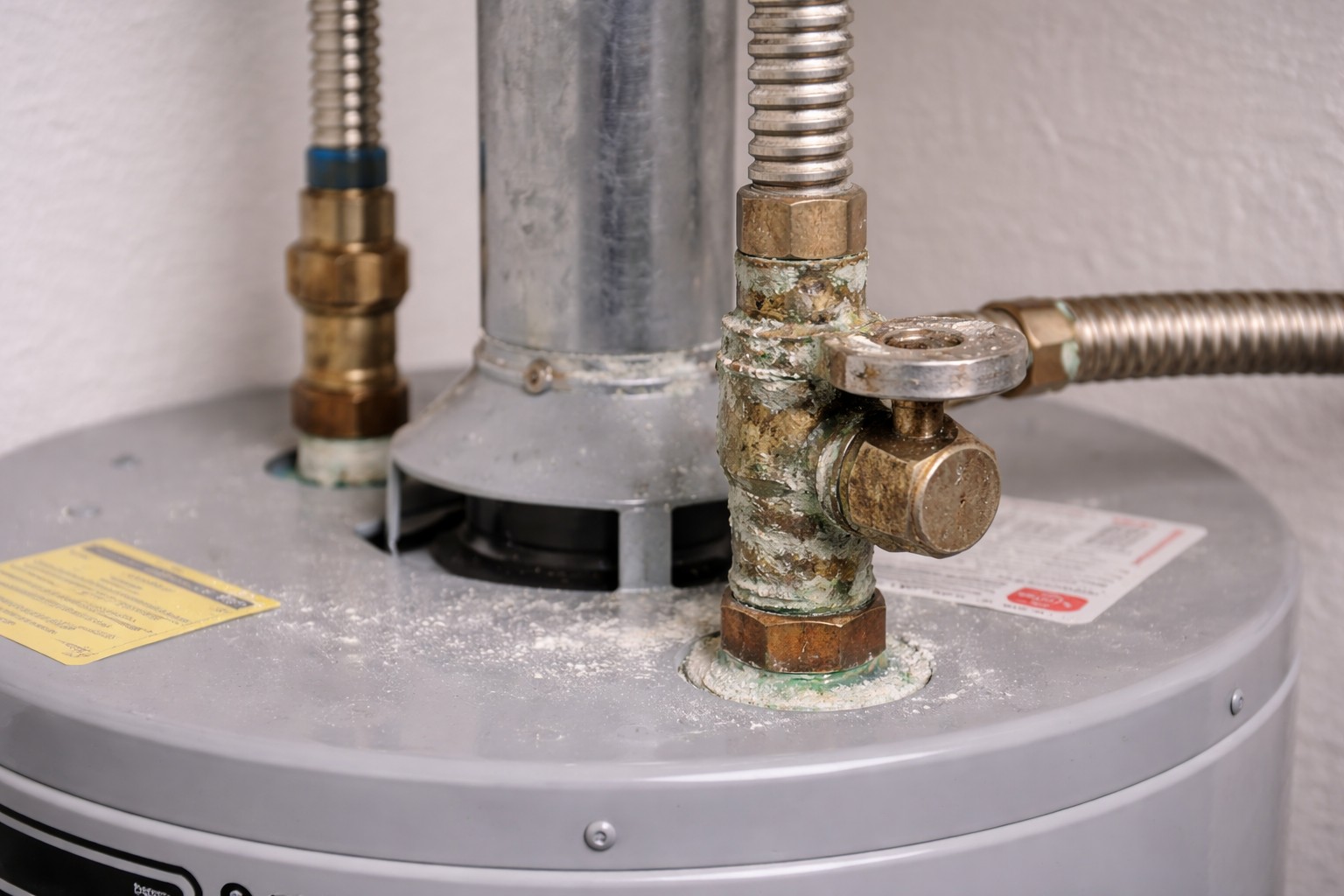
Quick Answer:
If static pressure is normal but pressure climbs each time the water heater fires, you likely have thermal expansion in a closed system. Prove the problem first by using a max-needle pressure gauge on an outdoor or laundry hose bib, record the cold static pressure, run a full heat cycle with no water use, then read the peak. If the peak is significantly higher, check for a closed-system device (PRV/backflow/check) and verify the expansion tank’s air charge matches the cold static pressure.
Why This Happens
When the water heater heats cold water, the water expands. If your plumbing is an open system (no backflow preventer or pressure-reducing valve), the extra volume can push back to the street and relieve the pressure. In a closed system, the expanding water has nowhere to go, so pressure in the house rises until something gives—often the relief valve, an expansion tank, or fittings.
This rise can be short and only occur while the heater completes a heat cycle, which is why fixtures feel over-pressured for a short window. Thermal expansion can also cause other symptoms such as valves dripping or noisy pipes—see Thermal expansion causing relief valve drip and Thermal expansion causes hammering pipes for more on those problems.
Step-by-Step What to Do
1. Get a max-needle pressure gauge
- Buy a simple max-needle (or high-water mark) pressure gauge that screws onto a standard hose bib. These hold the highest pressure reached while you’re watching or away from the gauge.
- Mount it on an outdoor bib or the laundry tub hose bib—somewhere you can watch or return to after the heater runs.
2. Record the cold static pressure
- Before the heater runs, make sure no water is being used anywhere in the house (turn off faucets, showers, dishwashers, etc.).
- Record the static pressure shown on the gauge. This is your baseline cold static pressure.
3. Let the heater complete a full heat cycle with no water use
- Run the heater until its thermostat turns it off. Do not run hot water while you do this—you’re testing how pressure changes when water heats but volume stays in the system.
- After the heater cycles off, read the peak recorded by the max-needle gauge.
4. Compare cold static vs. peak
- If the peak is only a few psi higher, that’s normal. If it rises sharply (commonly 10–40+ psi above static), you have significant thermal expansion and a closed-system issue.
5. Confirm closed-system devices
- Look for a pressure-reducing valve (PRV) at the main water supply, a backflow preventer near irrigation or utility connections, or a built-in check valve on a well pump. Any of these can create a closed system.
- If you find one, that explains why the expanding water has nowhere to go and why pressure spikes when the heater runs.
6. Check and set the expansion tank charge
- Find the expansion tank (often near the water heater). It will have a small Schrader valve (tire-style valve) on the air side.
- With the house water supply off and a faucet opened to relieve water pressure, use a standard tire gauge to check the tank’s air pressure. It should be set to the same value as your cold static pressure.
- If the tank pressure is low, add air until it matches the cold static pressure. If the tank is waterlogged (no air cushion), it may need replacement.
- If you are not comfortable doing this, call a plumber to avoid draining the tank or working around the heater.
What Not to Do
- Don’t start replacing faucets—prove the spike with a max-needle gauge so you fix the root cause.
- Don’t remove or tamper with the temperature & pressure relief valve unless you know what you’re doing; it’s a safety device.
- Don’t assume a minor pressure bump is harmless—repeated high spikes stress fixtures and can shorten the life of valves and appliances.
When to Call a Professional
- If the peak pressure rises sharply and you can’t locate or identify a PRV/backflow/check device.
- If the expansion tank won’t hold pressure, is waterlogged, or you need the tank replaced or recharged but aren’t comfortable working on it.
- If you see relief valve discharge or any leaking, or if you smell gas or observe other unsafe conditions around the heater.
Safety Notes
- Do not work on the water heater’s gas or electrical components unless you are qualified. If you must drain the heater or remove piping, turn off power/gas first and follow the manufacturer’s instructions.
- When checking the expansion tank pressure, relieve water pressure from the system first (turn off the main water supply and open a faucet) to avoid injury or water damage.
- If you’re unsure about any step—especially anything involving the heater itself—stop and call a licensed plumber. Safety first.
Common Homeowner Questions
- How much pressure rise is normal? A few psi is normal; a steady rise of 10 psi or more during heating suggests a problem.
- Can I just install an expansion tank myself? You can if you are comfortable with basic plumbing and follow instructions; otherwise hire a pro to size and install it correctly.
- Will a leaking relief valve fix this? No—valves leak because they’re relieving excess pressure. Fix the cause (closed system or faulty expansion tank) rather than relying on a leak to release pressure.
Related Articles
If you’re troubleshooting a similar symptom, these guides may help:
For the full directory, see Thermal Expansion Pressure Behavior.