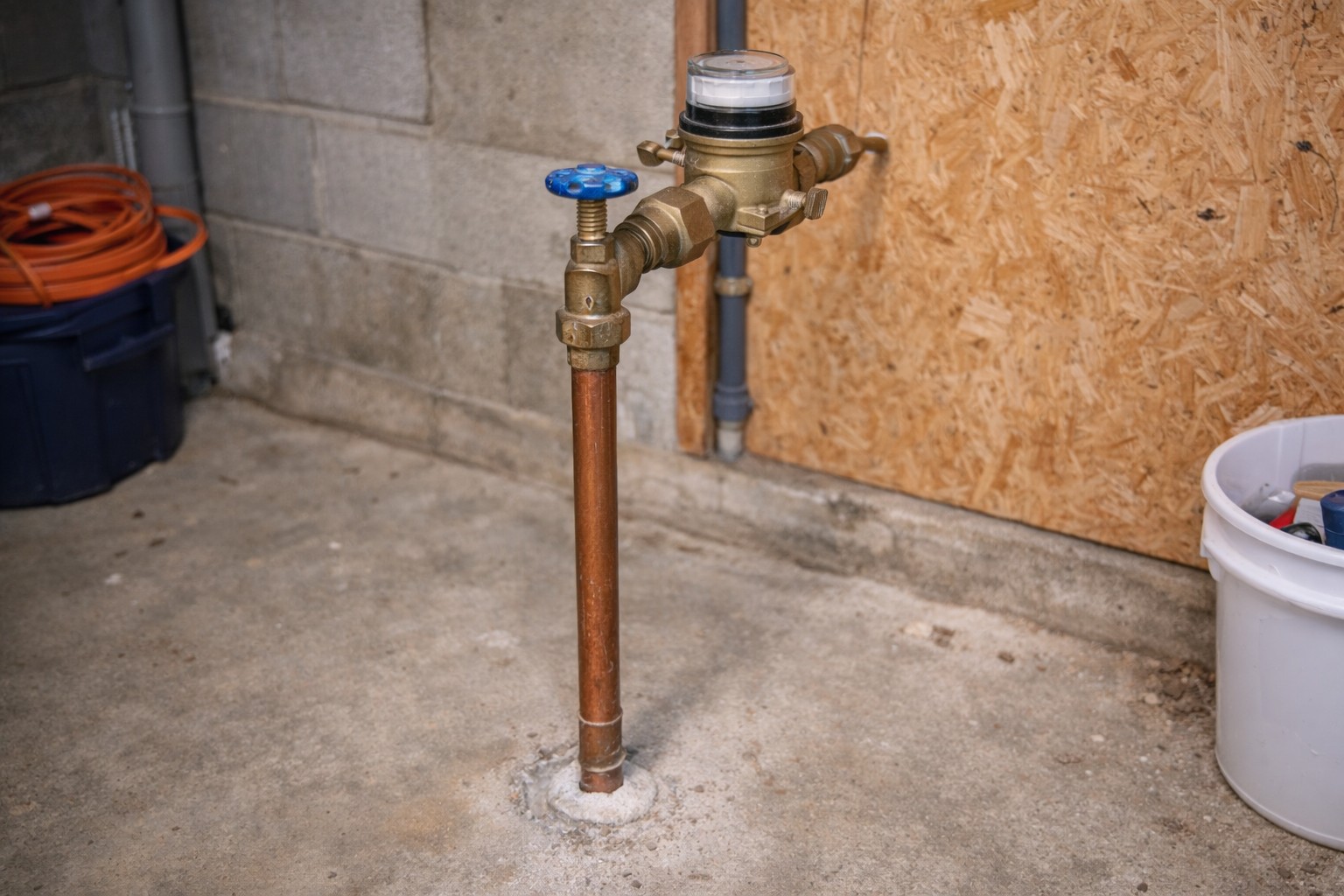
Quick Answer:
If pressure is normal when static but collapses as soon as water is used, a growing sediment restriction at the service entry, a sediment filter, or the pressure reducing valve (PRV) is likely. Attach a pressure gauge to a hose bib, compare static versus flowing pressure, inspect and clean the filter or PRV screen, flush the entry line, and if pressure stays low request a meter screen check or PRV service.
Why This Happens
Water mains and private wells can carry sand, rust, and mineral particles. These particles collect at narrow points—service entry screens, sediment filters, strainers inside a PRV, or the meter screen. When faucets are closed you’ll see normal static pressure because the restriction isn’t being pushed hard. Under flow, the restriction chokes the line and pressure collapses. These blockages can also cause uneven flow that wears fixtures and appliances; see Whole-house sediment issues and how they relate to Sediment damaging appliances.
Step-by-Step What to Do
1. Gather a gauge and pick a hose bib
- Get a basic inline pressure gauge that screws onto an exterior hose bib or spigot.
- Choose a bib near the main service entry for the most representative reading.
2. Measure static pressure
- With all water fixtures off (inside and outside), attach the gauge and note the static pressure. This is your supply pressure at rest.
- Typical municipal static pressure is often 50–70 psi; private well systems vary.
3. Measure flowing pressure and compare
- Open a large faucet or hose fully to create steady flow and watch the gauge. Note the flowing pressure.
- Compare readings: if static is normal but flowing drops dramatically, a restriction is likely between the meter/entry and your fixtures.
4. Inspect sediment filter and PRV screen
- Locate any entry sediment filter (bag/cartridge) and the PRV near the main shutoff. Shut off the incoming supply if required and relieve pressure before opening filters.
- Check and clean the filter element; many filters have a removable screen or cartridge that can be rinsed or replaced.
- Some PRVs have a small screen/strainer on the inlet—inspect it for trapped material and clean per the manufacturer’s directions.
5. Flush the entry line
- After removing filters/screens, briefly open the main to flush out loose sediment. Do this slowly at first to avoid dislodging large amounts that could harm downstream fixtures.
- Flush until water runs clear, then retest flowing pressure with the gauge.
6. If pressure is still low
- Ask your water provider to inspect the meter screen—meter inlet screens can become clogged and are their responsibility to check and clean.
- If the meter is clear, have a plumber test and service the PRV or replace a failing PRV that won’t hold pressure under flow.
What Not to Do
- Don’t crank the PRV up to “fix” low pressure—forcing it higher can damage the regulator, cause water hammer, or create unsafe high pressure in parts of the system.
- Don’t assume low pressure is always low supply—sediment restrictions can mimic a low supply and require cleaning rather than raising regulator settings.
- Don’t work on any pressurized part without shutting the main off and relieving pressure first.
When to Call a Professional
- If you can’t locate or safely access the filter, PRV, or meter screen.
- If flushing and cleaning don’t restore flowing pressure—especially when the meter screen may be at fault or the PRV needs service or replacement.
- If multiple fixtures show strange behavior (sputtering, abrasive particles), call a plumber to diagnose potential corrosion, scale buildup, or failing equipment.
Safety Notes
- Turn off the main shutoff and relieve pressure before opening filters or working on the PRV.
- Wear eye protection and gloves when flushing sediment; particles can spray and carry contaminants.
- If you smell gas or detect other hazards while working near the meter or utility lines, stop and contact your utility provider immediately.
Common Homeowner Questions
- How do I know if the PRV is bad? A PRV that won’t hold pressure under flow, or that leaks at the body, likely needs service or replacement.
- Can I clean the meter screen myself? Usually no—meter screens are the water provider’s responsibility; ask them to check it.
- How often should entry filters be checked? Check filters after any turn-on or service work and at least every 3–6 months in areas with known sediment; more often if you see pressure or clarity changes.