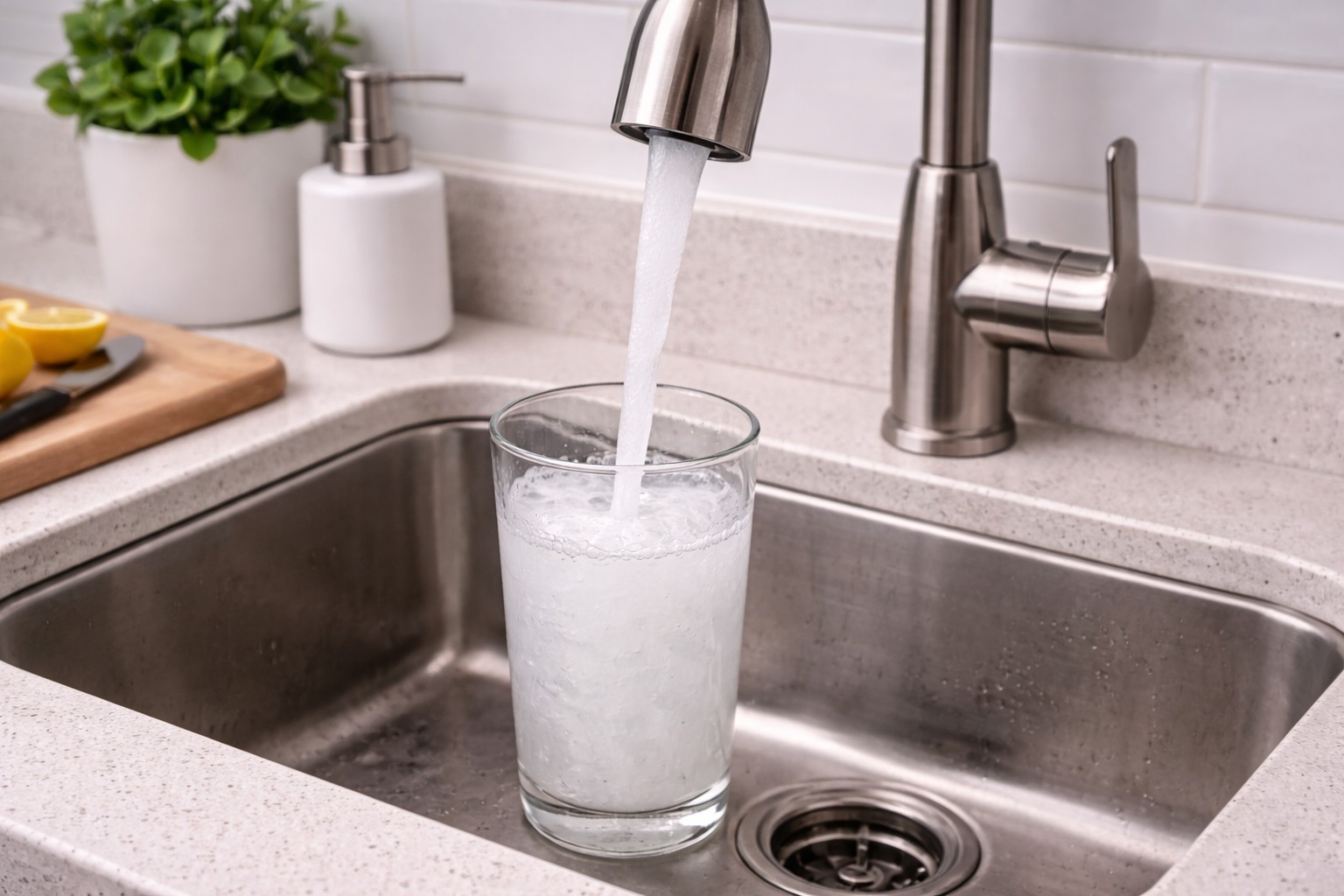
Cloudiness after reopening can include air or particles. Bottom-up clearing is a useful limited air observation, not proof that no dissolved or coexisting contaminant is present.
Use and safety first
Keep away from wet electrical equipment. Do not touch wet appliances, plugs or switches, or enter water to reach a breaker. When no gas leak is suspected, power may be isolated only from a safely accessible dry location; otherwise call an electrician or emergency help. Wet equipment needs qualified assessment before it is used again.
For leakage or immediate danger, use only a separate known safely accessible permitted owner control without force or obtain prompt supplier/plumber help. Keep out of potentially energized water and do not touch wet appliances or enter water to reach a valve or breaker. Do not operate unknown shared, fire, meter or curb controls.
For a new unexplained water-quality change, use bottled water or another known-safe consumption source and contact the supplier; a private well needs the appropriate well/health response. Do not taste it or boil suspected chemical contamination as a general remedy. Actual notices and hazard-specific permitted uses govern. Clear appearance, clean screens or a specified number of minutes do not certify water safe.
Keep the original observation
- Actual work, notice and original appearance/clearing behavior already seen.
- Known outlet/side scope without new hot/full-flow comparisons.
- Actual treatment/fixture models and any separate quality concern.
What it can and cannot identify
Air can make water appear milky and leave upward through a standing glass. Settling material or persistent cloudiness needs a different assessment. Neither quick clearing nor a settled layer certifies the supply safe or uniquely identifies a source.
What to do next
- For an actual supplier-identified routine air event, follow its normal restoration instructions; not every air bubble requires a contamination test.
- For new unexplained or conflicting quality concerns, use actual supplier response before collection or broad flushing.
- Do not cycle the main, remove generic inline strainers or use lowest-to-highest hot/cold purging to prove the cause.
- Service only an identified intended removable outlet part under its actual instructions; retained housings, screens and cartridges need verified model-specific conditions.
- Report persistent air-like symptoms or material with the existing work/appearance record, without visual-clear drinking clearance.
Actual service and discharge conditions
For retained supply connections, filter housings, regulator covers or valve parts, establish every-feed isolation, controlled pressure release and verification under the actual model. A main cannot isolate its own inlet and a mixer can have both hot and cold feeds. Unless the actual maker specifies a controlled captured service arrangement, keep the source isolated until compatible parts are fully secured; never substitute an exposed pipe, removed assembly or loose hose aimed at a bucket.
Does bottom-up clearing prove the only issue is harmless air?
It supports an air observation, not a complete water-quality finding. An identified routine air event and an unexplained quality concern need their own appropriate responses.
Related guides
- Sediment blocking PRV
- How to flush system after outage
- Air Bubbles Versus Sediment in an Existing Glass
- Sediment & Debris at Water Entry