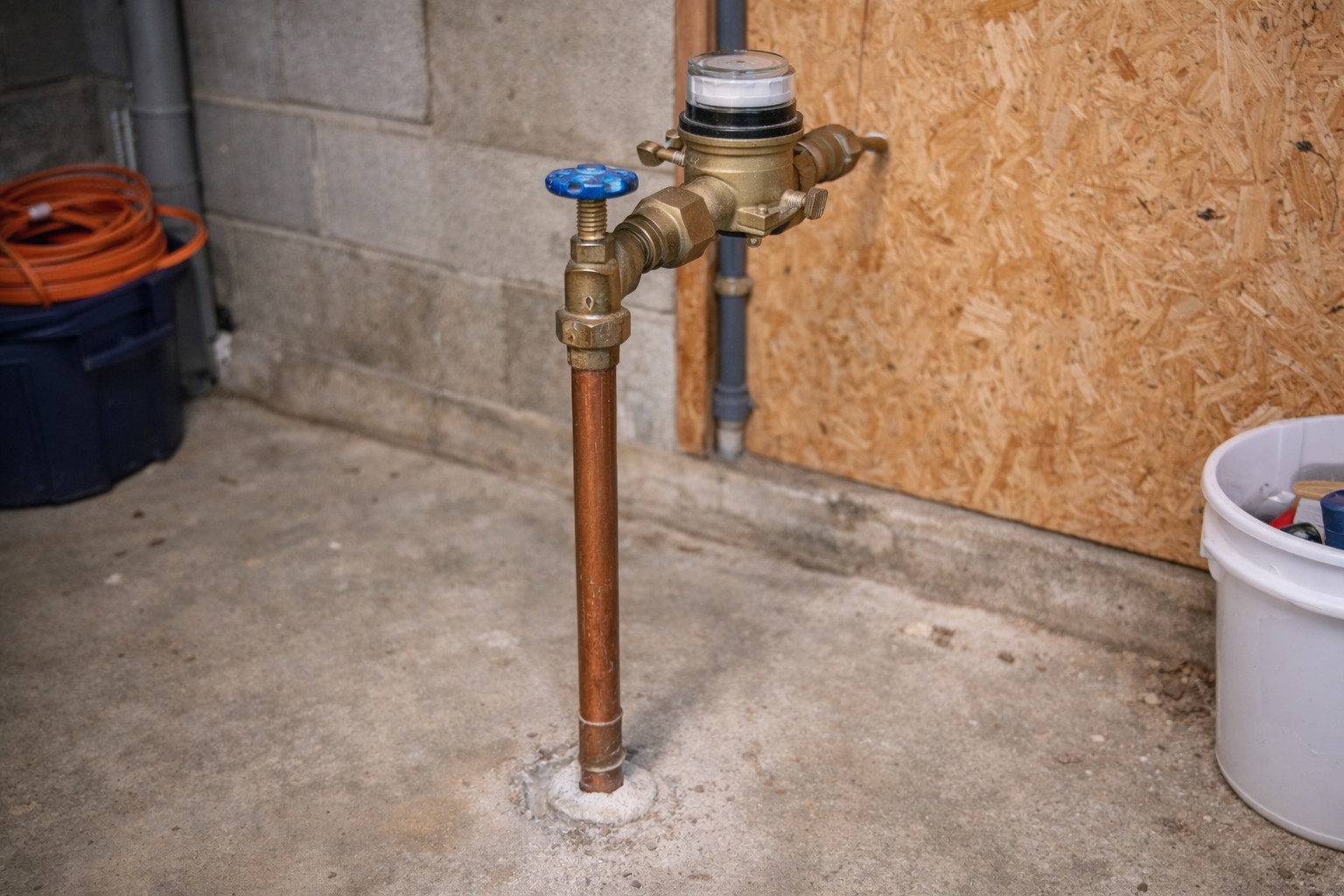
Quick Answer:
If your water pressure is noticeably higher only during the night, the most common cause is changes in municipal supply and pump cycles when household demand falls. Start by logging pressure with a simple gauge at different times of day, compare readings, and check whether the pattern matches the city’s demand schedule before changing household plumbing.
Why This Happens
Municipal water systems and local pumps respond to overall demand. When most homes and businesses use less water overnight, water mains and storage tanks can reach higher pressure. A pressure-reducing valve (PRV) in your house can also behave differently at very low flow rates, and tank refills or pump control settings at the utility can create short windows of higher pressure.
Two useful things to consider:
- Low night demand from your neighborhood can let supply pressure climb above daytime levels.
- If a PRV or expansion tank is worn, it might let pressure spike when flows are small.
Keep a log and compare it against local utility timing — a recorded pattern often makes the cause clear. For related seasonal patterns, note how pressure changes during hot weather; for example, see the guidance on Pressure weak during heat waves and how utility behavior shifts with demand. Also remember that a city system’s **Pressure varies daily pattern** is often the simplest explanation.
Step-by-Step What to Do
1. Get a pressure gauge and pick test points
Use an in-line gauge or a threaded hose-bib gauge. Install it at an outside spigot or on the water heater drain cock if accessible. Test at the same tap each time for consistency.
2. Log pressure at different times
- Record pressure at several times: early morning (before 6 AM), mid-morning, mid-afternoon, evening, and overnight (around 2–3 AM).
- Note date, time, and any major water use events (like lawn irrigation or swimming pool fill).
- Do this for several days to see a pattern rather than a single outlier.
3. Compare readings and look for patterns
Typical household pressure is 40–60 psi. If overnight readings are consistently 10–20+ psi higher than daytime, that suggests a supply-side cause rather than a single malfunctioning fixture.
4. Check neighbors and utility notices
- Ask a neighbor to check their outdoor spigot pressure at the same times — matching behavior points to the municipal system.
- Contact your water utility and ask about pump schedules, tower refill times, or any overnight maintenance cycles. Utilities may have known low-demand windows when pressure rises.
5. Inspect in-home pressure-control hardware
- Locate the PRV (usually near the main shutoff). If it’s adjustable and you’re comfortable, you can make small changes and re-test; otherwise note its settings for a pro.
- Check the expansion tank on homes with closed systems — a waterlogged tank can affect pressure behavior.
6. Decide next steps from the data
If the log and neighbor checks point to municipal timing, the solution may be to adjust an in-home PRV (done carefully) or ask the utility about reprogramming pumps. If the high overnight pressure is isolated to your house and persists even when neighbors see no change, that indicates an in-house device problem and you should pursue repairs.
What Not to Do
- Do not replace in-home plumbing before confirming municipal timing patterns.
- Do not loosen or remove municipal valves or tamper with street-side equipment — that is the utility’s responsibility.
- Do not ignore sustained high pressure; it can fatigue fittings and fixtures and lead to leaks or bursts.
When to Call a Professional
- If pressure readings exceed about 80 psi at any time — a plumber can install or adjust a PRV and verify system health.
- If you see leaks, bulging pipes, or repeated pipe failures that suggest pressure damage.
- If you cannot locate the PRV or are not comfortable making adjustments — a licensed plumber can test and set safe pressure levels.
- If utility checks show normal operation but your house still shows unusual spikes, have a plumber diagnose internal valves, tanks, and gauges.
Safety Notes
- Turn off the main shutoff before doing any major valve work or replacing components.
- Release pressure from lines before disconnecting fittings; water under pressure can spray and injure you.
- If electrical equipment is near the work area (pumps, heaters), shut power before working around water to avoid shock risk.
- When in doubt, hire a licensed plumber — avoiding risk is worth the cost.
Common Homeowner Questions
- Why is night pressure higher than daytime? — Lower neighborhood demand lets municipal pressure rise and sometimes refill cycles cause short overnight spikes.
- Will a PRV fix overnight spikes? — A properly working PRV should reduce excessive supply pressure; if it’s failing, replacement or adjustment is needed.
- How long should I log pressure before deciding? — Gather readings over several days to a week to see a consistent pattern before making changes.
Related Articles
If you’re troubleshooting a similar symptom, these guides may help:
For the full directory, see Water Pressure Changes by Time of Day.