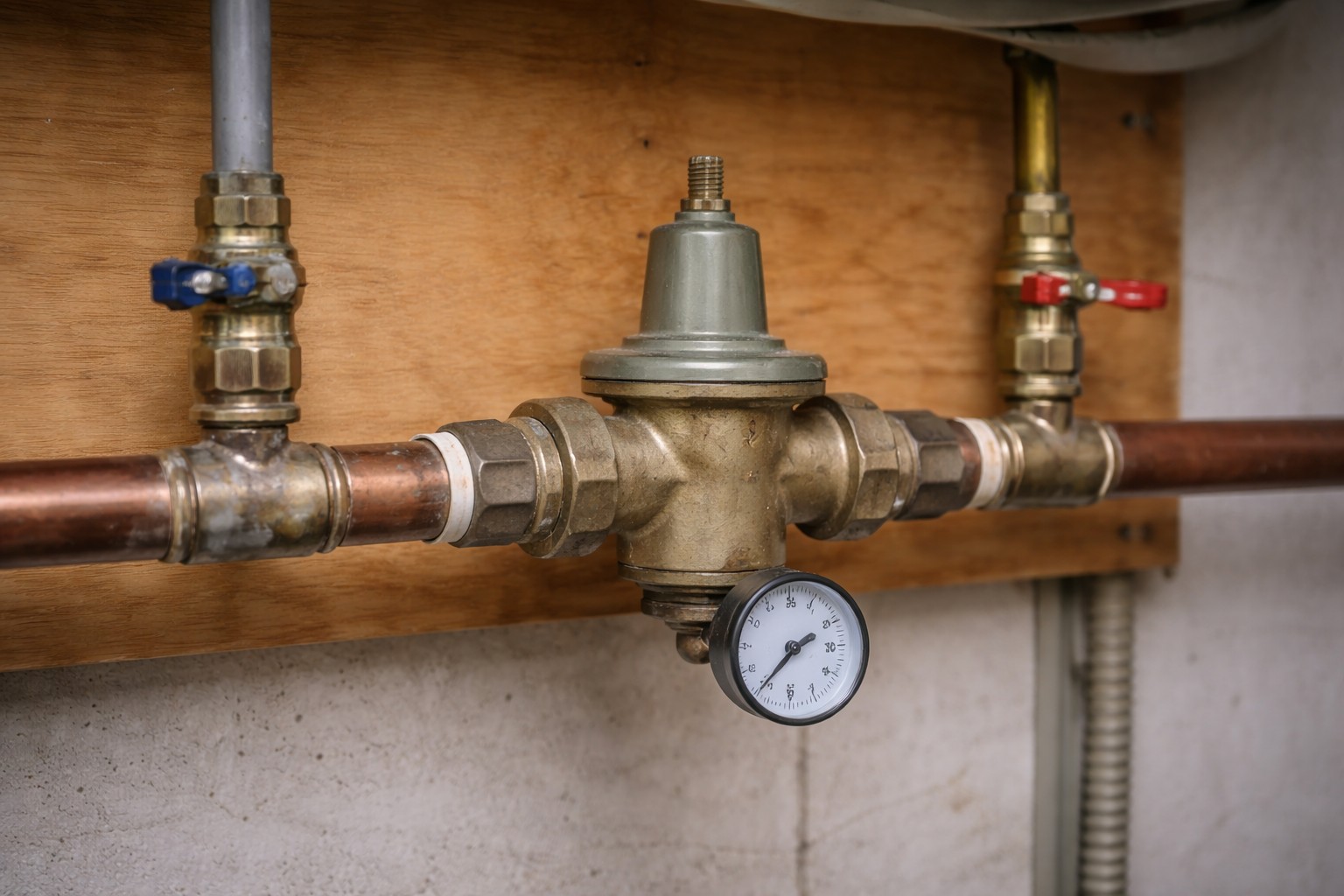
Quick Answer:
If the gauge needle jumps erratically despite steady water use, start by verifying the gauge itself. Install a known-good gauge to confirm readings, then isolate the PRV and any backflow devices to see if the swings stop. Monitor when the surges happen (time of day, appliance use, or after repairs) to narrow the cause. If spikes continue or you see leaks or noise, call a pro.
Why This Happens
- Transient pressure events: valves, pumps, or quick changes in flow can create short pressure spikes that a gauge records as jumps.
- PRV or backflow device cycling: a worn PRV or a stuck relief in a backflow preventer can open and close suddenly, producing rapid pressure changes.
- Faulty gauge: a damaged diaphragm, clogged port, or loose fitting on the gauge itself shows unstable needle movement even if pressure is steady.
- Air in the line or partial blockages: trapped air or debris can make pressure fluctuate under steady demand.
- Recent work: adjustments to a PRV or plumbing repairs can introduce new conditions that cause spikes.
Step-by-Step What to Do
1. Confirm the reading with a known-good gauge
Replace or temporarily install a reliable test gauge at the same port. This verifies whether the original gauge is the issue. Use a gauge sized for household pressure (0–100 psi). If the new gauge is steady, the old gauge or its connection is the problem.
2. Isolate the PRV and backflow device
Shut off any isolation valves that let you remove the PRV or bypass the backflow preventer without disrupting the whole system. Observe the gauge while the PRV or backflow device is taken out of the circuit. If the jumps stop, the device is a likely cause. If you cannot isolate safely, skip to “When to Call a Professional.”
3. Monitor surge timing and patterns
Keep a short log: note the exact time of each spike and what appliances or fixtures were running. Look for patterns such as:
- spikes when a neighbor’s irrigation cycles run
- spikes right after the water heater fires
- spikes shortly after you make a PRV adjustment
Recording this helps determine if the issue is internal or from the supply. If you recently adjusted the regulator and now see spikes, read about Pressure surge after PRV adjustment. If the problem started after a service visit, consider the note on Pressure jumps after plumbing repair.
4. Check for pump cycling or thermal expansion
If you have a booster pump or a closed domestic hot water system, watch for rapid on/off cycles or expansion-related pressure increases. An expansion tank that has lost charge or a pump pressure switch out of adjustment can cause quick swings.
5. Take simple corrective steps
- Tighten or clean the gauge fitting and re-test.
- Replace a suspect gauge with a new one.
- If isolation stopped the surges, repair or replace the PRV or backflow unit.
- If surges are intermittent and you can’t find a source, gather as much timing data as possible before calling a pro.
What Not to Do
- Do not ignore surges—they cause fixture and appliance failure.
- Do not attempt to service a backflow device unless you are certified to do so—these are safety devices and can be regulated.
- Do not loosen or remove fittings on a pressurized line without shutting the water off first.
- Do not repeatedly adjust the PRV hoping it will stabilize; repeated adjustments can mask the real problem and create new issues.
When to Call a Professional
- Spikes continue after you’ve confirmed the gauge and isolated devices.
- You find active leaks, loud banging, or repeated appliance trips.
- There’s a pump, pressure tank, or complex backflow assembly involved and you cannot safely isolate it.
- You’re unsure about working on a PRV, backflow preventer, or pump—these can be hazardous and are sometimes code-controlled.
Safety Notes
- Always shut off the main water supply before removing or replacing gauges and fittings.
- Relieve pressure by opening a nearby faucet before disconnecting hardware.
- Wear eye protection and gloves when working on plumbing.
- Electrical equipment near pumps should be de-energized before you touch wiring or components.
Common Homeowner Questions
- Will replacing the gauge fix the jumps?
Sometimes. If the gauge was faulty, a replacement will stop false readings. If the issue is real pressure transients, the new gauge will still show the spikes. - Can I stop surges by shutting off the main feed?
Shutting the main will stop pressure changes temporarily, but it doesn’t fix the underlying cause. Use it only to work safely on fittings. - Is this covered by home insurance if it damages appliances?
Coverage varies. Document the problem and consult your insurer; preventive fixes are usually the homeowner’s responsibility.
Related Articles
If you’re troubleshooting a similar symptom, these guides may help:
For the full directory, see Pressure Spikes & Sudden Surges.