Quick Answer:
Violent pressure spikes that happen only late at night usually come from a change in supply conditions or a control device in the house cycling when demand is low. Start by fitting a pressure gauge, isolate the house pressure regulator/backflow if you have one, and keep a timed log so you know exactly when the surges occur. These three checks will quickly narrow whether it’s an internal device, a municipal issue, or a plumbing fault that needs a pro.
Why This Happens
- Municipal supply changes: Water utilities sometimes adjust pumps or tanks at night to match low demand. Sudden starts or stops can create pressure transients that hit your plumbing.
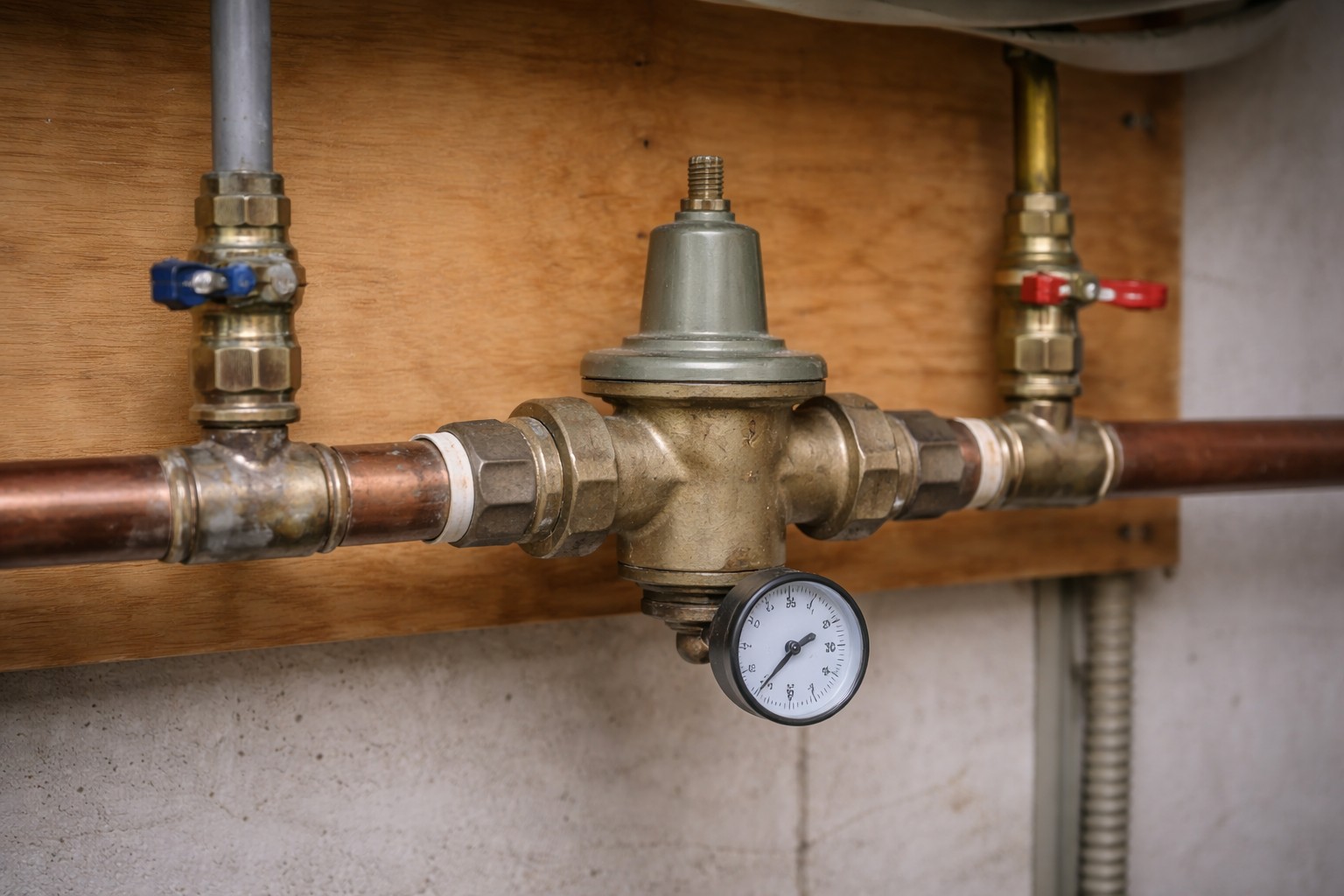
- Pressure-reducing valve (PRV) or backflow device problems: A failing PRV or stuck check valve can open or slam shut when system pressure shifts, causing violent spikes in the house.
- Tankless water heaters, pumps, or irrigation controls cycling: Equipment scheduled to run at night can cause quick pressure changes.
- Thermal contraction/expansion is less likely to create violent spikes, but can aggravate already unstable systems and lead to banging or hammering.
- If you hear noise with the spike, see the section about related effects such as Pipes bang after pressure surge.
Step-by-Step What to Do
1. Install a simple pressure gauge
- Buy a screw-in test gauge for a hose bib or meter connection. These are inexpensive and let you see pressure at different times.
- Install it at an accessible outdoor bib or at the main shutoff outlet. Take readings before bed and during the night when the spike happens.
- Note the baseline pressure and the peak readings. If the gauge shows abrupt jumps well above 60–80 psi, that’s a clear warning sign.
2. Isolate the PRV/backflow
- If your house has a PRV or a backflow preventer near the water meter, find the shutoff valves that isolate it. Many installations have an isolation valve on the house side.
- With caution, temporarily isolate the PRV/backflow (close the appropriate isolation valve) and monitor pressure overnight. If spikes stop, the device is likely the cause.
- Do not remove or permanently alter a backflow preventer yourself; if isolation points are not obvious, skip this step and call a professional.
3. Monitor surge timing
- Keep a simple log: note exact times when spikes occur and what appliances or municipal activities coincide (irrigation timers, pool fills, street work, utility truck noise).
- Try closing your main valve just before the expected spike and see if internal fixtures still experience the surge—this helps tell if the source is inside or outside the house.
- If you need continuous data, consider a gauge with a recorder or a plumber who can install temporary loggers.
- Compare patterns with other households nearby if possible; if neighbors report similar timing, it points to the utility supply rather than your plumbing.
What Not to Do
- Do not ignore surges—they cause fixture and appliance failure.
- Do not start cutting pipes or removing the PRV/backflow preventer without knowing local codes and without shutting the water off properly.
- Do not assume a plumber should be called immediately if you haven’t gathered basic data (gauge readings and timing). A few quick checks will make the service call more effective and less expensive.
When to Call a Professional
- Call a licensed plumber if gauges show repeated spikes above 80–100 psi, or if isolation testing points to the PRV/backflow as the likely cause.
- If you find damaged fixtures, leaking appliances, or sudden pipe failure, call immediately.
- Ask the pro to test and, if necessary, replace or properly set a PRV, inspect the backflow preventer, and install a permanent pressure-reducing or surge-control solution.
Safety Notes
- Turn off the main water before doing any permanent work. Small gauge installs at hose bibs are low risk but always follow manufacturer instructions.
- Backflow preventers are safety devices for drinking water. Tampering with them can create health hazards and may violate local rules—leave major work to licensed contractors.
- If there’s any sign of structural pipe failure (water spraying, active leaks under pressure), shut off water immediately and call for help.
Common Homeowner Questions
- Why does this only happen late at night? — Low demand at night lets utility pumps cycle differently; scheduled equipment (pumps, irrigation) may also run then.
- Can my expansion tank fix pressure spikes? — An expansion tank helps with thermal expansion and minor water hammer but won’t stop large supply-side surges by itself.
- Should I self-replace the PRV? — Replacing a PRV is often best left to a plumber because the device affects the whole house and may require permits or settings you should not guess.
If the pattern you see is more like higher pressure only in the early hours, compare notes with resources about Pressure high only early morning to explore that specific timing pattern.
Related Articles
If you’re troubleshooting a similar symptom, these guides may help:
For the full directory, see Pressure Spikes & Sudden Surges.