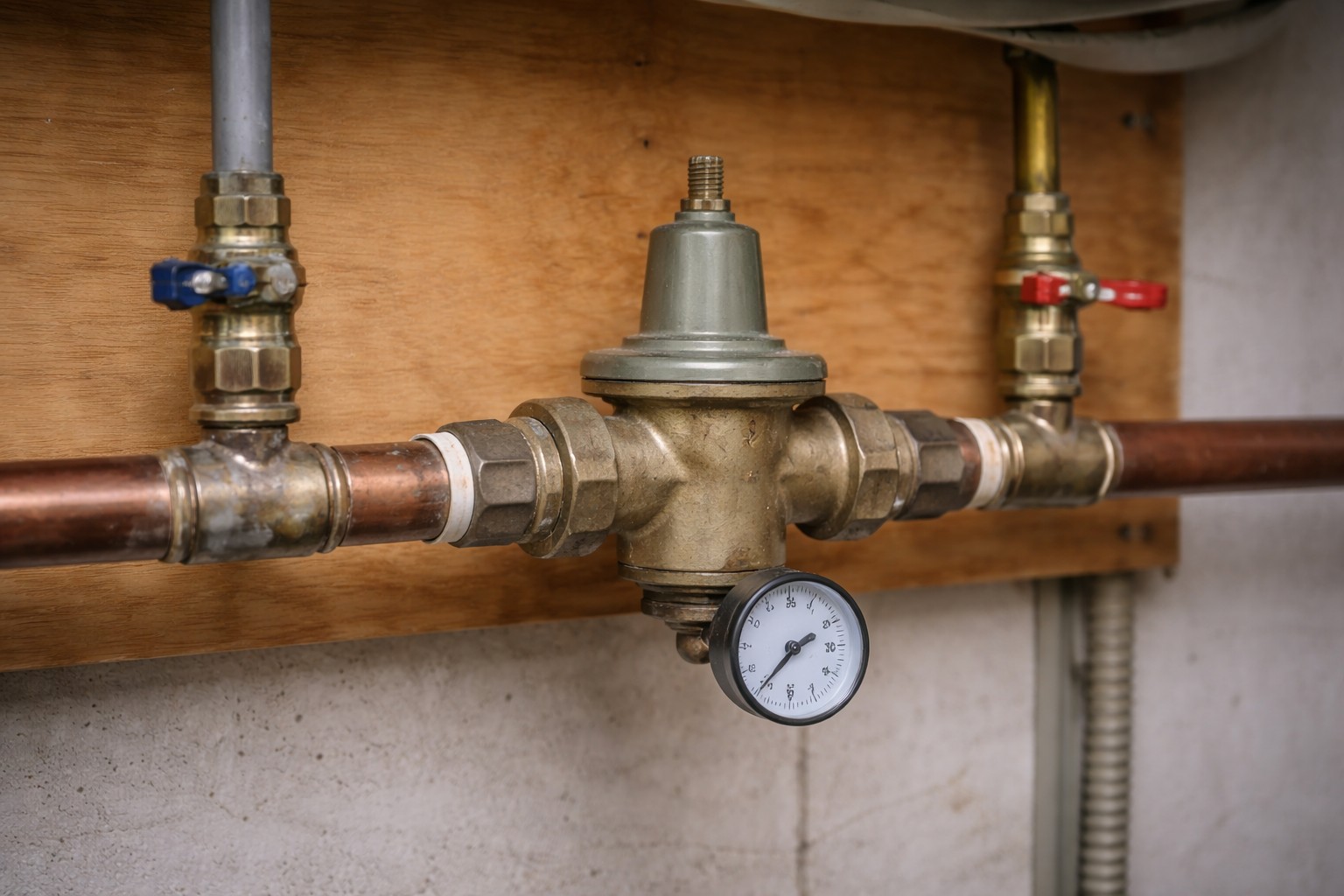
Quick Answer:
Short, repeated swings in water pressure that follow the clock are often caused by changing demand on the municipal system. Before changing anything inside your home, log pressure readings at different times and compare them with local demand patterns to see if the city supply is the cause.
Why This Happens
Municipal water systems feed many homes, businesses and irrigation systems. Demand rises and falls through the day — typically higher in the morning and evening — and that can lower pressure at your tap during peak hours. Other common reasons include:
- Nearby irrigation systems or commercial use that runs on a schedule.
- Water main flushing, hydrant use, or utility maintenance on a predictable daily schedule.
- A pressure regulator or well pump cycling on and off (less common for hour-by-hour patterns tied to the clock).
- Intermittent leaks or meter issues that show up during heavy use.
Step-by-Step What to Do
Step 1 — Install and learn a pressure gauge
Attach a reliable pressure gauge to an outdoor hose bib or the home’s main water shutoff if accessible. Make sure the gauge is rated for household water pressure and is secure before taking readings.
Step 2 — Log pressure with a gauge at different times
Keep a simple log for at least 48 hours. Record:
- Time of day (note morning and evening peak windows)
- Pressure reading in psi
- Whether any major water user was running (washing machine, sprinkler, hydrant use seen outside)
A practical schedule is: record every hour for 48 hours, and add extra readings during peak times (e.g., 6–9 AM and 5–9 PM).
Step 3 — Correlate your log with city demand patterns
Compare your pressure log to local water-use patterns. Call or email your water utility to ask about peak usage hours, planned maintenance, or hydrant flushing schedules. Ask neighbors if they notice similar timing. If drops line up with known peak hours, municipal demand is the likely cause. Also check whether pressure dips match common patterns such as weekend lawn watering; for example, look for the pattern suggested by Pressure weak on weekends or by the experience summarized in Pressure low when neighbors are home.
Step 4 — Test home systems during low and high readings
When you record a low-pressure reading, test multiple fixtures (kitchen, upstairs bathroom, outdoor hose) to see if the drop is house-wide. Note whether the pressure regulator (if present) reacts or makes unusual noises. If the issue only appears during high municipal demand and affects all fixtures equally, it is less likely to be isolated plumbing failure.
Step 5 — Share findings with the utility or a pro
Provide your pressure log and timing notes to the water utility or a licensed plumber. Clear evidence that fluctuations match city demand will often direct the utility to investigate mains, storage tanks or system scheduling.
What Not to Do
- Do not replace in-home plumbing before confirming municipal timing patterns.
- Avoid buying major equipment (new pump or whole-house regulator) without a documented pattern showing it will solve the problem.
- Do not ignore clear signs of a leak — if pressure slowly falls over hours or days without correlation to demand, investigate a leak promptly.
When to Call a Professional
- If pressure drops are severe (very low flow or no water) or if pressure spikes above safe levels persist.
- If your logs show random, unexplained changes that don’t match municipal patterns.
- If you find signs of a leak, water damage, or obvious regulator failure (e.g., continuous hammering or hissing sounds).
- If you aren’t comfortable taking pressure readings or interpreting the results — a licensed plumber can test the regulator, meter and internal systems safely.
Safety Notes
- Shut off the main valve before making any repairs to pressurized fixtures.
- Release pressure at a hose bib before removing fittings or gauges.
- Use a properly rated pressure gauge and follow the manufacturer’s instructions.
- If working near electrical panels or appliances, turn off power first and keep the area dry.
Common Homeowner Questions
- How long should I log pressure? Log for at least 48 hours, including morning and evening peaks.
- Can the water meter cause fluctuations? Yes — a failing meter or valve at the meter can affect pressure; have the utility check it if other causes are ruled out.
- Will a pressure regulator fix hourly changes? Only if the regulator is failing; if fluctuations match city demand, replacing a regulator may not help.
Related Articles
If you’re troubleshooting a similar symptom, these guides may help:
For the full directory, see Water Pressure Changes by Time of Day.