Quick Answer:
If your house water pressure drops when the city is busiest, it’s often a municipal supply issue, not your pipes. Measure and log pressure with a gauge at different times and compare those readings to known city demand patterns before doing any major work inside your home.
Why This Happens
City water systems serve many customers from shared pipes, storage tanks and pumps. During peak hours—usually early morning and evening—more people use water for showers, laundry and irrigation. That higher demand can lower pressure in neighborhood mains and drop the pressure at your house. Maintenance, hydrant use, or a failing pump can cause similar symptoms.
Step-by-Step What to Do
1. Gather a pressure gauge and a simple log
- Buy or borrow a threaded water pressure gauge that attaches to an outdoor hose bib or the laundry bib. They are inexpensive and easy to use.
- Prepare a notebook or spreadsheet to record time, pressure reading (psi), and brief notes about what else is happening (e.g., “morning peak”, “rain”).
2. Measure and log pressure at different times
- Take readings several times a day for at least a few days: pre-dawn, morning peak, midday, evening peak and late night. Record each reading and the exact time.
- Also take a reading while running a tap or shower to see pressure under load versus static pressure.
3. Correlate your log with city demand patterns
- Compare your logged readings to typical peak times. If pressure drops line up with busy hours, the problem is likely in the municipal system.
- Talk to neighbors to see if they see the same pattern; call your water utility to ask about scheduled maintenance, known pump issues, or peak-demand constraints. Watch for patterns like Pressure high only overnight or Pressure better during rain, which point toward supply-side or storage behavior in the municipal system.
4. Check your pressure regulator and shutoff
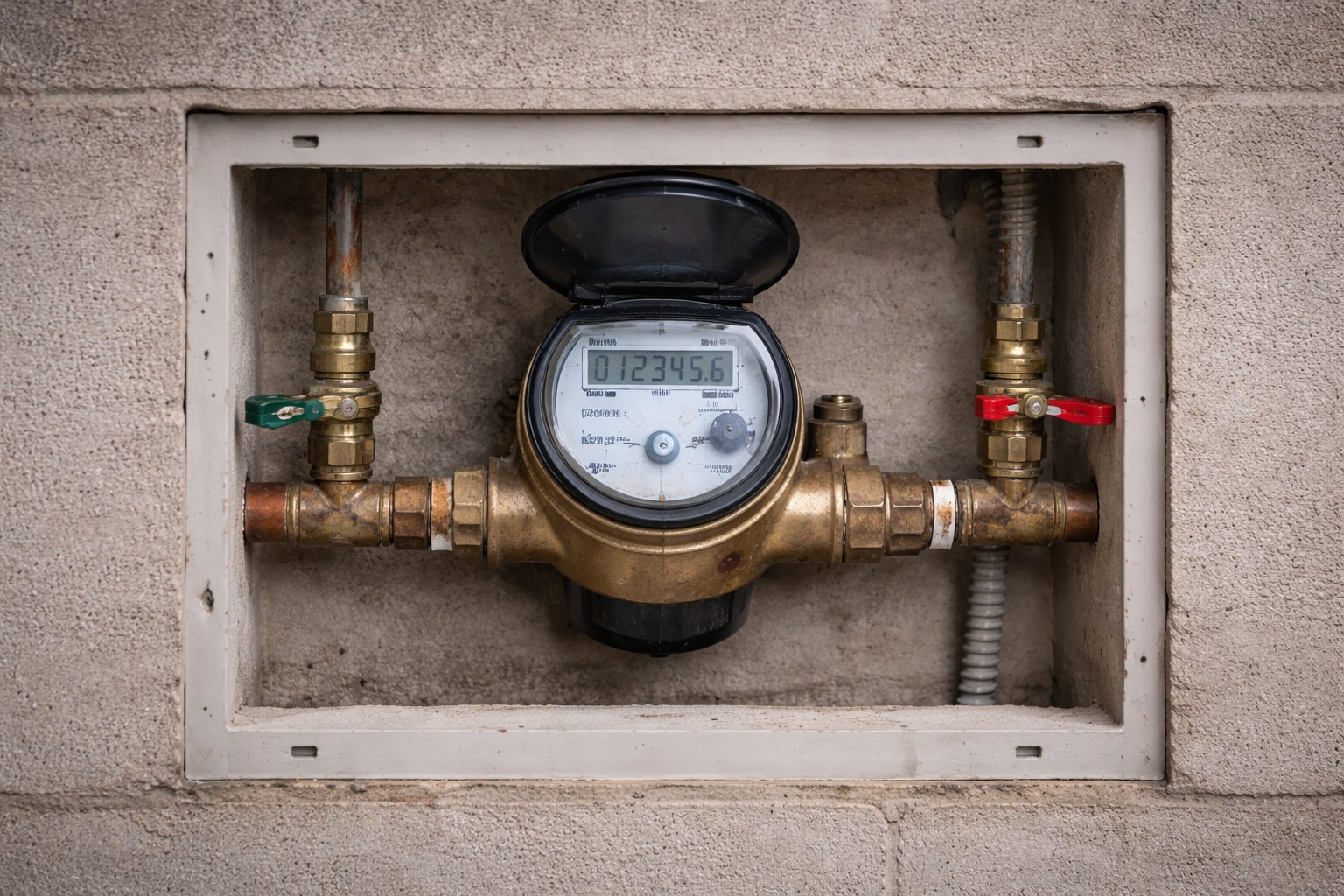
- Locate the house main shutoff and the pressure-reducing valve (PRV) if you have one. Note the pressure reading before and after the PRV to see if it’s functioning.
- If you suspect the PRV is failing, measure upstream (street-side if safely accessible) and downstream pressure to confirm the difference before replacing it.
5. Try simple temporary fixes if needed
- For short-term comfort, run high-demand tasks (washing machine, irrigation) outside peak hours when pressure is better, based on your log.
- Consider a small pressure tank or a point-of-use booster only after confirming the problem isn’t purely municipal and after discussing options with a plumber.
What Not to Do
- Do not replace in-home plumbing before confirming municipal timing patterns.
- Do not modify or try to adjust equipment in the street or the municipal vault; that is the water utility’s responsibility.
- Do not buy an expensive whole-house booster pump as a first response; it may mask a city supply issue and lead to unnecessary cost and complications.
When to Call a Professional
- Call a licensed plumber if your pressure log shows low pressure even during off-peak hours, or if pressure fluctuates wildly at all times.
- Contact your water utility if multiple houses are affected, if you see sudden long-duration drops, or if the utility confirms a supply or pump issue.
- Get professional help for PRV replacement, booster pump installation, or any work on the service line entrance to the house.
Safety Notes
- Turn off the main before working on household plumbing. If you are unsure, hire a pro.
- Do not open or tamper with valves or equipment in the street or service boxes—leave that to the utility.
- Use the pressure gauge only on threaded outdoor spigots or appropriate test ports to avoid water damage.
Common Homeowner Questions
- Why does pressure return at night? It often returns when overall demand drops and storage tanks refill, so mains experience less drawdown.
- Can a bad PRV cause this pattern? A failing PRV can lower pressure, but a consistent night-vs-day pattern usually points to municipal demand rather than just the PRV.
- How long should I log pressures? Log for at least a week to capture weekday and weekend differences and any maintenance events.
Related Articles
If you’re troubleshooting a similar symptom, these guides may help:
For the full directory, see Water Pressure Changes by Time of Day.