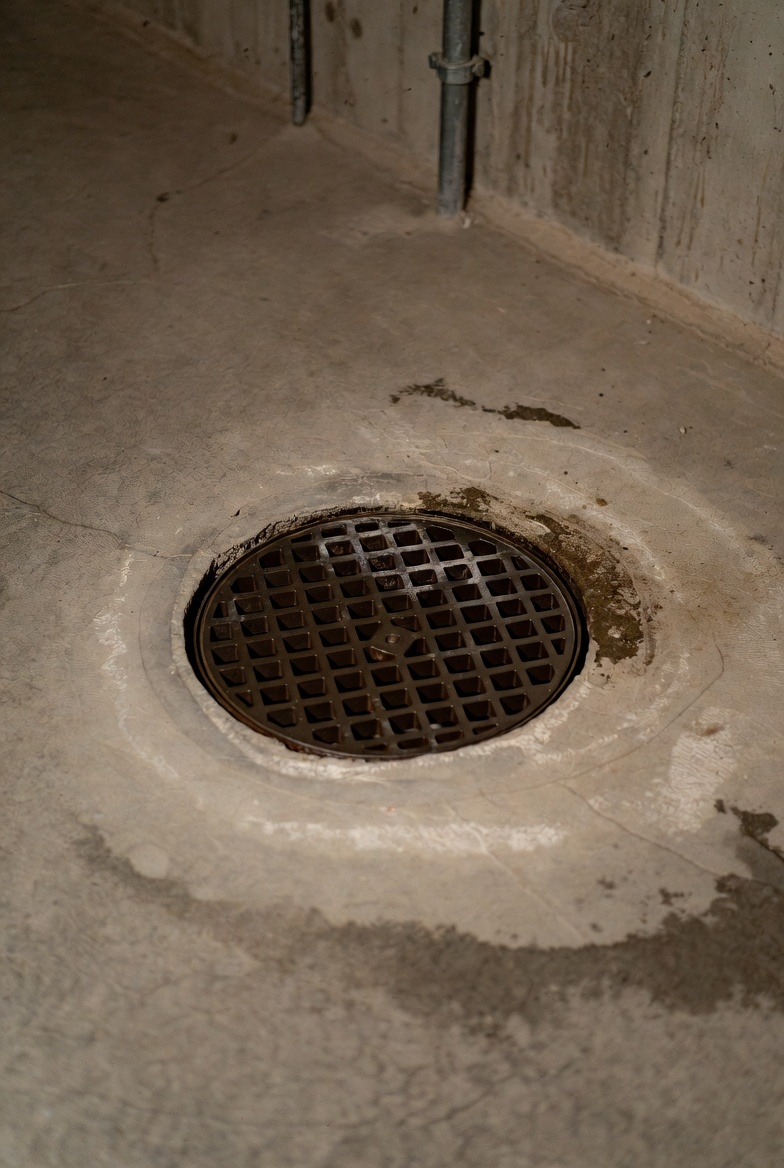
Reduced flow at several taps after a filter installation is a supply-delivery observation. It does not establish a partial sewer clog. Tell the installer whether water arrives weakly, drains slowly, or actually returns from another fixture; keep these paths separate.
Stop an active backup before investigating
If wastewater is rising, returning through another fixture or overflowing, stop adding water to the affected drainage path. Keep connected appliances from discharging using only safely reachable dry controls. Keep people and pets away from sewage and arrange prompt drainage help. Do not flush toilets, fill a basin or run an appliance to reproduce a known backup. Report a suspected public-sewer problem to the sewer agency; do not delay urgent private help for an assumed universal city-first rule.
For strong, widespread gas-like fumes, exposure symptoms or suspected dangerous sewer gas in an enclosed space, leave immediately and call emergency services from outside. If fuel gas is suspected, leave without operating valves, switches or phones there; call the gas emergency service from well away. Do not stay to sniff a drain or ventilate a suspected hazardous atmosphere. Stay away from wet electrical equipment and standing water near wiring; use qualified electrical or emergency help rather than entering water to reach a breaker.
Identify the treatment path and the measurement location
- Valve positions: Use the actual installation diagram. Two isolation valves alone do not necessarily provide a bypass, and a closed bypass can be correct normal service. Do not turn unfamiliar valves from a generic position list.
- Filter performance: A point upstream of the filter alone cannot show its downstream delivery. A plumber can compare the correct inlet/outlet pressure and actual flow under matched conditions. Improved bypass flow suggests a treatment-path effect, not one uniquely failed cartridge; unchanged flow does not exclude every filter-related condition.
- Cartridge or housing: Match the exact cartridge, seat, seals and any serviceable screen. Some cartridges are directional, disposable or unsuitable for rinsing. Do not assume every housing has a removable sediment trap or inlet screen.
Before any permitted housing service, identify all connected feeds, isolate them and verify local pressure release using the actual model procedure. Allow safe temperature conditions. Keep the housing securely assembled with sound specified seals before restoration; use the maker’s tightening, conditioning and leak checks. Existing shutoff and pressure-release precautions apply before opening, not after removing the bowl.
Do not bypass treatment that is needed to make the water safe unless the responsible provider has established acceptable water use and the actual approved path. A short bypass is not automatically safe. Any permitted comparison needs a sealed compatible path and a suitable accepting receiver, not a sewer cleanout or unknown cap. Do not run high and low taps as a universal two-minute air bleed; follow the actual commissioning instructions and supplier advice.
Persistent instability, leakage, uncertain isolation or unknown treatment purpose calls for the installer.
Keep access and testing controlled
Keep cleanout caps closed while the possible retained wastewater level, release and access conditions are unassessed. Slow loosening, a side stance, gloves and a bucket do not contain an unknown wastewater column. Do not enter pits, tanks or manholes, or climb to roof vents from this guide. A qualified provider should choose suitable access and equipment for the actual pipe and conditions.
Tell the provider every drain product already used. Do not add or mix chemicals, or plunge, vacuum, snake or open a trap while hazardous residue may remain. Match any service to the actual parts and instructions. Keep connected inputs inactive while a drain assembly is open; complete secure, supported reassembly before any permitted small attended cool-water leak check into a known accepting drain. Stop that check immediately for leakage or a rising level.
Related situations
- Partial clog after water heater install
- Separate supply and drain symptoms after a pressure change
- Main Line Partial Clogs
Sources and limits
- Madison Metropolitan Sewerage District: responding to sewer backups
- Wisconsin DHS: sewer gas and emergency exposure
- CDC: electrical hazards around water
- Pentair FPS example: filter service and treatment limits
Manufacturer and utility examples explain specific boundaries; use the actual equipment instructions and local service arrangements. No inspection of your home, professional signoff or field test is implied.