After a pressure change, first distinguish weak or sputtering water delivery from wastewater that drains slowly or rises back into a fixture. These are different paths. Do not cycle a regulator or open a cleanout to discover which system is affected. The timing of a pressure change does not prove a sewer blockage, loose supply debris or a broken main.
Stop an active backup or unsafe release
If wastewater is rising or overflowing, stop using affected fixtures and automatic appliances that discharge into that drainage path, from safe controls. Keep people and pets away from sewage and arrange a plumber; contact the sewer utility if a public-line problem is suspected. Do not add hose water, flush toilets or run an appliance to see whether a known backup repeats. Shutting off the drinking-water main does not stop sewage arriving from a public sewer.
Stay away from wet electrical equipment and water near exposed wiring. Do not enter water to reach a switch or breaker. Use emergency help if there is an immediate electrical hazard; isolate equipment only from a safely accessible dry location.
Identify the symptom without opening anything
- Supply symptom: water is weak, sputters or changes at the faucet while the drain can accept normal flow. Record which hot/cold outlets were affected during use already completed, and any supplier notice or recent valve work.
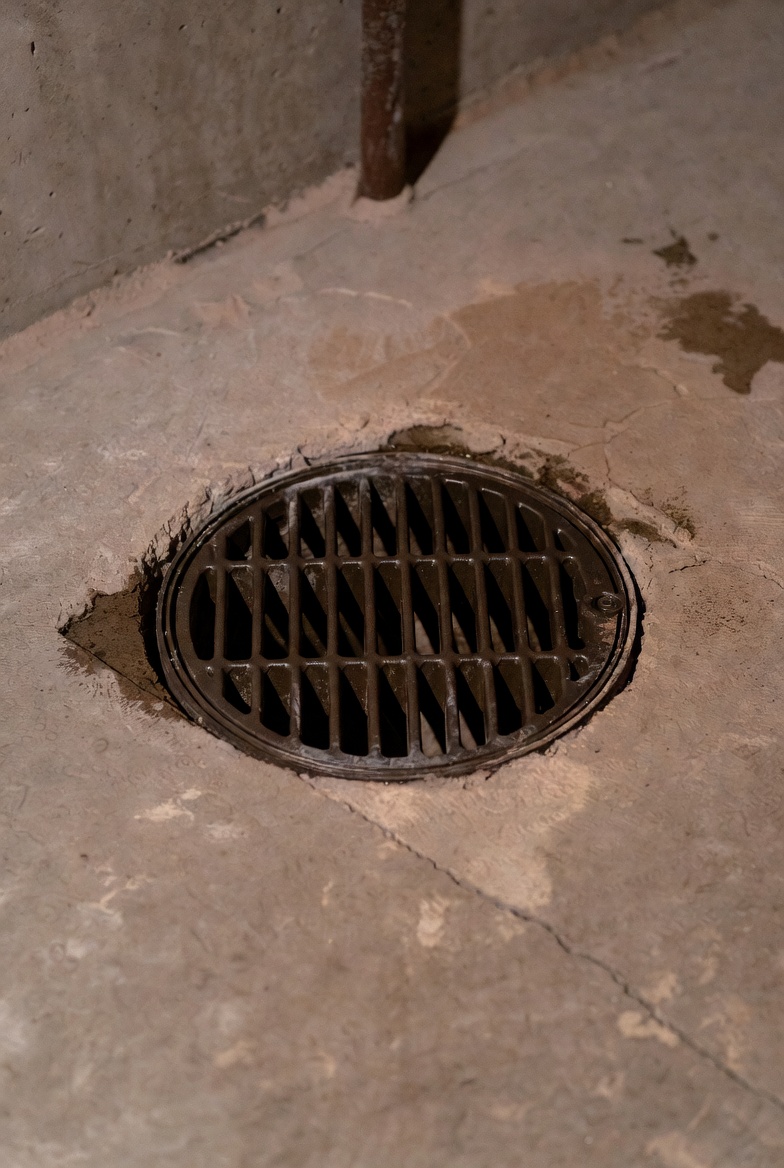
- Drainage symptom: water leaves a basin slowly, rises from a floor drain or backs into another fixture. Record the actual location, level and fixtures already operating when it happened; do not recreate an overflow.
- Both symptoms: treat each as an observation to investigate. A single timing coincidence does not establish a shared cause or permit supply tools to be used on a sewer opening.
Keep supply fittings and sewer access separate
A sewer cleanout accesses wastewater piping. It does not measure the condition of the drinking-water main. An unknown plug or cap on supply equipment is not a faucet or a safe viewing port. Do not loosen either type to vent an unknown head of water. Slow turns, a towel, gloves or a bucket do not control a pressurized supply release or an elevated wastewater column.
Keep cleanout caps closed while access, possible stored wastewater head and exposure are unassessed. A qualified drain contractor can choose appropriate access, containment and equipment. Do not attach a potable-water hose to a sewer opening or unknown fitting. A hose is not a test or repair for a pressure regulator; use of drain-cleaning equipment requires its actual application and appropriate contamination protection.
If the problem is at the water supply
Contact the person who changed the pressure setting or the water supplier if the timing follows public work. Identify the actual regulator and whether a gauge is on its inlet or outlet. Record no-draw and ordinary-demand conditions separately; the appearance of faucet flow is not a pressure measurement. Do not repeatedly cycle the main or turn the regulator as a flushing experiment, force a sticking valve or bypass backflow protection.
For any necessary supply service, qualified personnel must identify all feeds, isolate the worked section, allow safe cooling and verify pressure release before opening it. Follow the actual manufacturer’s method for the identified service port or strainer, secure reassembly and controlled restoration. This is different from removing an unknown cap while the system is under normal pressure. An approved service port is not prohibited merely because it is a port.
If the problem is at the drain
Keep the affected drainage path out of use during an active backup and provide the recorded pattern to the contractor. They can assess access and use appropriate inspection or cleaning equipment before deciding whether the problem is local, shared or on the sewer lateral. Flow seen at one opening cannot certify every downstream section, and a supply pressure adjustment does not clear a sewer restriction.
When the answer needs prompt help
- Sewage, repeated rises at multiple fixtures, an uncontrolled leak, inaccessible isolation or wet electrical equipment: stop testing and arrange appropriate urgent help.
- Persistent supply pressure instability, a noisy or leaking regulator, or a backflow device requiring attention: use qualified service for the actual equipment.
- A new unexplained drinking-water quality change: do not taste it; contact the supplier and follow its actual use advice. Do not assume clear water proves safety.
Which water path needs assessment?
Use the supply-versus-drain observations above to describe where water is failing to move.
Related situations
Sources and limits
- Watts LF25AUB-Z3 instructions: an example of measured regulator adjustment and identified, depressurized service, not a universal setting or flushing recipe.
- EPA: sanitary sewer overflows explains wastewater collection, several overflow causes and the public-health risk of sewage backups. It does not establish the cause at your property.