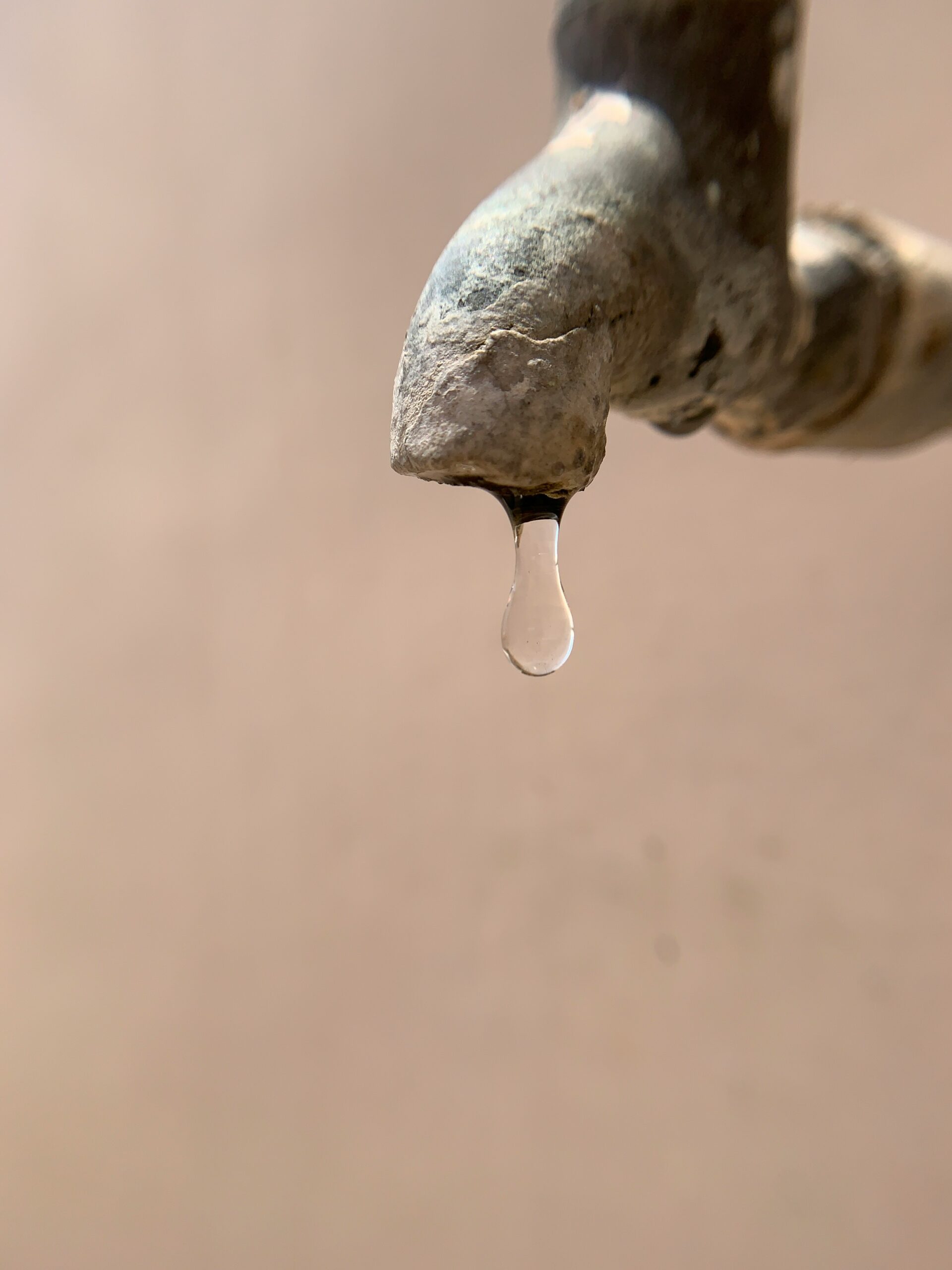
Air or sputtering before water can follow a supply interruption, a draining branch or a particular pump/system condition. Duration, sound and a pump’s cycling pattern are clues, not proof of one fault or safe water.
Keep away from wet electrical equipment. Do not touch wet appliances, plugs or switches, or enter water to reach a breaker. When no gas leak is suspected, power may be isolated only from a safely accessible dry location; otherwise call an electrician or emergency help. Wet equipment needs qualified assessment before it is used again.
If fuel gas is suspected, leave the building or affected area immediately. Do not operate valves, switches, plugs, appliances or phones there. Call the gas emergency service from a safe location well away, and wait for responders’ clearance.
Check hazards and source advice first
For a new, unexplained water-quality change: do not deliberately taste the water. Use bottled water or another known-safe supply for drinking, food preparation, teeth brushing and ice while you contact the supplier. Follow the actual local notice for other uses. Boiling does not make chemically contaminated water safe, and clear appearance or a fading odor does not certify safety.
For suspected fuel gas, concerning unexplained fumes or exposure symptoms, leave and obtain emergency help rather than sampling. For leakage or possible freeze damage, stop use and keep effective safe isolation. A supplier can advise about a single affected outlet; confirmation at several fixtures is not a prerequisite.
Keep useful original observations
- Record the original delay or sputtering pattern, recent supply work or outage, hose/nozzle state and known water notices.
- Record already-known behavior elsewhere without running every faucet to reproduce it.
- For a well, note actual alarm, low-water or abnormal cycling information from safe access and follow its manual or technician’s advice. Avoid repeated starts to gather a better sound recording.
Interpret within actual physics
Air can be carried, trapped or admitted through an actual connected path. An ordinary fall in still-positive water pressure does not by itself draw air through any loose fitting; the pressure differential and connection matter. Air-pocket location depends on the real geometry and flow, not a universal low-point rule. Rapid cycling or long pump operation can accompany several faults and does not itself identify an air-entry mechanism.
A suitable purge is source-specific
Do not open fully into a bucket for a fixed minute and declare the cause resolved. If the provider or actual equipment procedure calls for restoration flushing, first establish sound containment, suitable water-use conditions and a secure accepting discharge path. Attend it, follow the stated procedure and stop for renewed rise, leakage, abnormal pressure, gas concern or other unsafe change. Recurrence needs source assessment, not progressively longer purges.
Connections and internal work
For an owner-removable hose or splitter, close its supply and release trapped hose-side pressure through the intended outlet into a suitable receiving area. A closed nozzle, check valve or attachment can retain pressure separately. Do not loosen a coupling to vent it, twist the faucet in the wall, or remove required backflow protection. Support the fitting and follow its actual instructions; stop for a seized connection or uncertain pressure.
Surface crusting does not alone prove a body failure. Record actual external escape or handle spray separately. Before internal repair, use the identified model, effective all-feed isolation, actual serviced-segment relief, compatible parts and fully secured protective refit. Do not force a valve or disturb pump controls.