Quick Answer:
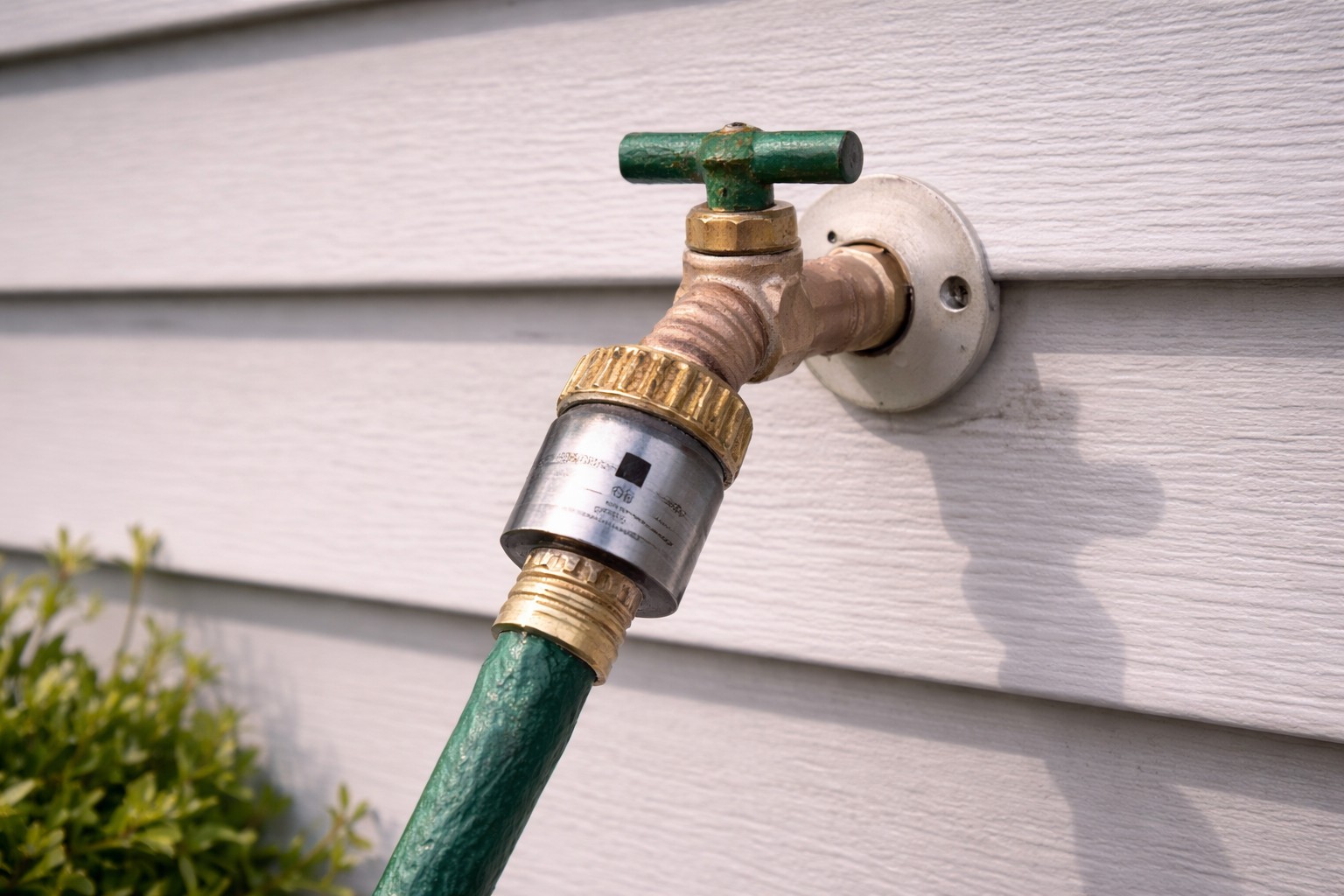
If an outside hose bib is weak while indoor faucets are fine, the issue is usually local to the hose bib: a hose or splitter left on, a stuck vacuum breaker or backflow device, or seasonal debris inside the spout. Start by removing attachments and opening the valve fully, then flush into a bucket and inspect the vacuum breaker. If you see related indoor symptoms, check resources on tub spout low pressure or single fixture pressure loss.
Why This Happens
- Hoses or Y-pattern splitters can partially close the spigot outlet or have internal screens that clog.
- Many outdoor spigots include a vacuum breaker (backflow device) that can stick or trap debris and reduce flow.
- Seasonal debris — leaves, mineral buildup, or bits from a frozen pipe repair — can restrict the hole just inside the spout, especially after first use in spring.
- Less often, an interior shutoff valve feeding the spigot is partly closed or a section of pipe has debris.
Step-by-Step What to Do
Step 1 — Remove any hose or splitter
Disconnect every hose, nozzle and splitter from the spigot. Many hoses and multi-outlet devices contain small screens or valves that cut flow — removing them eliminates that as the cause.
Step 2 — Open the spigot fully
Turn the handle all the way open. Some people only crack the valve and that hides a full-flow restriction. Full opening also makes it easier to flush debris out.
Step 3 — Check the vacuum breaker / backflow device
Inspect the small device on the threaded end of the spigot (if present). Look for a stuck pin, debris or a cap that won’t sit properly. Try to move internal parts gently by hand or by tapping, but do not force anything that seems frozen — forcible action can damage the threads or body.
Step 4 — Flush into a bucket
Place a bucket under the spout, open the valve fully and let it run. Watch how the water comes out:
- If flow is weak but constant and then clears to full flow, you likely flushed debris.
- If you get sputtering, air or brown particles, let it run until the water clears and collect samples if needed.
Step 5 — Inspect for seasonal debris after first spring use
If the spigot sat unused through winter, feel inside the outlet with a gloved finger or flashlight. Look for leaves, grit or mineral scale. Remove visible debris gently with a small brush or cloth and repeat the flush step.
Step 6 — If flow remains weak
Check the indoor shutoff that feeds the outdoor line (usually in the basement or utility area) to ensure it is fully open. If other outdoor fixtures on the same line are also weak, the problem may be further upstream and needs a professional inspection.
What Not to Do
- Don’t ignore a vacuum breaker that’s stuck—forcing it can crack the hose bib.
- Don’t use excessive force, wrenches or heat on the spigot or vacuum breaker — that can break the threads or valve body.
- Don’t open interior valves or cut into piping unless you know where the supply shutoff is and can stop the water; uncontrolled water can cause damage.
When to Call a Professional
- Flow stays weak after you remove attachments, flush, and inspect the vacuum breaker.
- The vacuum breaker is stuck and won’t move with gentle effort, or it’s cracked or leaking.
- You find signs of a freeze crack, recurring clogging, or low pressure on multiple fixtures supplied by the same line.
Safety Notes
- Turn off the indoor shutoff for the outdoor line if you need to disassemble anything or if there’s a leak you can’t stop quickly.
- Wear gloves and eye protection when removing debris or working with old fittings — mineral scale can be sharp and sediment can splash.
- Be cautious handling parts that may have been frozen; metal parts can be brittle and break if forced.
Common Homeowner Questions
-
Q: Why is only the outdoor spigot weak when indoor taps are fine?
A: The problem is usually at the spigot itself (hose, vacuum breaker, debris) rather than the main supply. -
Q: Can I replace a vacuum breaker myself?
A: If the unit threads off easily and you can shut the supply, you can replace it, but stop if the part is stuck or corroded. -
Q: Will flushing the spigot damage anything?
A: No — flushing into a bucket is safe and recommended; it helps clear debris and shows whether flow returns to normal.
For more related articles, see the Low Pressure at Single Fixture hub.