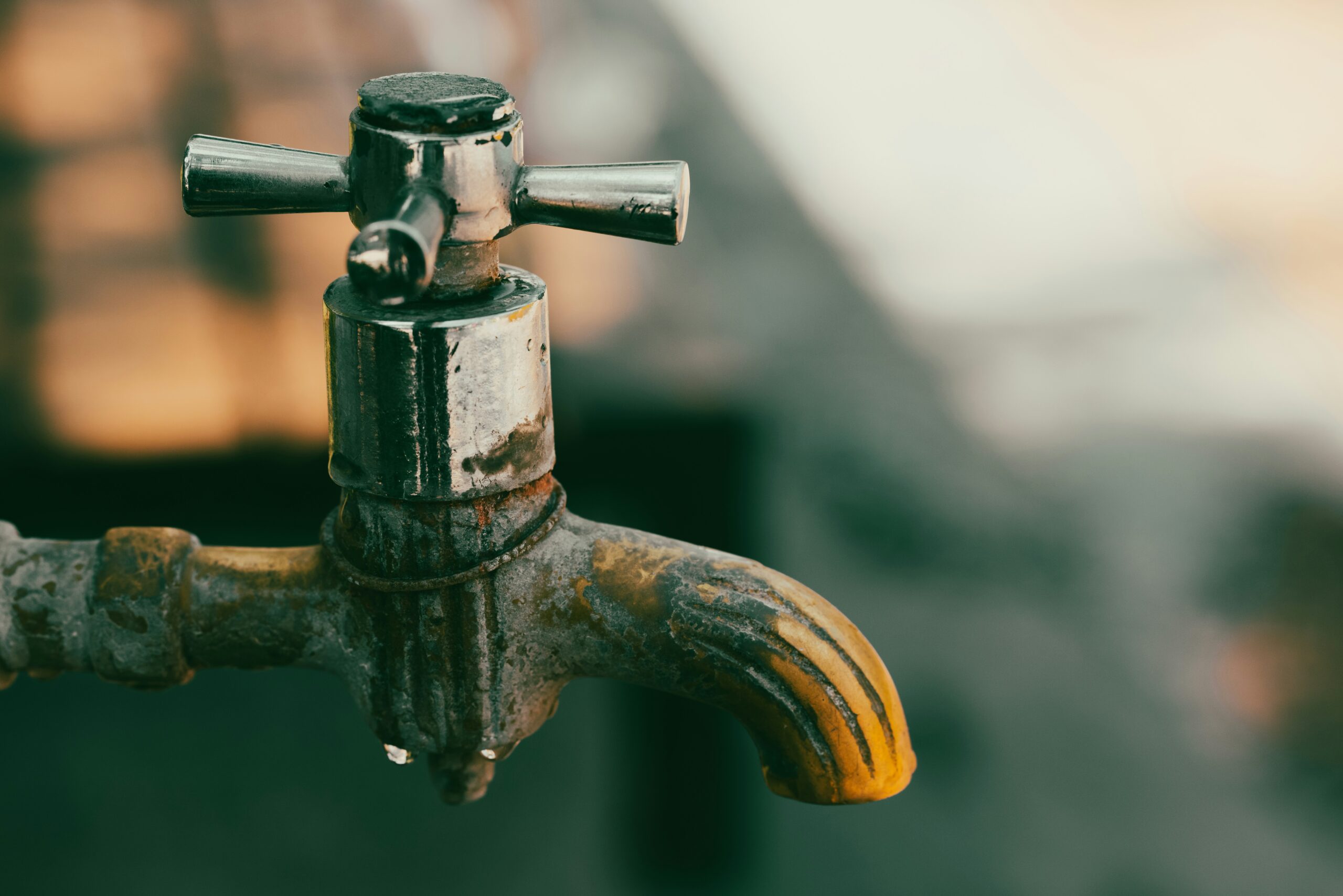
No water after winter may mean the branch is still intentionally isolated, the handle is not moving its valve, or freezing, damage or restriction has affected the line. A dry outlet does not prove that reopening the indoor valve is safe.
Keep away from wet electrical equipment. Do not touch wet appliances, plugs or switches, or enter water to reach a breaker. When no gas leak is suspected, power may be isolated only from a safely accessible dry location; otherwise call an electrician or emergency help. Wet equipment needs qualified assessment before it is used again.
Keep the seasonal state and original clues
- Read any winterization label or service record and identify the actual faucet model and homeowner branch control. Do not operate meter or utility equipment merely because it is nearby.
- Record whether flow stopped in cold weather, whether the hose remained connected and whether leakage or bulging is already visible from safe existing access.
- Do not enter an unsafe crawlspace or remove a wall to find a valve. Ask the installer or a plumber when the route or control is uncertain.
Decide whether restoration is appropriate
Keep the branch isolated for suspected freeze damage, interior wetness or uncertain containment. A frozen or damaged section can leak only when supplied or when the faucet opens. If the documented seasonal procedure permits return to service and the branch is sound, use the actual valve travel and controlled restoration instructions. Quarter-turn and multi-turn controls do not share a fixed quarter-turn-every-few-seconds procedure. Attend the accessible connections and stop immediately for leakage.
Suspected freezing
The Red Cross describes controlled thawing of an accessible household pipe, with its affected faucet open, and calls for a plumber when the frozen section cannot be located or reached or will not thaw. That is not permission to heat an unknown concealed faucet barrel, a wet cavity or a damaged line. Do not force a frozen handle or use flame. For a leaking, inaccessible or uncertain branch, keep an effective safe isolation and arrange help. Any appropriate accessible-pipe method also needs dry electrical access, appliance clearances, supervision, a known discharge path and a plan to stop the supply promptly. Cold touch alone does not establish ice.
Prepare for the next cold period
Match winter preparation to the installed design. A conventional branch may use a closed indoor isolator and a deliberately open outdoor drain path. A self-draining frost-free faucet depends on its actual installation, drainage, protected inboard seat and instructions; an open upstream supply is not by itself a winterization error. Remove hoses or other drainage restrictions as directed after controlling their trapped pressure. A cover or insulation does not guarantee protection, and leaving a damaged branch safely isolated can be appropriate until repair.
If it remains dry in safe thawed conditions
Record the actual source/control/handle state and ask for model-specific diagnosis. A stripped handle, failed operating mechanism and a pipe restriction require different repairs. Do not dismantle a dry faucet on the assumption that it is depressurized.
Before removing a bonnet, packing, operating rod, cartridge or pressure-retaining breaker part, identify the exact model and its approved service procedure. Close a known effective homeowner supply control for every feed, control other connected inputs, and relieve and verify pressure at the actual serviced segment. A different indoor tap may not relieve an isolated outdoor branch. Stop if flow continues, the control is uncertain or parts bind. Use compatible approved parts and fully secure all pressure-retaining and protective components before an attended restoration. Re-isolate and verify relief before further disassembly. Cosmetic handle trim and maker-permitted external packing adjustment are different operations; neither authorizes loosening an unknown retainer under pressure.