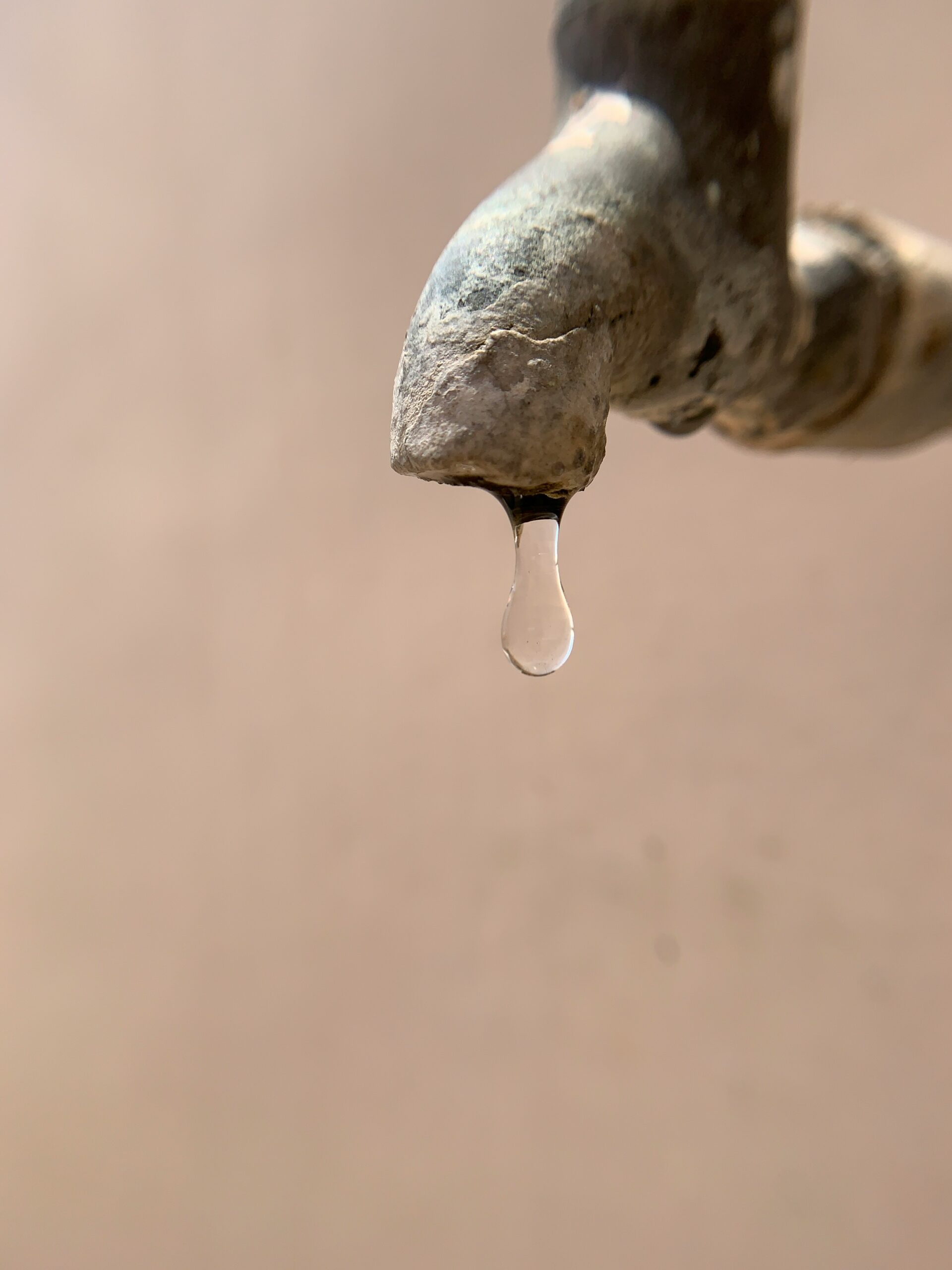
Dripping for several minutes after closure can be finite water draining from a hose or a self-draining faucet barrel, or continuing supply passing a valve that has not sealed. Duration alone cannot choose between them.
Keep away from wet electrical equipment. Do not touch wet appliances, plugs or switches, or enter water to reach a breaker. When no gas leak is suspected, power may be isolated only from a safely accessible dry location; otherwise call an electrician or emergency help. Wet equipment needs qualified assessment before it is used again.
If fuel gas is suspected, leave the building or affected area immediately. Do not operate valves, switches, plugs, appliances or phones there. Call the gas emergency service from a safe location well away, and wait for responders’ clearance.
Separate the three water paths
- Finite drainage: stored water leaves the intended outlet after closure. Actual barrel or hose volume, elevation and drain design affect its duration.
- Continuing supplied outlet flow: water keeps passing the closed valve; assess the actual seat, washer or cartridge and operating mechanism.
- External escape: water comes from the stem, body, wall or joint. That is a containment issue even if the outlet also drains normally.
Record without repeatedly reopening
Use the original leak location, handle state, attached equipment and whether the amount was diminishing or sustained. Do not tighten the handle harder or run repeated cycles to establish a stopwatch cutoff. Sun, ambient temperature, conduction and condensation can affect pipe warmth or moisture; feeling the pipe does not establish a hot feed, thermal expansion or an exact hidden leak source.
Control a hose before disconnecting
For an owner-removable hose or splitter, close its supply and release trapped hose-side pressure through the intended outlet into a suitable receiving area. A closed nozzle, check valve or attachment can retain pressure separately. Do not loosen a coupling to vent it, twist the faucet in the wall, or remove required backflow protection. Support the fitting and follow its actual instructions; stop for a seized connection or uncertain pressure.
When service is appropriate
A compression washer, replaceable cartridge and long frost-free rod have different retention and service methods. Do not partly back out a stem just to see a seat. Maker-approved external packing adjustment concerns stem escape and does not repair a valve passing water at the outlet.
Before removing a bonnet, packing, operating rod, cartridge or pressure-retaining breaker part, identify the exact model and its approved service procedure. Close a known effective homeowner supply control for every feed, control other connected inputs, and relieve and verify pressure at the actual serviced segment. A different indoor tap may not relieve an isolated outdoor branch. Stop if flow continues, the control is uncertain or parts bind. Use compatible approved parts and fully secure all pressure-retaining and protective components before an attended restoration. Re-isolate and verify relief before further disassembly. Cosmetic handle trim and maker-permitted external packing adjustment are different operations; neither authorizes loosening an unknown retainer under pressure.
When to stop
Keep a suspected damaged branch safely isolated and obtain help for wall wetness, persistent supplied leakage, an inaccessible connection or inability to control the source. For major flooding, structural danger or a suspected gas release, leave the dangerous area and obtain emergency help.