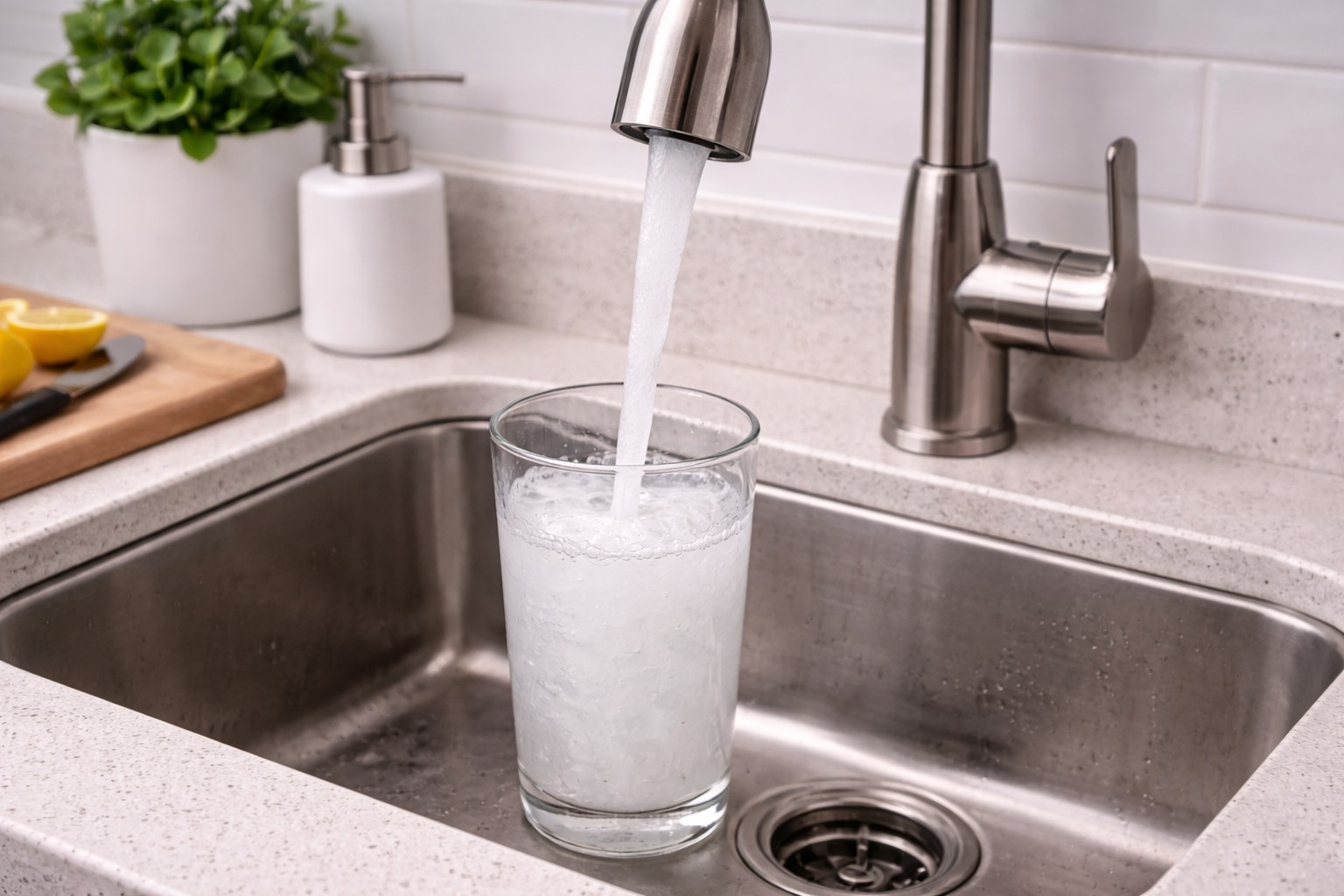
Choose the place or event you actually observed. A slippery skin sensation, a surface film, a flavor already noticed and a protective-device alert are different facts. These descriptions do not identify a chemical, prove a transfer route or certify safe water.
First decide which situation applies
If strong chemical or fuel-like fumes, breathing difficulty or another immediate exposure hazard is present, leave the affected area and call emergency help from safety. Do not stay to sniff, ventilate or run appliances to identify it. Follow any emergency or water-use notice.
For a new unexplained water-quality change, use a known-safe supply for consumption while you obtain supplier advice. Avoid deliberate taste, skin-feel and hot-water comparison tests. Boiling is not a remedy for unknown chemical contamination. Ask separately about bathing, laundry and other contact uses; a drinking restriction and a do-not-use notice have different limits.
An unchanged familiar sensation after washing with correctly softened water can be normal. It is different from a new unknown film, an exposure symptom or an actual supplier notice. Do not use hot/cold taste or skin tests to force a diagnosis.
Keep the evidence in its own path
Actual outlet, treatment and work history; suitable supplier/lab sampling
Soap, tub, toilet, laundry load and product history; not automatically incoming water
Actual heater or shutoff model, original event and safe service/commissioning
Describe the observation
- Water feels slick or oily — Slippery skin after washing versus an unfamiliar film: keep those observations separate.
- Water leaves rainbow film — Rainbow reflection: document appearance without treating it as a substance test.
- Soapy taste in tap water — A soapy taste already noticed: no deliberate tasting or leaking-hose source verdict.
Where it was noticed
- Soapy feel in shower water — Shower: familiar softness differs from new residue, irritation or unsafe delivery.
- Oily sheen in toilet bowl — Toilet bowl/tank: toilet contents are not a tap-water sample; a drain transfer needs a real path.
- Oily sheen in bathtub only — Bathtub: known surface products differ from an unexplained delivered-water concern.
- Slick water in upstairs bathroom — Upstairs: floor location does not certify a riser fault or a safe downstairs alternative.
- Oily film in washing machine — Washer: load/drum/additive history differs from incoming supply; oil also raises dryer safety questions.
Hot water and treatment
- Water feels slippery only on hot side — Hot-only scope: no improvised heater isolation, alternate connection or bypass.
- Slick water after water heater install — After heater installation: actual commissioning before drain/reheat or normal-use trials.
- Oily film after filter replacement — After cartridge replacement: exact equipment and sampling with necessary protection maintained.
After service or interruption
- Slick feel after city repair — City repair: actual supplier event and restoration advice before assumptions about products.
- Oily residue after plumbing work — Plumbing work: exterior compound does not explain outlet water without a transfer route.
- Slick feel after pressure change — Pressure event: water quality and measured pressure are different investigations.
- Soapy water after outage — Outage: actual use/restoration directions rather than feel-based clearance.
- Soapy feel after smart shutoff trip — Smart shutoff: understand and resolve the original alert before a permitted reset.
After winterization
- Water feels greasy after winterization — Greasy feel: identify product/application and actual startup/disposal before a purge.
Prepare a useful report
Give the supplier or service provider the exact place and ordinary activity, first time noticed, product/device labels, work record and current notice. Use existing photos and records without another exposure. Ask what evidence would distinguish the proposed causes before approving a filter, heater, valve or concealed-pipe replacement.
Sampling and restoration
Ask the supplier, local health department or a state-certified drinking-water laboratory which substances and locations fit the history. Get its containers, collection and delivery instructions before taking a sample. Ask before flushing, cleaning an outlet or changing treatment: those actions can alter the evidence. A household jar, paper towel or toilet-bowl sample is not a universal drinking-water test.
If flushing is appropriate, use the actual supplier, installer or product procedure with sound fully assembled plumbing, an accepting drain and continuous attendance. Stop for leakage, backup or a new hazard. No universal number of minutes, hot-appliance cycle or clear-looking endpoint establishes that an unknown substance is removed.
A filter needs a specific independently verified reduction claim and correct maintenance; normal taste/feel is not that evidence. Keep any needed treatment and temperature/backflow protection effective. Actual heater or pressure-boundary service requires identified equipment and safe control, not a general bucket, bypass or timed-drain method.
Browse Water Contamination, Taste & Odor for the wider topic.
Safety sources
- CDC: drinking-water advisories
- EPA: certified drinking-water laboratories
- EPA: home water testing and laboratory sample instructions
- CDC: selecting and maintaining a water filter
- USGS: why softened water can feel slippery after washing
- Moen Flo example: understand the alert before restoring water
- Whirlpool example: oil, flammable-fluid and dryer fire warnings