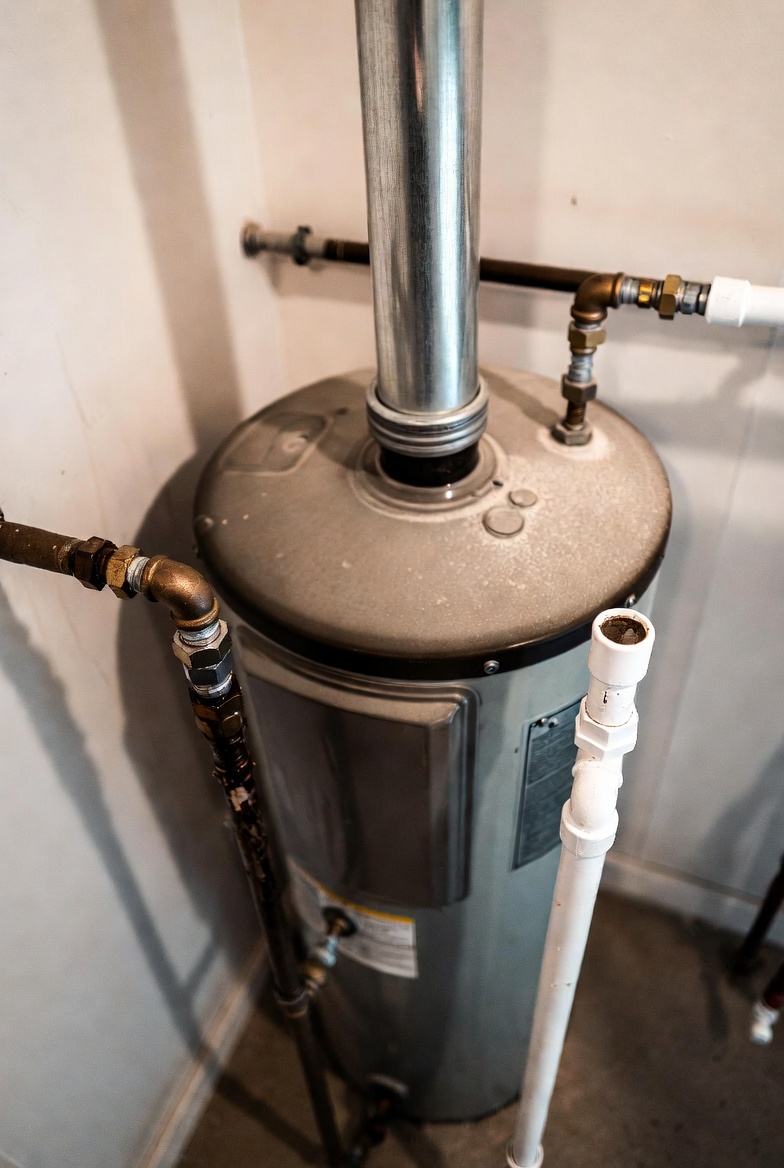
A slippery sensation already noticed with hot use can guide a hot-path question. It does not identify a heater, anode, mixing valve or chemical. Do not close the heater’s cold inlet and run hot as an outlet-isolation test, or connect an alternative hot source for comparison.
Decide what use is appropriate
If strong chemical or fuel-like fumes, breathing difficulty or another immediate exposure hazard is present, leave the affected area and call emergency help from safety. Do not stay to sniff, ventilate or run appliances to identify it. Follow any emergency or water-use notice.
For a new unexplained water-quality change, use a known-safe supply for consumption while you obtain supplier advice. Avoid deliberate taste, skin-feel and hot-water comparison tests. Boiling is not a remedy for unknown chemical contamination. Ask separately about bathing, laundry and other contact uses; a drinking restriction and a do-not-use notice have different limits.
Record where the observation occurred
- Original outlet/control position and whether the observation followed soap use.
- Heater, tempering, recirculation and treatment models from accessible records.
- Recent work, existing leakage or abnormal temperature and other observations already known.
What it does and does not show
Closing one feed changes the operating conditions and may leave trapped pressure or other connected paths. A mixed outlet is not automatically a pure hot sample. A failed hot/cold mixer can change mixing, but a chemical-entry allegation needs an actual contaminant source and transfer route.
What to do next
- Avoid a new hot/cold cup, skin-feel or appliance comparison. Obtain advice for the actual water-use concern and preserve the original scope.
- Ask the installer to identify the actual hot distribution and protective controls before internal work. Do not use bypasses, temperature changes or anode removal to see if feel changes.
- Do not run laundry or dishwasher hot cycles as a quality test. Device contamination and restart requirements depend on the actual concern and instructions.
- Appropriate intended outlet care remains possible under its maker’s method after sampling is settled, but it is separate from retained cartridge or heater service.
Sampling and any directed restoration
Ask the supplier, local health department or a state-certified drinking-water laboratory which substances and locations fit the history. Get its containers, collection and delivery instructions before taking a sample. Ask before flushing, cleaning an outlet or changing treatment: those actions can alter the evidence. A household jar, paper towel or toilet-bowl sample is not a universal drinking-water test.
If flushing is appropriate, use the actual supplier, installer or product procedure with sound fully assembled plumbing, an accepting drain and continuous attendance. Stop for leakage, backup or a new hazard. No universal number of minutes, hot-appliance cycle or clear-looking endpoint establishes that an unknown substance is removed.
Before heater or internal plumbing service
Heater service requires its actual model procedure for energy control, cooling, effective isolation of every feed, pressure release and safely secured discharge. Opening a hot faucet with supply still on is not zero-pressure proof. Reassemble correctly and verify required filling and air purge before restoring energy to an electric storage tank. Do not improvise an alternate hot-water connection, bypass protection or open an anode or relief device as a film test.
Does hot-only mean the cold downstairs tap is safe?
No. That is an existing scope observation, not certification of another location. Use a known-safe consumption supply and ask how the actual concern affects the sampling and use plan.
Related guides
- Water feels slick or oily
- Soapy feel in shower water
- Oily Sheen, Slick Feel, or Soapy-Like Water
- Slick water after water heater install
- Oily film in washing machine