Quick Answer:
After a power or water outage, water pressure can be unpredictable because the system is re‑pressurizing, air pockets move through pipes, pressure regulators cycle, or upstream demand changes. Start by installing a gauge with a max-needle to record highs and lows, then watch for patterns tied to irrigation, storms, or PRV cycles and isolate whether the problem is upstream or downstream before changing fixtures or valves.
Why This Happens
Outages change the normal balance of pressure and flow. Common causes include:
- Air trapped in lines after the system refills, which can make pressure spike or drop briefly.
- Pressure regulating valves (PRVs) cycling while they settle back to their set point.
- High demand when services come back (irrigation systems, pumps, or nearby construction) that temporarily lowers pressure.
- Loose sediment or debris moved by the refill that can partially block screens, strainers, or faucet aerators.
Step-by-Step What to Do
Step 1 — Install a gauge with max-needle
Put a simple pressure gauge on an outdoor hose bib or at a convenient service port. Use one with a max-needle (a pointer that stays at the highest reading) so you capture transient spikes and drops. Leave it in place for several outage cycles or a few days after a recent outage.
Step 2 — Log and correlate pressure drops
Keep a short log of times when you see pressure change and compare to household or neighborhood events. Specifically check for:
- Irrigation cycles or sprinkler startups.
- Storm-related main breaks or utility work that might change supply pressure.
- PRV cycles when the regulator is trying to stabilize after the outage.
Use the gauge readings to correlate drops with those triggers rather than guessing.
Step 3 — Isolate upstream vs downstream causes
Work methodically to determine where the issue originates:
- Turn off all household water and irrigation zones, then watch the gauge. If pressure stays low, the cause is likely upstream (utility, pump, or PRV).
- Shut off the main valve to the house and open a downstream hose bib; if pressure disappears as expected, the incoming side is the cause.
- If you have a PRV, measure pressure on both sides if you can safely access them. A stable upstream reading with unstable downstream suggests a PRV or downstream issue.
Step 4 — Check for debris and related patterns
After outages, trapped sediment can move and intermittently block screens or inlet filters. Watch for patterns such as reduced flow only when a specific device starts up. If you notice symptoms related to showers or aerators, also review the note about Pressure flickers during showers and, if sediment seems likely, see the guidance on Pressure intermittent after sediment events.
Step 5 — Record findings and act cautiously
Save your gauge readings, times, and what you turned on or off. That record will tell you whether the issue is intermittent and tied to specific triggers or consistent enough to need repair. If the problem only appears during heavy neighborhood use or irrigation cycles, it’s probably upstream and may need utility attention or a larger PRV.
What Not to Do
- Do not assume intermittent loss is a fixture issue—track system-wide behavior first.
- Do not repeatedly adjust the PRV without data; small changes can make cycling worse.
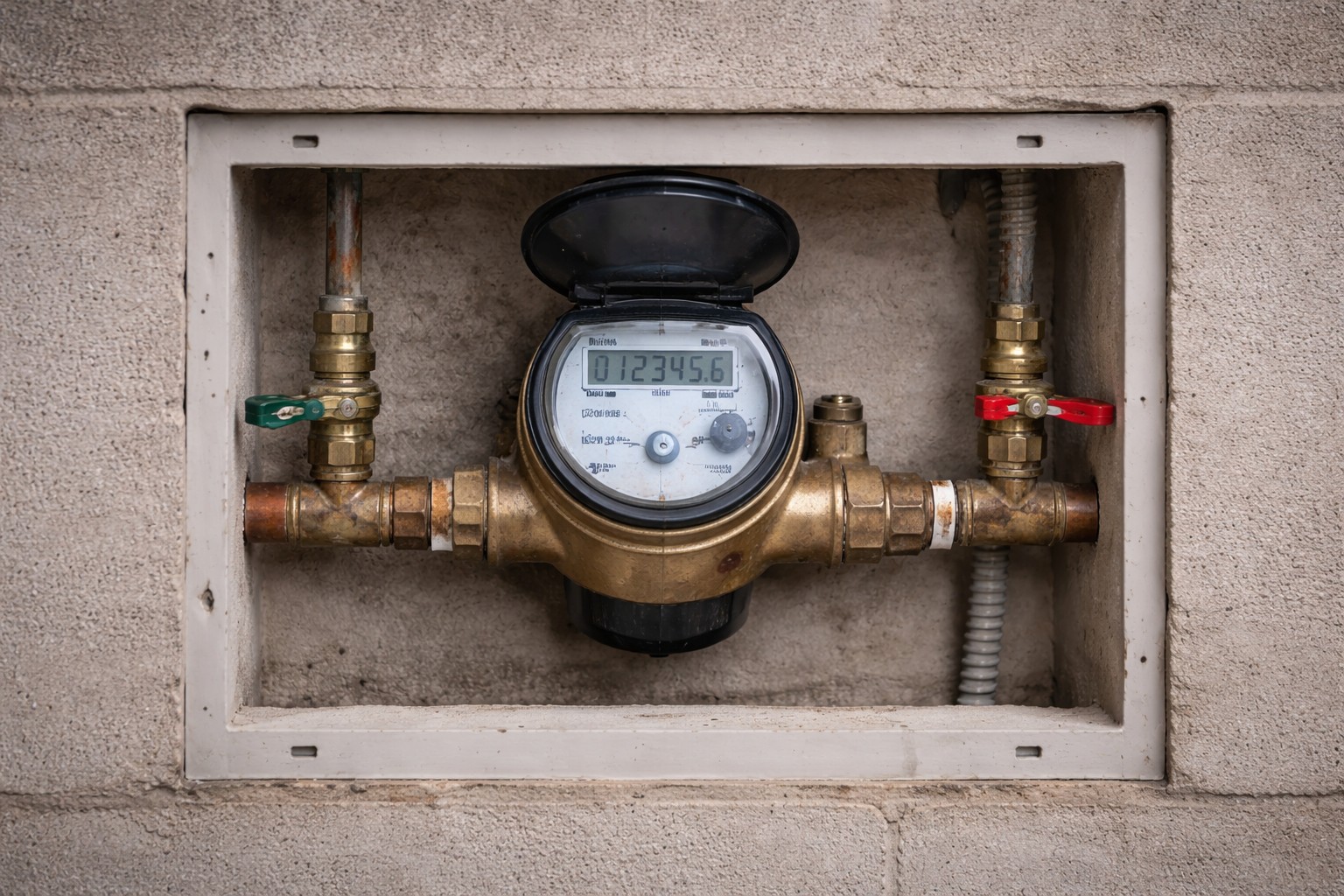
- Do not try to force-open or tamper with the water meter or utility equipment—contact the water provider if you suspect upstream problems.
When to Call a Professional
- Pressure swings continue after you’ve logged data and isolated likely causes.
- You find obvious leaks, hammering, or noisy PRV behavior that you can’t safely access or fix.
- There’s a suspected failure of a pump, pressure tank, or PRV and you’re not comfortable working on pressurized equipment.
- Your water utility confirms low supply pressure or recurring interruptions—ask them for an inspection or explanation.
Safety Notes
- Always depressurize a section before working on it. Closing a valve does not remove all pressure immediately.
- Turn off electrical power before working near pumps or controllers. Don’t work on electric pumps while wet.
- Avoid modifying utility-owned equipment; contact the water provider for anything upstream of your shutoff or your meter.
- If you smell gas or see major leaks, evacuate and call emergency services—don’t try to repair large ruptures yourself.
Common Homeowner Questions
- Why did this start right after an outage? — Repressurizing moves air and debris and forces PRVs to re‑settle, causing temporary instability.
- Can a small gauge test really identify the problem? — Yes. A gauge with a max-needle records transient spikes and drops that you won’t notice by eye.
- Will replacing fixtures stop intermittent drops? — No; don’t replace fixtures until you confirm the issue is isolated to that fixture rather than system-wide.
Related Articles
If you’re troubleshooting a similar symptom, these guides may help:
For the full directory, see Intermittent Pressure Loss Events.