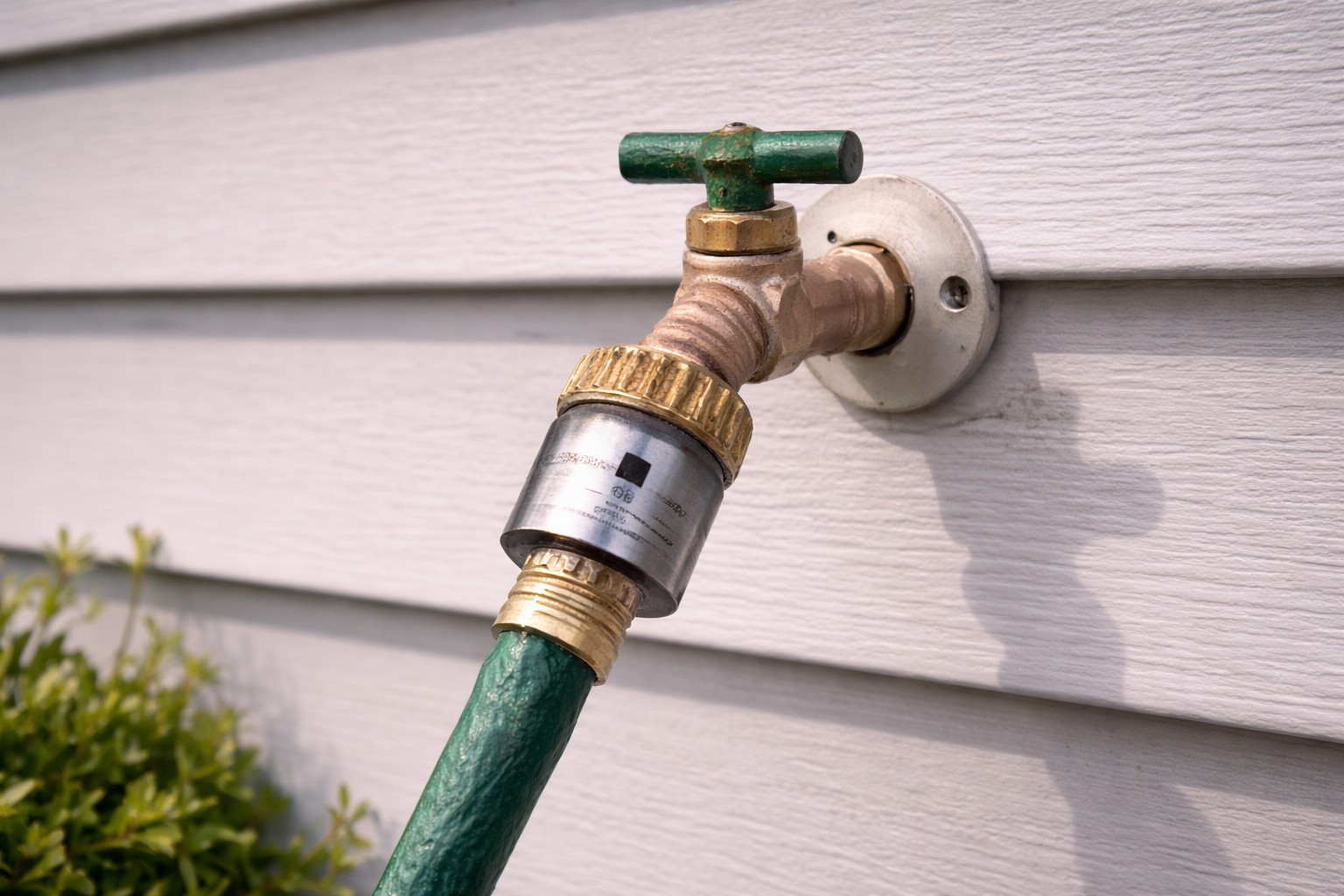
An interruption as irrigation starts differs from weak pressure throughout its steady run. Identify the zone’s real takeoff, protection and load before calling its controller or the utility the cause.
Safety before a pressure test
If fuel gas is suspected, leave the building or affected area immediately. Do not operate valves, switches, plugs, appliances or phones there. Call the gas emergency service from a safe location well away, and wait for responders’ clearance.
Keep away from wet electrical equipment. Do not touch wet appliances, plugs or switches, or enter water to reach a breaker. When no gas leak is suspected, power may be isolated only from a safely accessible dry location; otherwise call an electrician or emergency help. Wet equipment needs qualified assessment before it is used again.
Stop affected use and obtain prompt appropriate help for complete/severe loss, active leakage, unsafe temperature, violent movement or damage. Use a known effective safely accessible homeowner control without force where suitable. Preserve required fire/shared services and actual equipment safe states; warning occupants does not authorize disabling protection. Notes are useful, but do not wait days or recreate a hazardous event before contacting the supplier or qualified provider.
Keep the original event
- Original zone/start versus steady event and any indoor flow or temperature effect.
- Known water source, regulator/backflow/gauge layout and actual controller/valve model.
- Existing flow, wet ground, leaks or records; no fixed one-minute recovery promise.
Recovery and protection remain separate
Pressure returning after irrigation stops shows changed operating demand, not a failed controller. Actual valve and electrical procedures govern suitable work; understanding consequences alone does not authorize bypassing backflow or changing wiring. A controller-off command does not necessarily isolate upstream water or remove trapped pressure. Preserve required protection and obtain appropriate irrigation/well help for unexplained loss.
Choose an instrument that can record the event
A maximum-only pointer stores the highest reading it registered; it does not retain the lowest pressure or the event’s time, duration or sequence. Verify a claimed minimum/maximum function and response rate for the actual instrument. A suitable time-stamped recorder may be needed for brief lows; an ordinary dial can miss a fast event. A gauge at one point describes that point, not every outlet. Use an existing safe instrument or an actual approved owner supply connection with known pressure/temperature rating and its connection/release method. Never use a drain cleanout, backflow test cock, utility fitting or improvised port as a household supply-pressure test point.
Use the actual supplied state
Record the gauge’s side of the source, main, regulator, smart valve and takeoffs, plus actual open flow paths and automatic/shared demands. Stream appearance or a bucket per time measures delivery, not pressure. A gauge capping an outlet prevents flow there. A supplied simultaneous comparison and pressure trapped after closure are different states; closing the main removes demand and can stabilize an upstream constraint without proving an indoor fault. Neighbor or weather timing is context, not unique source proof.
Before settings or service
Do not make PRV or pump-switch changes from a small screw turn, body stamp or comfort with tools. Actual model instructions, measured target and system protection govern permitted external adjustment. Before retained supply parts are opened, independently isolate every feed, control temperature, relieve and verify pressure at the serviced segment, and keep it isolated during removal/refit. Secure compatible parts before attended restoration and actual checks. Lowering a setting or opening one remote tap is not proof the whole assembly is depressurized.
Next action
Report actual scope, event phase, model, recent work and any correctly labeled readings. A suitable stable comparison uses normal controls, known accepting receivers and safe temperature without forcing a failure. Do not bypass protection, exercise an unreliable valve or replace a part solely from timing. The directory below gives the shared instrument and measurement guide.
Related situations
- Pressure cuts out randomly
- Water stops briefly then returns
- Intermittent Pressure Loss Events
- Pressure collapse when irrigation starts
- Pressure cuts out during heavy use
- Intermittent Pressure Loss Events