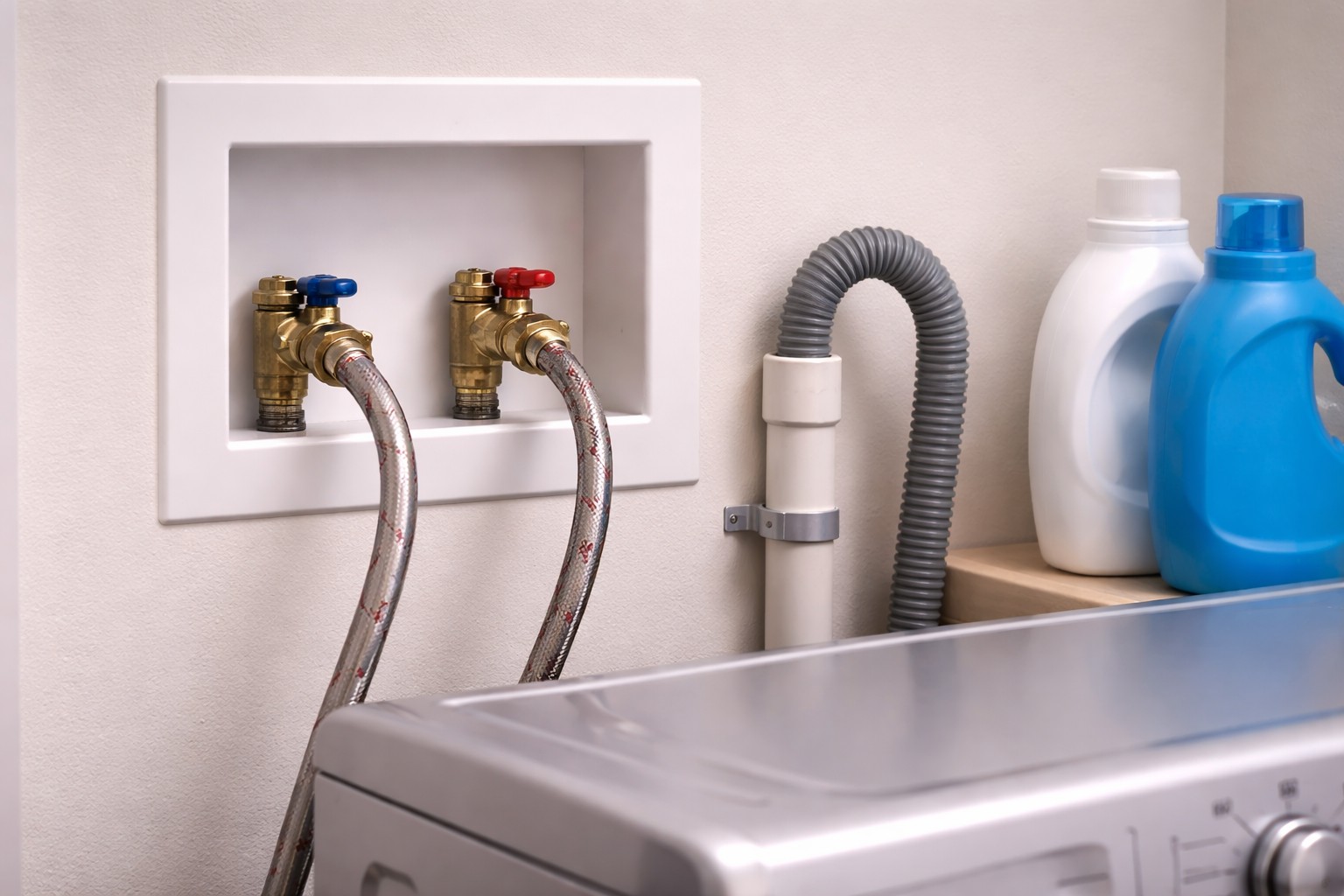
Check for an emergency first
Keep away from wet electrical equipment. Do not touch wet appliances, plugs or switches, or enter water to reach a breaker. When no gas leak is suspected, power may be isolated only from a safely accessible dry location; otherwise call an electrician or emergency help. Wet equipment needs qualified assessment before it is used again.
When an ice-maker supply tube releases or leaks, stop using the water/ice system and control the leak only from a safe dry position. A released tube does not prove a pressure spike. Preserve the fitting and tubing details so the actual compatibility, installation, damage and supply conditions can be checked.
Useful details to record
- Refrigerator model and exact tubing/fitting markings, without pulling the appliance through water.
- Where the line released, any visible damage and recent movement or installation.
- Existing pressure records or alerts and any other leaking fixtures.
What the pattern can tell you
- Water reaches a plug or appliance. Do not touch it or reach behind the wet fridge to unplug it. Get dry-safe electrical isolation and assessment.
- A push-fit connection released. Do not press the release collet as a seating check on a live connection. Its actual engagement method must be followed after isolation.
- The problem recurs. Keep water isolated and obtain service; repeatedly reconnecting and testing is not a repair.
What to do next
- From a safe dry location, close an identified owner-operated supply valve if it can be reached without wet equipment or force. Otherwise request prompt plumbing or utility assistance. Do not drag a heavy refrigerator through water to reach a valve.
- Before any internal service or fitting removal, identify and isolate every supply that can pressurize the section, release trapped pressure through the appropriate controlled outlet and verify depressurization. Account for hot water and possible alternate feeds. Lowering a PRV setting, reducing flow or wearing gloves does not make a pressurized assembly safe to open. If isolation cannot be established, leave it assembled and obtain qualified help.
- Have compatible tubing, connectors, insertion/sealing requirements and service movement allowance checked under the actual refrigerator and fitting instructions. Do not assume compression is always safer than a properly specified push-fit design or substitute non-potable tubing.
- Replace damaged parts under the proper procedure. Keep the connection assembled before restoring pressure and perform the prescribed attended leak checks only after electrical and appliance clearance.
- For an optional cold-water measurement, use only an intact, safely accessible owner test connection whose location in the system is known, with a compatible gauge rated for the actual pressure and temperature. Follow its connection and pressure-release instructions; never loosen a pressurized fitting or use a backflow test cock as a household gauge port. Do not create a new connection to perform this check. A plumber can install or verify the measurement instead.
- Do not bypass a pressure regulator, backflow preventer or other protective control to see whether the symptom disappears. A different result after changing the supply arrangement does not prove the removed device was faulty. Approved protected arrangements and qualified device-specific tests are different from an improvised bypass.
- Use a plumber for abnormal supply behavior and appliance service for wet or damaged refrigerator components. Do not automatically install a regulator or expansion tank solely because a line popped off.
Can I unplug it quickly if water is reaching the socket?
No. Avoid the wet plug, outlet and appliance. Power isolation requires safely accessible dry controls or appropriate emergency/electrician help; assessment is needed before reuse. Catching drips or wearing rubber gloves does not make wet energized equipment safe.
Related situations
- High pressure breaking faucet cartridges
- Toilet fill valves failing repeatedly
- High Pressure Causing Fixture Damage