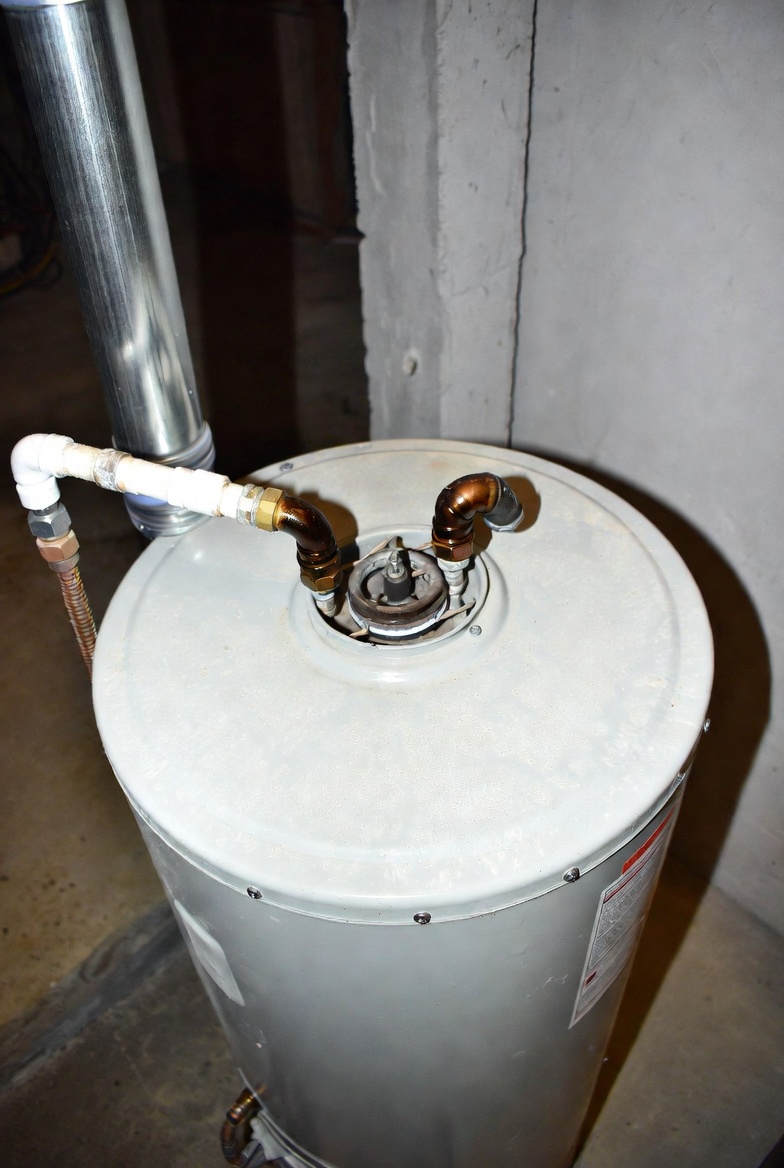
A chemical-like smell noticed with hot water requires source and exposure assessment before experiments. Do not sniff cold then hot, draw enough water to force reheating, or compare odor after the heater cycle. Smelling is not a safe diagnostic alternative to tasting unknown water.
Address an emergency before investigating
If fuel gas is suspected, leave the building or affected area immediately. Do not operate valves, switches, plugs, appliances or phones there. Call the gas emergency service from a safe location well away, and wait for responders’ clearance.
If a carbon monoxide alarm sounds or you suspect carbon monoxide exposure, get everyone outside immediately and call emergency services from safety. Carbon monoxide has no smell; an odor comparison cannot rule it out. Do not restart or repeatedly cycle a fuel-burning heater to investigate a possible combustion problem.
Keep away from wet electrical equipment. Do not touch wet appliances, plugs or switches, or enter water to reach a breaker. When no gas leak is suspected, power may be isolated only from a safely accessible dry location; otherwise call an electrician or emergency help. Wet equipment needs qualified assessment before it is used again.
For a new, unexplained water-quality change: do not deliberately taste the water. Use bottled water or another known-safe supply for drinking, food preparation, teeth brushing and ice while you contact the supplier. Follow the actual local notice for other uses. Boiling does not make chemically contaminated water safe, and clear appearance or a fading odor does not certify safety.
Record the original event
- Original ordinary activity and whether the odor was in room air or associated with water.
- Actual heater, supply, treatment and repair/product records.
- Existing alarm, irritation, leakage or unsafe temperature, without another exposure.
What it establishes
Timing with heat does not identify disinfectant/anode chemistry, bacteria or a harmless sealant. Anode-related sulfur odor is one actual model/water issue; it does not explain every chemical description. Turning off energy or closing one feed does not prove the tank is the source or control every pressure path.
What to do next
- Leave suspected gas, strong unexplained fumes or exposure emergencies and call appropriate help from safety before operating any control or fan.
- Obtain actual water-use and sampling advice. Do not assume cold-only water is cleared or that tested hot tap water should become the drinking source.
- Do not change to a universal 120°F compromise, force heating, add disinfectant or change anodes as a smell experiment. Scald protection and microbial-control needs require the actual equipment/system plan.
- Do not create a tank-side-only or alternative bypass, remove relief protection or prescribe changing the tank lining. A qualified provider should select justified model-compatible service from actual findings.
Actual service and restart conditions
Before any heater service, identify the exact type/model and every water feed, return, protective control and energy source. Use its actual safe isolation, cooling, pressure-release, secured discharge and reassembly procedure. Power-off, gloves or a small hot draw do not establish cooling or zero pressure. Do not use an open joint, unidentified bypass or relief/anode removal as a quality test.
After justified service, close/refit parts as specified, restore water under the actual procedure, verify complete filling and air purge before energizing an electric storage tank, and check leaks and intended protected operation. Tankless, storage, heat-pump and recirculation systems can require different commissioning. A temporarily clear stream does not certify water quality or complete the equipment checks.
Sampling and water use
Ask the supplier or a state-certified drinking-water laboratory what substances, locations and collection conditions fit the actual history. Use its containers and handling instructions; ask before flushing or outlet cleaning whether a first-draw sample is needed. A household hot-water jar, tank-drain cup or handful of particles is not a universal sample. For consumption, use known-safe cold water rather than hot tap water, including hot water that was cooled.
Can I drink hot tap water after the smell is gone?
Use known-safe cold water for consumption rather than hot tap water, including after cooling. Disappearance does not identify the chemical or certify the source; appropriate water-use and equipment findings must address the concern.
Related guides
- Hot water tastes like pennies
- Hot water sediment clogging fixtures
- Hot-Water-Only Contamination and Odor Problems
- Sulfur smell only when heater runs
Safety sources
- Con Edison: suspected gas leaks
- CDC: carbon monoxide alarms and wet electrical devices
- CDC: electrical hazards near water
- CDC: drinking-water advisories
- EPA: testing, cold-water consumption and contaminant-specific precautions
- EPA: certified drinking-water laboratories
- EPA: home testing and laboratory collection instructions
- Example electric-heater manual: filling and maintenance requirements
- A. O. Smith: water-heater maintenance and refill before restart