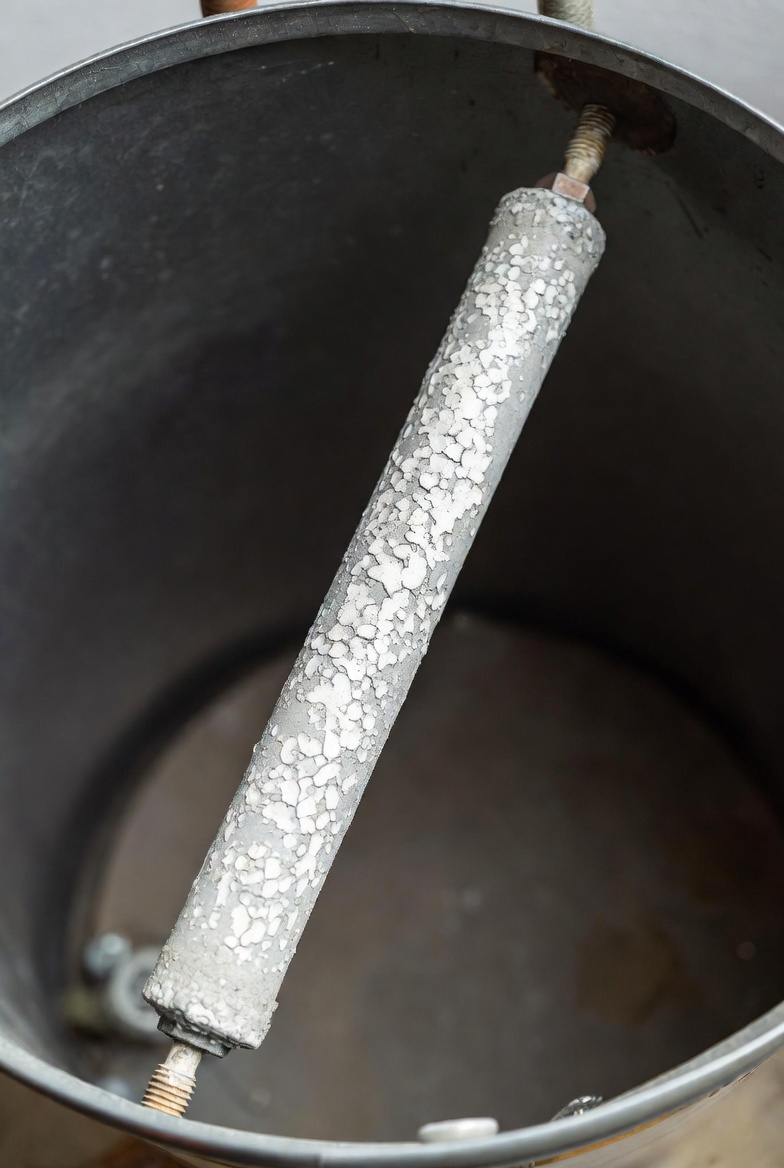
Check for an emergency first
If you smell fuel gas or suspect a gas leak, leave the building or affected area immediately and take others with you. Do not operate switches, plugs, phones, appliances, thermostats or valves in the affected area, light flames, or stay to ventilate or investigate. From a safe location well away, call the local gas emergency service or emergency services. Do not re-enter until responders say it is safe. Plumbing checks and normal maintenance must wait.
For a new, unexplained water-quality change: do not deliberately taste the water. Use bottled water or another known-safe supply for drinking, food preparation, teeth brushing and ice while you contact the supplier. Follow the actual local notice for other uses. Boiling does not make chemically contaminated water safe, and clear appearance or a fading odor does not certify safety.
Do not collect, cool and taste bitter hot water to locate a cause. Cooling addresses temperature, not contamination. A bitter description can guide the history but does not diagnose concentrated minerals, bacterial growth or anode chemistry, and does not justify a general reassurance about poisoning.
Useful details to record
- Which ordinary outlet and activity first revealed it and whether it followed service or long nonuse.
- Heater model, maintenance and treatment record.
- Existing particles, discoloration, leakage or other outlets already involved.
What the pattern can tell you
- The observation seems hot-only. Give that scope to the provider without assuming every cold tap is safe.
- It followed a heater service. Ask for the actual commissioning record rather than repeating drain/flush/reheat cycles.
- There is also a gas-like odor. Do not decide it is merely sulfur from water. Use the emergency boundary if fuel gas or concerning exposure is suspected.
What to do next
- Contact the drinking-water supplier promptly about the new unexplained change and check for a current notice. For a private well, contact the local health department or a qualified well-water professional. Describe existing observations without another taste or a guessed contaminant.
- For consumption, use known-safe cold water rather than hot tap water, including hot water that was cooled. Heating, cooling or mixing samples does not remove dissolved contaminants. Avoid hottest-tap samples and direct skin temperature tests.
- Arrange any needed tests with a state-certified drinking-water laboratory or the supplier. Ask which substances, locations and collection conditions fit the history. Use the laboratory’s supplied containers and exact handling directions. Before flushing, removing an aerator or changing treatment, ask whether a first-draw or other specific sample is required.
- Do not drain or disinfect a heater, remove its anode, change temperature settings or open relief devices to diagnose water quality. Required service must follow the actual model’s energy isolation, cooling, pressure, reassembly and restart requirements. A drained electric tank must be correctly filled and purged before power returns. Use qualified help for internal, fuel or uncertain work.
- Do not open anode or element fittings, change temperature settings or treat a ten- or fifteen-year age as proof a heater requires replacement. Ask what actual inspection or water result supports proposed work.
- Flavor, odor, feel, clear appearance or a normal home strip cannot certify water quality. A laboratory result covers the substances, locations and conditions actually assessed. Ask the supplier or health authority how the findings apply to use; do not resume consumption through a sensory test or a fixed waiting period.
Can boiling or reheating remove the bitter substance?
Boiling is not a general chemical-removal method. A change in flavor would not establish safety anyway. Use the actual water-use advice and an appropriate investigation rather than cooled or reheated taste comparisons.
Related situations
- Hot water sediment clogging fixtures
- Hot water tastes metallic
- Hot-Water-Only Contamination and Odor Problems
Safety sources
- Con Edison: suspected gas leaks
- CDC: drinking-water advisories
- CDC: chemical contamination, copper and lead in tap water
- EPA: certified drinking-water laboratories
- EPA: laboratory sample containers and handling
- Ohio EPA example: first-draw sampling precautions
- EPA: sensory limits and testing drinking water for lead
- Example electric-heater manual: filling and maintenance requirements