Quick Answer:
Sudden high or fluctuating pressure only on the hot side is usually caused by plumbing components around the water heater (check valves, mixing valves, expansion tanks or the heater’s refill behavior), or by restriction and sudden opening elsewhere that sends a pressure surge back through the hot line. Start by comparing hot and cold at the same fixture and watch what the water heater does when the spike happens.
Why This Happens
- Thermal expansion: when the heater raises water temperature, built-up expansion can momentarily change pressure if the expansion tank or backflow prevention is not working correctly.
- One-way valves or mixing valves: stuck or faulty valves on the hot side can cause pressure to rise and fall with sudden demand elsewhere.
- Heater refill or cycling: when the tank refills after a burn-off or automatic cycle, the brief valve action or pump can cause spikes on the hot line.
- Differences at the fixture: a problem isolated to hot-only parts (cartridges, shower mixers, check valves) will produce spikes on hot but not cold.
Step-by-Step What to Do
1. Reproduce and compare at the same fixture
Open the same fixture on cold only and note the flow and steadiness. Then open the hot only and compare. If the hot side fluctuates while the cold stays steady, the issue is localized to the hot plumbing or heater. This simple side-by-side check reveals whether the problem is a general house pressure issue or a hot-side issue like a faulty mixing valve or check valve. If you want to record it for a technician, a short video of the two tests is helpful. For more reading, see Pressure uneven between hot and cold.
2. Watch the heater while the fluctuation happens
Have someone run the faucet and observe the water heater when the spike occurs: listen for valve clicks, refill sounds, or relief valve drips. Note whether the heater cycles or a valve opens at the same moment as the spike. If spikes coincide with the heater refilling, that points toward the heater or its refill controls. Consider documenting what you see and hear; this will speed diagnosis. Related guidance is under Pressure loss when water heater refills.
3. Check visible valves and expansion tank
- Look at shutoff valves to make sure they are fully open and not partially closed or corroded.
- Inspect the expansion tank (if present) for obvious failure: a very hot tank, leaks, or a waterlogged tank that lacks an air cushion.
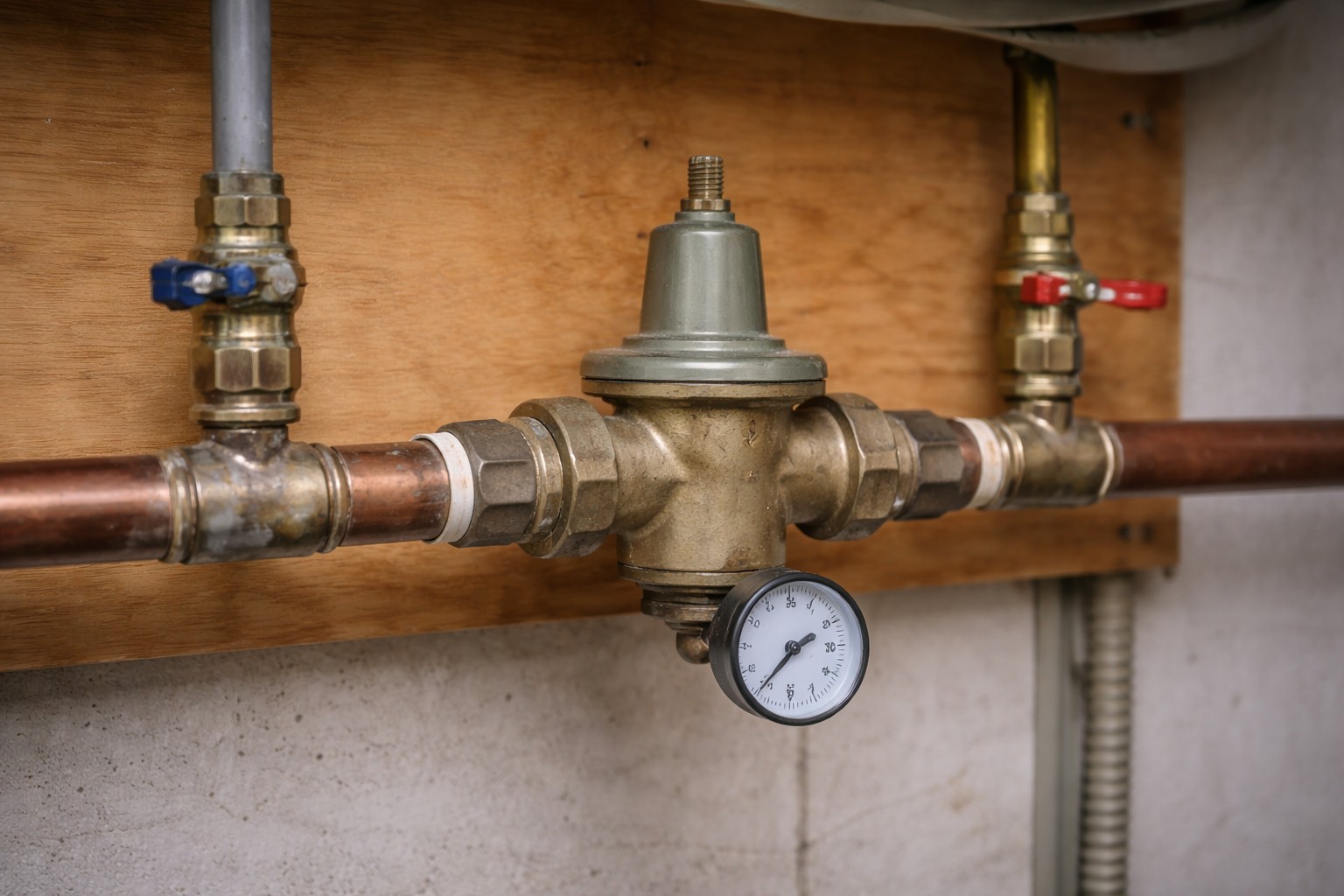
- Check for a pressure-reducing valve (PRV) at the main; note its setting but do not attempt major adjustments unless you are comfortable and it’s a simple dial-type.
4. Isolate the heater (simple isolation test)
If accessible, close the heater’s cold inlet valve to isolate the tank and then open a hot fixture slowly to see if spikes stop. If the spikes stop when the tank is isolated, the problem is at or inside the heater or its immediate piping. If you don’t know how to isolate the tank, skip this and call a professional.
5. Gather information for a technician
- Note when spikes happen (time of day, after long draws, when other appliances run).
- Record noise from the heater, any visible leaks, and whether the temperature changes when spikes occur.
- Keep the results of your hot vs cold test ready.
What Not to Do
- Do not replace cold-side plumbing for a hot-side-only problem. That wastes time and money and won’t fix a hot-side valve, expansion tank, or heater issue.
- Do not open the water heater, burner compartment, or electrical access panels yourself unless you are qualified.
- Do not force or repeatedly snap open/closed any pressure relief valve; these are safety devices and should only be serviced properly.
When to Call a Professional
- If the spikes continue after the basic checks above, call a licensed plumber.
- Call immediately if you see persistent relief valve discharge, water leaking from the heater, or pressure readings above 80 psi.
- If the heater is gas or electric and you suspect internal valve or control failure, stop troubleshooting and get a pro — those repairs can be hazardous.
Safety Notes
- Hot water can scald. Run tests carefully and avoid placing cameras or hands directly under hot flow.
- Do not attempt gas or electrical repairs on the water heater. Turn off power or gas only if you are instructed to do so by a qualified technician.
- Shut off the main water if you discover a significant leak and call for help.
Common Homeowner Questions
- Why does only the hot side spike?
Because the cause is likely in hot-side components or the heater itself, not the cold supply. - Can I fix it myself?
You can do visual checks, compare hot vs cold, and note heater behavior, but repairs to tanks, valves, or controls are best left to a pro. - Will replacing the water heater fix it?
Not always. If the issue is a valve, expansion tank, or a nearby fitting, replacing the heater may not resolve the spikes.
Related Articles
If you’re troubleshooting a similar symptom, these guides may help:
For the full directory, see Pressure Fluctuates Only on Hot Water.