Quick Answer:
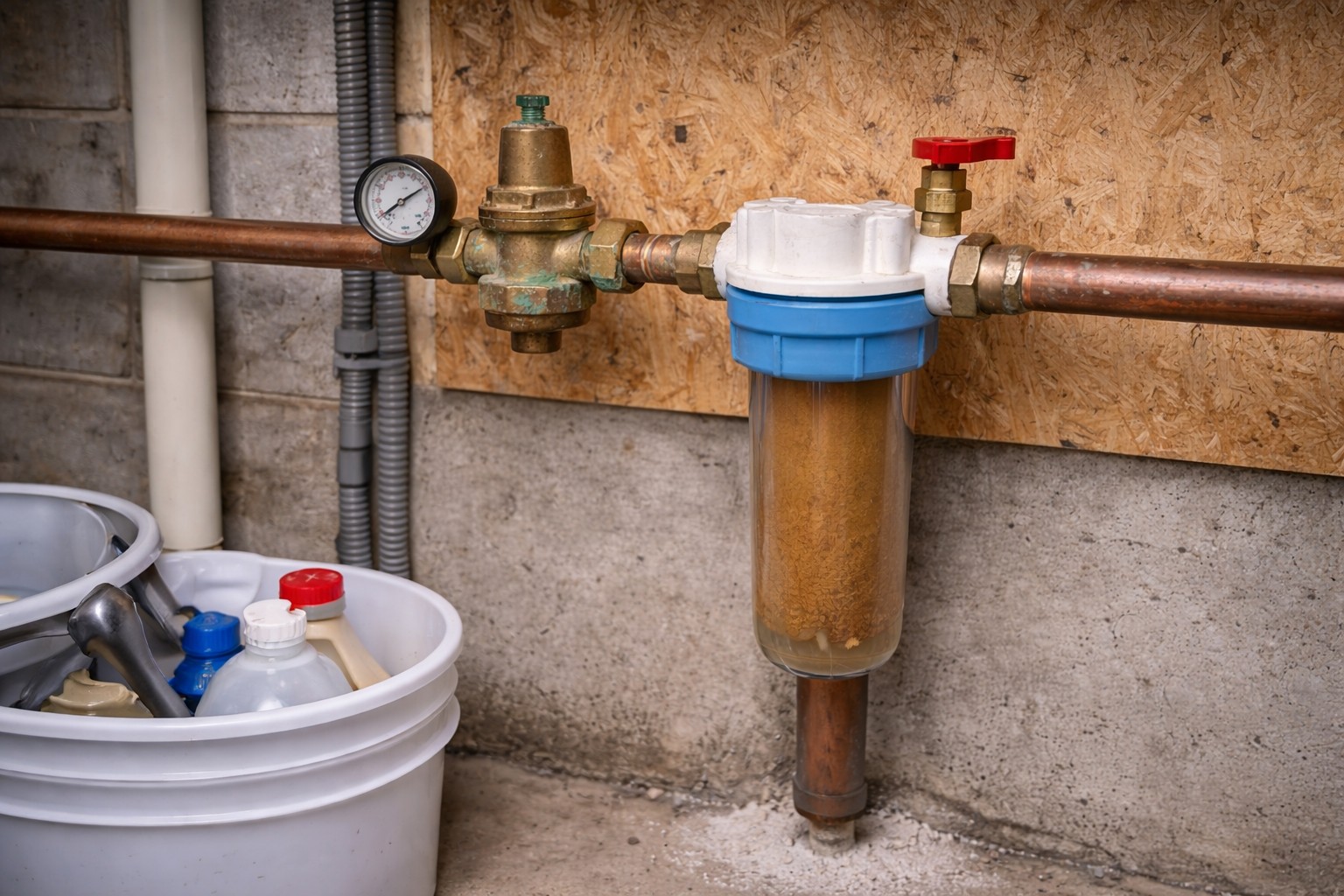
If water pressure has been slowly getting worse in every room over weeks, start by measuring pressure at an outdoor hose bib, then isolate main components (PRV, meter, water heater, filters) to narrow the cause, and flush lines where sediment might be restricting flow. These checks often show whether the issue is in your plumbing, on the service line, or with the municipal supply.
Why This Happens
- Pressure-reducing valve (PRV) or pressure regulator wearing out and slowly losing setpoint.
- Partial obstruction at the service entry, water meter, or in a main line from mineral buildup or debris.
- Sediment buildup in pipes or appliances restricting flow over time.
- Slow leak on the service line reducing supply pressure to the whole house.
- Changes in municipal supply pressure after work by the utility — this may happen intermittently.
Step-by-Step What to Do
1. Measure pressure at the hose bib
- Buy or borrow a simple screw-on pressure gauge and attach it to an outdoor hose bib or other full-flow hose connection that taps the cold supply.
- Read the gauge: typical household pressure is about 40–60 psi. Note if pressure is below 40 psi or fluctuates while taps are opened.
- Record readings with taps closed, then with a tap open (to see drop under load).
2. Compare house reading to service entry
- If possible, measure at the bib closest to where the supply enters the house. If that reading is low, the issue is upstream (service line, meter, or city supply).
- If the entry bib reads normal but interior pressure is low, the issue is inside the house piping or a pressure regulator downstream.
3. Isolate main components
- Locate and temporarily bypass or isolate devices one at a time: whole-house filter/backwash, water softener, PRV, and water heater. Many have bypass valves—use them to test pressure with each device out of the line.
- Close the house shutoff valve briefly and check for pressure loss on the metre side (if accessible) to see if property side has leak.
- Turn off the water heater and open a cold tap to see if hot-side problems are affecting perceived pressure.
4. Flush the system appropriately
- Start with the lowest outlets and open full-flow hose bibs to flush any loose debris from service lines. Run for several minutes and re-check pressure.
- Flush interior fixtures by opening multiple cold taps and showers to push sediment out. Clean faucet aerators and showerheads; mineral deposits can reduce flow slowly.
- Do not drain the water heater unless you are comfortable with the procedure. If you do, follow the manufacturer’s steps or get help—improper draining can damage the heater or create scald risk.
5. Re-check and monitor
- After isolating and flushing, re-measure at the hose bib and at an interior faucet. Compare results and note any improvement or continued decline.
- If pressure improves after bypassing a filter or softener, that device may need service or replacement.
If the timing suggests city work affected pressure, read up on **Low pressure after city maintenance**. If you suspect different levels of pressure in the house, compare readings and consult **Low pressure only upstairs** for upstairs-specific symptoms.
What Not to Do
- Do not immediately replace fixtures without verifying service entry issues.
- Do not start cutting into distribution pipes or remove the PRV without first confirming the cause and isolating the system.
- Do not drain the water heater or disconnect gas/electric supplies without following safe procedures—turn off power and allow components to cool first, or call a pro.
When to Call a Professional
- Pressure readings are low at the service entry or the meter — this often needs the utility or a licensed plumber to inspect the service line or meter.
- The PRV appears to be failing (pressure unstable or rising unexpectedly) — replacing or adjusting a PRV is a job for a plumber if you are not experienced.
- Evidence of a leak in the yard or repeated unexplained pressure decline—these can indicate a buried service line leak that requires specialty tools.
- If you are unsure how to safely isolate, bypass, or drain major components like the water heater, call a professional.
Safety Notes
- Turn off power to the water heater before attempting to drain it. For gas heaters, turn off the gas and follow the manufacturer’s safety steps.
- Avoid working on the main service line or meter yourself—these are often the utility’s responsibility and can be dangerous if mishandled.
- When flushing lines, be prepared for a large water flow. Direct hoses away from electrical equipment and valuables.
- Wear gloves and eye protection when opening fittings that may release mineral-laden water or debris.
Common Homeowner Questions
- How low is too low? Under about 40 psi is generally considered low for most homes; consistent readings below that justify investigation.
- Can a small leak cause this? Yes — a slow leak on the service line or inside the house can reduce pressure gradually and should be checked quickly.
- Will cleaning aerators fix it? Sometimes — clogged aerators and showerheads reduce flow at fixtures, but they won’t fix low pressure at the service entry or across the whole house.
For more related articles, see the Whole-House Low Water Pressure hub.